/ Most Commented
ICANN and GSMA Sign Memorandum of Understanding
ICANN and the mobile network operators trade body, GSM Association (GSMA) today signed a Memorandum of Understanding (MoU) at the Mobile World Congress being held this week in Barcelona. more
- CircleID Reporter
- Comments: 0
- Views: 8,339
Big Data for the Common Good of Local Communities
 There is no doubt that big data is going to be one of the most important tools that will assist human society in the future. Our increasingly complex society has been able to move forward, and it will continue to do so, based on rational, scientific facts and figures within the context of the needs of humanity. As an example, neuroscience is giving us more insight into ourselves, and we are learning that many of the elements that we have always thought of as being uniquely human are based on neurological/biological processes that can be put into algorithms. more
- Paul Budde
- Comments: 0
- Views: 10,454
Vodafone Plans to Create the First 4G Network on the Moon, Appoints Nokia as Technology Partner
Vodafone is working on a project to create the first 4G network on the Moon to support a mission by PTScientists in 2019. Nokia is chosen as the company's technology partner, according to a press release issued today. more
- CircleID Reporter
- Comments: 0
- Views: 8,262
Court Sides with FTC, Says AT&T Cannot Escape Jurisdiction of the Agency
California appeals court today gave Federal Trade Commission the green light to move forward with a lawsuit alleging that AT&T Inc was deceptive in slowing internet speeds to customers with unlimited plans. more
- CircleID Reporter
- Comments: 0
- Views: 12,504
The Magical Ampersand: Hope Is Not an Integration Plan
 In a software-defined and virtualised world, who will integrate the complex dynamic systems, and take responsibility for the result? It is unclear if telcos have the skills, but someone else likely does... The included image caught my eye whilst I was reviewing presentations from last October's Metro Ethernet Forum gathering in Florida on behalf of a consulting client. At first glance, it's just a marketing pseudo-Venn diagram peppered with telco tech buzzword bingo. But... more
- Martin Geddes
- Comments: 0
- Views: 8,321
Significant Changes Underway for Core Internet Protocols
Significant changes to the core Internet protocols are underway due to the increased necessity to overcome limits that have become apparent particularly with regards to performance. more
- CircleID Reporter
- Comments: 0
- Views: 14,317
Usenet, Authentication, and Engineering (or: Early Design Decisions for Usenet)
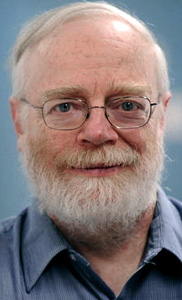 A Twitter thread on trolls brought up mention of trolls on Usenet. The reason they were so hard to deal with, even then, has some lessons for today; besides, the history is interesting. (Aside: this is, I think, the first longish thing I've ever written about any of the early design decisions for Usenet. I should note that this is entirely my writing, and memory can play many tricks across nearly 40 years.) more
- Steven Bellovin
- Comments: 0
- Views: 10,289
U.S. Government Officials Raise Concerns Over Intel’s Long Delay Informing Government on Chip Flaws
Latest reports suggest Intel Corporation did not inform U.S. cyber security officials about the so-called Meltdown and Spectre chip security flaws until they were leaked to the public six months after Intel was notified about the problem. more
- CircleID Reporter
- Comments: 0
- Views: 7,550
SEC Reinforces and Expands Its Cybersecurity Guidance for Public Companies
The Securities and Exchange Commission has issued an updated guidance for public companies in preparing disclosures about cybersecurity risks and incidents. more
- CircleID Reporter
- Comments: 0
- Views: 18,140
Domaining Europe Returning Home to Valencia, Spain for 10th Anniversary Show Next Spring
 The Domaining Europe conference began in Valencia, Spain almost a decade ago and the first seven shows in the annual series were staged at the Hotel Sorolla Palace there. In 2016 conference founder Dietmar Stefitz decided to take the show on the road, staging that year's event in The Hague, Netherlands, followed by the 2017 show in Berlin, Germany this past May. more
- Sara Vivanco
- Comments: 0
- Views: 7,814
Report Estimates Cybercrime Taking $600 Billion Toll on Global Economy
Cybercrime is costing businesses close to $600 billion, or 0.8 percent of global GDP, according to a report released today by McAfee, in partnership with the Center for Strategic and International Studies (CSIS). more
- CircleID Reporter
- Comments: 0
- Views: 25,671
ICANN Spearheading Launch of Virtual DNS Entrepreneurship Center of the Caribbean
The Internet Corporation for Assigned Names and Numbers (ICANN) is spearheading an initiative to launch Virtual DNS Entrepreneurship Center of the Caribbean (VDECC). more
- CircleID Reporter
- Comments: 0
- Views: 11,296
Vermont Governor 5th to Take a Stand Against Rollback of Net Neutrality Rules
Vermont Gov. Phil Scott is the latest state governor to take a stand against the FCC's rollback of net neutrality rules. more
- CircleID Reporter
- Comments: 0
- Views: 9,842
WHOIS Access and Interim GDPR Compliance Model: Latest Developments and Next Steps
 WHOIS access and development of an interim GDPR compliance model remains THE hot topic within the ICANN community. Developments are occurring at a break-neck pace, as ICANN and contracted parties push for an implementable solution ahead of the May 25, 2018 effective date of the GDPR... ICANN is now poised to formally publish the convergence model, although the community continues to discuss and seek a solution that is acceptable for all stakeholders. more
- Brian Winterfeldt
- Comments: 0
- Views: 9,839
SpaceX Starlink and Cuba - A Match Made in Low-Earth Orbit?
 I've suggested that Cuba could use geostationary-orbit (GSO) satellite Internet service as a stopgap measure until they could afford to leapfrog over today's technology to next-generation infrastructure. They did not pick up on that stopgap suggestion, but how about low-Earth orbit (LEO) satellite Internet service as a next-generation solution? SpaceX, OneWeb, Boeing and others are working on LEO satellite Internet projects. more
- Larry Press
- Comments: 0
- Views: 16,448