/ Most Viewed
China Sets Up $14.6 Billion Internet Investment Fund
China's government has established a 100 billion yuan (US$14.5 billion) state fund to invest, nurture and support internet companies and spearhead the country's technological innovations and economic transformation into the so-called 'Internet Plus' era. more
- CircleID Reporter
- Comments: 4
- Views: 10,319
The Cyber Security Ecosystem: Collaborate or Collaborate - It’s Your Choice
 As cyber security as a field has grown in scope and influence, it has effectively become an 'ecosystem' of multiple players, all of whom either participate in or influence the way the field develops and/or operates. It's increasingly evident that, more than ever, it is crucial for those players to collaborate and work together to enhance the security posture of communities, nations and the globe. more
- Arun Raghu
- Comments: 1
- Views: 10,319
NTIA & You: NTIA’s Intention to Transfer IANA Functions to the Global Community Is Welcome, But…
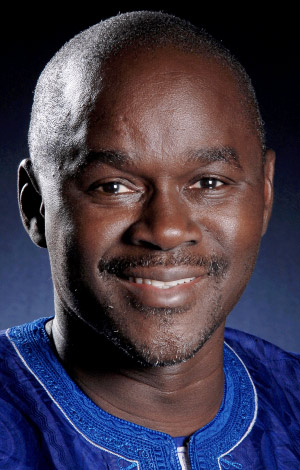 It is no secret that both the US government, ICANN, and the global Internet community have argued and worked tirelessly for the past 15 odd years on the vexing issue of globalizing the US government's role in the IANA function. Despite the desire, long-held by many, for the US to relinquish its control of the IANA function, it is clear that getting to full multistakeholder control of the function is not going to be easy. more
- Katim Seringe Touray
- Comments: 0
- Views: 10,318
Who Will Crack Cloud Application Access SLAs?
 The broadband industry doesn't have an agreed-upon unit of supply and demand that meaningfully "adds up". This is rather odd for a service that aspires to be a utility. It is also a barrier to a much-needed transformation from "bit pipes" to "digital supply chain management". The chart here ought to be in every basic undergraduate textbook on packet networking and distributed computing. That it is absent says much about our technical maturity level as an industry. more
- Martin Geddes
- Comments: 0
- Views: 10,317
The New ICANN Emerges in Seoul
 With the loud crashing of a traditional drum ceremony and an impromptu electric guitar performance by a young Korean whose rendition of Pachabel has been downloaded sixty million times on YouTube, the 36th meeting of ICANN was kicked off this morning (Korean time) by new CEO Rod Beckstrom and his fellow Directors and assembled one thousand or so participants. ICANN has always been about change, but the atmosphere in Seoul this week is charged with a sense of new challenges and new opportunities. more
- Michael Roberts
- Comments: 1
- Views: 10,316
The ITU Busan Plenipotentiary
 The ongoing ITU Plenipotentiary Conference in Busan South Korea is the quadrennial gathering where its Nation State Members gather to elect new leadership of its four permanent secretariats and populate a few other of its assorted bodies. The next two weeks are spent in endless sessions where several regional blocs of Members still enamored with pre-liberalization telecom models complain about the new world of telecommunications that they did not invent -- while engaging in copious use of their new smart phones and online services. more
- Anthony Rutkowski
- Comments: 0
- Views: 10,315
Worming Our Way Out of Trouble
 The Conficker worm will be active again on April 1st, according to an analysis of its most recent variant, Conficker.C, by the net security firm CA. This malicious piece of software, also known as Downup, Downadup and Kido, spreads among computers running most variants of the Windows operating system and turns them into nodes on a multi-million member ‘botnet’ of zombie computers that can be controlled remotely by the worm’s as yet unidentified authors. more
- Bill Thompson
- Comments: 0
- Views: 10,313
Assigning 32-bit ASNs
 With 16-bit Autonomous System Numbers (ASNs), 65,536 unique numbers are possible. Just like 32-bit IP addresses, these 16-bit ASNs are becoming a scarce resource. Therefore, in 2007 the Internet Engineering Task Force (IETF) developed a new format, 32-bit ASNs (RFC 4893), which increases the supply of ASNs to four billion. more
- Mirjam Kuehne
- Comments: 0
- Views: 10,312
11 Information Economy Policy Reversals Coming to a Marketplace Near You!
 In the wake of the election, sweeping policy shifts in the information economy are set to accelerate. Expect fast-tracked FCC reforms, Starlink subsidies, and AI-driven oversight to redefine media, tech, and regulatory landscapes. From relaxed antitrust to intensified media control, these eleven reversals signal a move toward deregulation and Chicago School libertarianism, with lasting impacts on U.S. markets and governance. more
- Rob Frieden
- Comments: 0
- Views: 10,311
Amazon Launched Its First Two Internet Satellites Into Orbit
Amazon launched its debut prototype satellites, Kuipersat-1 and Kuipersat-2, from Florida's Cape Canaveral on Friday. This marks the tech giant's initial foray into space, aiming to rival SpaceX's Starlink broadband network. more
- CircleID Reporter
- Comments: 0
- Views: 10,311
NANOG 95: From Faster Fibre to Route Leaks, Operators Face Old Problems with New Tools
The NANOG 95 conference spotlighted breakthroughs in fibre optics, wireless technology, routing security, and quantum computing, offering a forward-looking assessment of internet infrastructure and its vulnerabilities, as reported by APNIC's Geoff Huston. more
- CircleID Reporter
- Comments: 0
- Views: 10,310
Article 22 of the GDPR Should Not Preclude Contemplated Automation
 There is an ongoing disagreement among various members and groups in the ICANN community regarding automation -- namely, whether and to what extent automation can be used to disclose registrant data in response to legitimate data disclosure requests. A major contributing factor to the complications around automation has been confusion about how to interpret and apply Article 22 of the GDPR. more
- Russell Pangborn
- Comments: 1
- Views: 10,310
New Revenue Models for the ‘Software Telco’
I was recently asked how telcos might come up with new business models for a world where all resources are under software control. The core idea is to match network supply and demand in space and time (and at all timescales). I've typed up my notes for the curious to critique...Today's telco is more like a static utility 'pipe', the way that gas, electric or oil are delivered. It sells direct access to raw network mechanisms, and users buy circuits that offer a fixed bandwidth in space and time. more
- Martin Geddes
- Comments: 0
- Views: 10,308
UDRP and the ACPA Differences, Advantages and Their Inconveniences
 The ACPA and the UDRP provide two separate and distinct methods for resolving domain name disputes. Both alternatives have many critics and proponents, but the true value of each will ultimately be determined by how well each combats cyber-squatting. Separately, the UDRP and the ACPA will probably work well to defuse most of the cyber-squatting that is currently invading the Internet. If combined together the UDRP and the ACPA can be a cost saving and effective way to prevent cybersquatting... more
- Duksh K. Koonjoobeeharry
- Comments: 0
- Views: 10,305
Ten Years of UDRP
 In 1999, the Internet Corporation for Assigned Names and Numbers (ICANN) developed a policy to resolve disputes between trademark owners and registrants of domain names. This policy, the Uniform Domain-Name Dispute Resolution Policy (UDRP) was made available for disputes concerning an alleged abusive registration of a domain name. In the past 10 years alone, more than 16,000 disputes have been filed resulting in more than 10,000 domain name transfers. more
- Elisa Cooper
- Comments: 0
- Views: 10,305