/ Recently Commented
Defense Science Board Urges Obama to Take Immediate Cybersecurity Measures
According to a report by the Defense Science Board, the President-elect Barack Obama will inherit a cybersecurity infrastructure that is ill-prepared for advanced cyberattacks which will be of particular challenge for the new leaders... Reporting today on eWeek, Roy Mark writes: "The Bush administration has been widely criticized by security experts as de-emphasizing cyber-security and hamstringing the authority of officials in charge of government-wide cyber-security" said Roy Mark in a report eWeek." more
- CircleID Reporter
- Comments: 0
- Views: 7,592
In Response to CADNA: Cybersquatting is Not Criminal But a Civil Matter
 The Coalition Against Domain Name Abuse (CADNA) recently released a statement that implied that cybersquatting is a criminal activity. It said, "CADNA has been working diligently to further international and national policies that combat the practice of cybersquatting... As brands continue to learn about the prevalence and practice of online criminal activities..." While, Internet Commerce Association (ICA) vigorously opposes cybersquatting, it is important to note that cybersquatting is a civil matter, not a criminal one. There is a good reason that cybersquatting is a civil matter... more
- Michael Collins
- Comments: 0
- Views: 9,090
What’s Going on at ICANN in Cairo
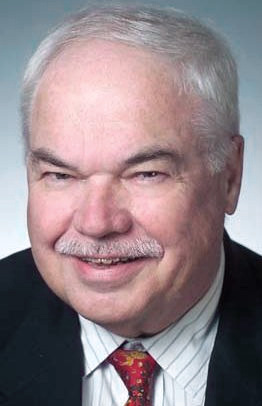 Following up on the big decision at the Paris ICANN meeting in June to make new Top-Level Domains available, there's lots of activity at the ICANN conference in Cairo, Egypt this week. A few of the hot topics of discussion that we are following are the applications process for new generic Top-Level Domains (gTLDs), Registry/Registrar Cross Ownership, and restructuring of the ICANN Board. more
- David Maher
- Comments: 0
- Views: 12,938
TV White Spaces Just the Beginning: Secondary Use of the Spectrum
 Yesterday, the US Federal Communications Commission (FCC) voted to allow qualified devices to operate on a license-exempt basis in unused portions of TV channels 2-51, spectrum commonly referred to as "TV white spaces." A lot has already been written about this move... But what is missing in these discussions is the bigger picture. more
- Brough Turner
- Comments: 0
- Views: 11,960
Consumers Worldwide Getting Better Deals on Broadband Access, Says New Study
According to a report released today by market research company Point Topic, consumers worldwide are getting better deals on broadband. Out of the three main broadband technologies, DSL, Cable, and Fiber, DSL has seen the largest worldwide fall in average price for a subscription which dropped from $66.75 in first quarter of this year to $53.32 in third quarter. That is a 20% drop in the first 3 quarters of the year. In comparison average subscription prices for cable are down just over 12% and for different versions of fiber (often called FTTx) down by 6.5%. more
- CircleID Reporter
- Comments: 0
- Views: 4,854
FCC Approves White Space Devices: The Dawn of the Age of Opportunistic Spectrum Reuse
 Yesterday will go down in history as a bellwether moment. Few among us will soon forget the excitement of Obama's election. But there was an equally historic vote yesterday that for geeks, policy analysts, and technologists represents an entirely new trajectory in telecommunications. In essence, the FCC has begun the transition from command-and-control, single-user spectrum licensure to a more distributed system that holds the potential to eliminate the artificial scarcity that prevented widespread access to the public airwaves since 1927. more
- Sascha Meinrath
- Comments: 0
- Views: 12,983
FCC Approves White Space for Broadband in Unanimous Vote
The Federal Communications Commission (FCC) today approved, in a 5-0 unanimous vote, the plan to open up unused, unlicensed portions of TV white space spectrum for wireless applications and devices. However, to prevent interference, FCC has also placed some "rigorous certification process" which device offered by a technology company for use on the white spaces will have to go through. more
- CircleID Reporter
- Comments: 0
- Views: 21,437
FCC Vote Results: We the People Won
 The Federal Communications Commission (FCC) has just voted to open up the so called TV Whitespaces for UNLICENSED use. This is incredibly good news for rural America in particular but actually for all of America. It's not as important as the election the rest of us in the US voted in today -- but this action is a very, very big deal. Just a few of the benefits... more
- Tom Evslin
- Comments: 0
- Views: 9,982
The Real White Spaces Debate: To Create or Abolish a Market in the Airwaves
 I've been following the "white spaces" for as long as it has been happening -- four, maybe five years -- and I must admit that I am surprised by FCC Chairman Kevin Martin's sudden fondness for them. Until the last days of his chairmanship, Martin never cared for this somewhat radical notion: allowing techies and community activists to spew electromagnetic frequencies in zones currently occupied (at least ostensibly) by the broadcasters. more
- Drew Clark
- Comments: 0
- Views: 7,941
Who is Responsible in Our Cloudy World?
 A number of large technology companies, including Google, Microsoft and Yahoo!, have announced that they have signed up to a voluntary code of conduct on how they do business in countries that curtail freedom of expression like China and Singapore... It's not surprising to see this sort of self-regulation being proposed as otherwise political initiatives like the Global Online Freedom Act, passed in one US Senate committee but currently floating in legislative limbo, could actually make it into law. more
- Bill Thompson
- Comments: 0
- Views: 11,367
Sinowal Trojan May Be One of the Worst Crimeware Ever Created
A sophisticated cybercrime group that has maintained an especially devious Trojan horse for nearly three years has stolen login credentials of close to 300,000 online bank accounts and almost as many credit cards during that time, according to reports released today by RSA FraudAction Research Lab. The spyware is called Sinowal Trojan, also known as Torpig and Mebroot. RSA reports that their findings are based on data collected on this Trojan over the course of almost three years -- including information regarding its design and its infrastructure. Findings indicate that this may be one of the most pervasive and advanced pieces of crimeware ever created by fraudsters, say RSA experts. more
- CircleID Reporter
- Comments: 0
- Views: 25,033
CAN-Spam-a-Friend? The Case Against Reunion.com
 Hoang v. Reunion.com sidesteps an eagerly anticipated legal dispute over the legality of commercial address book scraping and 'send-to-a-friend' emails, and also highlights the damage that can cascade when a federal Circuit Court woefully misreads a statute. more
- Ethan Ackerman
- Comments: 0
- Views: 12,491
Domain Slammers Go Phishing
ICANN introduced a requirement for domain name registrars to send out annual notices to all their customers (registrants) to check the Whois on their domain names to ensure the information is correct. While this seemed fairly reasonable (if cumbersome), the fact is it confuses the heck out of people -- and creates a whole lot of confusion for registrants. But that was a problem we could deal with. Fast-forward to October, 2008... more
- Paul Holmes
- Comments: 0
- Views: 9,594
ICANN Terminates EstDomains, Seeks Bulk Transfer of Customers
In follow up to reports on ICANN's termination of notorious domain name registrar, EstDomains due to fraudulent activities, the Internet oversight agency is now preparing to transfer domain names of its customers to other registrars... However the question asked by experts is whether any other registrar would have an interest in inheriting EstDomains questionable domain names. more
- CircleID Reporter
- Comments: 0
- Views: 8,176
IPv6: Zeno’s Paradox and Invisible Brick Walls
 As we continue our ride toward the exhaustion of IPv4 addresses, Regional Internet Registries public discussion groups remain filled with endless discussions on how large swaths of allocated IPv4 addresses are unused, should be reclaimed or recycled one way or another, maybe be put on the free market and sold to the highest bidder or parsed out in more egalitarian controlled ways. Although everyone now accepts the notion of IPv4 address exhaustion, it seems to be for some an invisible glass wall and for others a gold brick wall worth the death of the internet to get a piece of it. more
- Yves Poppe
- Comments: 0
- Views: 14,446