/ Most Viewed
Join the Quantum Internet Hackathon 2018
The eighth RIPE NCC hackathon takes on the Quantum Internet! The hackathon will be held during the weekend before RIPE 77 in Amsterdam, and is co-organised by QuTech and TU Delft, along with the RIPE NCC. We're bringing together network operators, quantum networking researchers, students, hackers, software developers and artists, to imagine and build the tools for the future Internet. more
- Vesna Manojlovic
- Comments: 0
- Views: 42,485
Noncommercial Users Ask ICANN Board to Review Decision to Expand Trademark Rights in New Domains
 ICANN's Non-Commercial Stakeholders Group (NCSG) has filed a Request for Reconsideration with ICANN's Board of Directors regarding the staff's decision to expand the scope of the trademark claims service beyond that provided by community consensus policy and in contradiction to ICANN Bylaws. Specifically at issue is ICANN staff's unilateral decision to adopt the "trademark +50" proposal for new domains, which would provide trademark holders who have previously won a UDRP or court decision with rights to 50 additional derivations of their trademark in ICANN's Trademark Clearinghouse (TMCH). more
- Robin Gross
- Comments: 0
- Views: 42,448
An Infrastructure TLD: Avoiding the Side Effects of Today’s .Net
 I've mentioned before that there is something special about the .net top level domain - in particular .net is the place where the legacy root DNS servers and most of the TLD servers are to be found. Thus, if .net were to wobble there is more than a strong chance that the DNS root and other TLDs would also begin to wobble. This kind of cross-dependency is something that A) is a risk to overall internet stability and B) is something that ICANN seems utterly unable to perceive. more
- Karl Auerbach
- Comments: 6
- Views: 42,429
PIR’s Anti-Abuse Policy for .ORG Offers No Due Process for Innocent Domain Registrants
PIR, the registry operator for .org, has sent notices to registrars that it is implementing an anti-abuse policy that offers no due process for innocent domain registrants... While it's good intentioned, there is great potential for innocent domain registrants to suffer harm, given the lack of appropriate safeguards, the lack of precision and open-ended definition of "abuse", the sole discretion of the registry operator to delete domains, and the general lack of due process. more
- George Kirikos
- Comments: 20
- Views: 42,386
What’s Next for Ethos
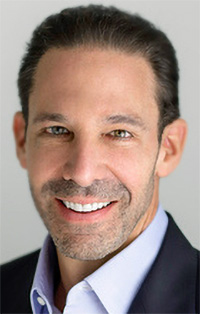 Since last fall, Ethos has actively engaged with ICANN and .ORG communities regarding our proposed acquisition of Public Interest Registry (PIR). Through that process, we demonstrated our desire to ensure that .ORG continues and thrives as an exemplary service for the mission-driven community. ICANN has now declined to consent to the proposed change of control of PIR. more
- Erik Brooks
- Comments: 2
- Views: 42,131
Reporting To God
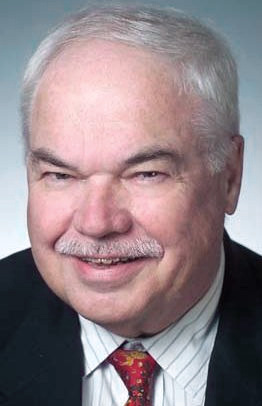 "GOD, at least in the West, is often represented as a man with a flowing beard and sandals. Users of the Internet might be forgiven for feeling that nature is imitating art — for if the Net does have a god he is probably Jon Postel" (The Economist, Feb. 1997) David W. Maher, Senior Vice President, Law and Policy of Public Interest Registry (PIR) offers his reminiscence of the early days of the Internet and attempts made to restructure the Domain Name System — an article he has entitled 'Reporting to God'. more
- David Maher
- Comments: 3
- Views: 42,028
IPv6: Don’t Forget About Your Switches!
 When preparing a network for IPv6, I often hear network administrators say that their switches are agnostic and that there is no need to worry about them. Not so fast. Yes, LAN switches function mainly at layer 2 by forwarding Ethernet frames regardless of whether the packet inside is IPv4 or IPv6 (or even something else!) However, there are some functions on a switch that operate at layer 3 or higher. more
- Dan Campbell
- Comments: 1
- Views: 41,980
A New Project Called Handshake Wants to Decentralize DNS, Says It’s Unlike Previous Attempts
An entity called the Handshake Network claims its newly developed open source project offers advantages over the traditional naming and signature systems. more
- CircleID Reporter
- Comments: 1
- Views: 41,909
ICANN Approves .XXX
The Internet Corporation for Assigned Names and Numbers (ICANN), in its board meeting in San Francisco on Friday, approved the .xxx Top-Level Domain. The ICANN board members voted 8 for, 3 against, 4 abstain. While the decision still has to undergo final review with IANA and the US Department of Commerce, it appear that ICANN's decade-long, most controversial Top-Level Domain application to date has now concluded. more
- CircleID Reporter
- Comments: 0
- Views: 41,866
ccTLD Registries Push Back Against EU’s Disinformation Crackdown
As the European Union presses ahead with its European Democracy Shield (EUDS) to counter foreign disinformation, European country code top-level domain (ccTLD) registries are urging caution. more
- CircleID Reporter
- Comments: 0
- Views: 41,864
Afrinic Faces Receivership Amidst Legal Battles
The African Network Information Centre (Afrinic), the primary body overseeing internet resources for Africa and the Indian Ocean region, has been thrust into receivership. This move comes in the wake of a crippling injunction secured by a South African firm in Mauritius's highest court. more
- CircleID Reporter
- Comments: 2
- Views: 41,841
DNS: An Essential Component of Cloud Computing
 The evolution of the internet is anchored in the phenomenon of new technologies replacing their older counterparts. But technology evolution can be just as much about building upon what is already in place, as it is about tearing down past innovations. Indeed, the emergence of cloud computing has been powered by extending an unlikely underlying component: the more than 30-year-old global Domain Name System (DNS). more
- Dr. Burt Kaliski Jr.
- Comments: 1
- Views: 41,829
An Institute to Combat DNS Abuse
 Over the last few years, it's become clear that abuse of the Domain Name System -- whether in the form of malware, botnets, phishing, pharming, or spam -- threatens to undermine trust in the Internet. At Public Interest Registry, we believe that every new .ORG makes the world a better place. That means anything that gets in the way of that is a threat, and that includes DNS Abuse. more
- Graeme Bunton
- Comments: 4
- Views: 41,804
An Economic Analysis of Domain Name Policy - Part III
"Competitive Bidding for new gTLDs" is the focus of part three of a three-part series based on a study prepared by Karl M. Manheim, Professor of Law at Loyola Law School and Lawrence B. Solum, Professor of Law at University of San Diego. Special thanks and credit to Hastings Communications and Entertainment Law Journal, Vol. 25, p. 317, 2004. ...When new radio frequencies become available for commercial use, federal law requires that licenses be auctioned off to the highest qualified bidder. The FCC does a reasonably good job in designing and conducting spectrum auctions. They are often familiar in format, not much different than found for consumer goods on eBay. In other cases, such as with "Simultaneous Multiple-Round" or "combinatorial bidding," the auction design is fairly complex. Because of complexity in these cases, the FCC sponsors periodic conferences on auction theory and seminars on auction mechanics for potential bidders. more
- CircleID Reporter
- Comments: 0
- Views: 41,779
Trusted Notifiers and the Future of DNS Abuse
 Efforts have been ongoing in the ICANN community to develop a better understanding of its role in the combat of abuse. This theme has been rising in prominence every year since 2018, and 2021 appears to be the tipping point, in which consensus has built around the idea that more can be accomplished in terms of reducing the impact of rogue actors using the Internet for malicious purposes. more
- Mark Datysgeld
- Comments: 0
- Views: 41,758