/ Most Viewed
An Economic Analysis of Domain Name Policy - Part I
"The Root Server is a Scarce Resource" is the focus of part one of a three-part series based on a study prepared by Karl M. Manheim, Professor of Law at Loyola Law School and Lawrence B. Solum, Professor of Law at University of San Diego. Special thanks and credit to Hastings Communications and Entertainment Law Journal, Vol. 25, p. 317, 2004. ...We begin our analysis of domain name policy with a brief excursion into economics. Economics cannot answer all of the questions raised by domain name policy. First, domain name policy must answer to the discipline of network engineering. A useful domain name system must work, and the functionality, scalability, reliability, and stability of the system are determined by the soundness of its engineering. Second, domain name policy must answer to public policy. The Internet is a global network of networks, and Internet policy is answerable to a variety of constituencies, including national governments, the operators of the ccTLDs, Internet Service Providers, information providers, end users of the Internet, and many others. more
- CircleID Reporter
- Comments: 1
- Views: 45,247
Official: Rod Beckstrom Announced as the ICANN President and CEO
During its board meeting today in Sydney, the Internet Corporation of Assigned Names and Numbers (ICANN) announced Rod Beckstrom, the former U.S. cybersecurity chief, as the new President and CEO. Beckstrom will be replacing Dr. Paul Twomey who had been serving this position since March 2003 and announced his resignation earlier this year. Dr Twomey has lately been reported as the primary candidate for heading Australian Government's proposed A$43 billion investment in a new National Broadband Network. more
- CircleID Reporter
- Comments: 0
- Views: 45,227
EFF and Its Use of Propaganda: Could Karl Rove do better? Probably
 The latest post on DearAOL's blog, by EFF activist coordinator Danny O'Brien, is titled "The Shakedown Begins". In short, Danny receives email from overstock.com on an AOL mailbox -- email that he apparently paid overstock $29.95 to receive. And that email arrives with Goodmail certification that AOL recognizes and flags as such. Danny seems to think this is not the sort of email that should be certified by Goodmail, and that AOL should not suddenly turn on Goodmail certification. Suddenly? more
- Suresh Ramasubramanian
- Comments: 9
- Views: 45,189
Is Verisign a Monopoly? Does It Matter?
 Senator Elizabeth Warren and Rep. Jerry Nadler recently wrote a letter complaining that VeriSign overcharges for .com domains due to its market power. They sent it to the Department of Justice and the National Telecommunications and Information Administration (NTIA). While you can make a reasonable case that the claim is true, two more interesting questions are "Why now?" and "Why bother?" more
- John Levine
- Comments: 8
- Views: 45,165
CircleID’s Top Ten Posts of 2011
Here are the top ten most popular news, blogs, and industry updates featured on CircleID in 2011 based on the overall readership of the posts for the year. Congratulations to all the participants whose posts reached top readership and best wishes to the entire community for 2012. Happy New Year! more
- CircleID Reporter
- Comments: 0
- Views: 45,110
The Problem With HTTPS SSL Runs Deeper Than MD5
 The recent research highlighting the alarming practice of Secure Socket Layer (SSL) Certificate Authority (CA) vendors using the MD5 hashing algorithm (which was known to be broken since 2005) has shown a major crack in the foundation of the Web. While the latest research has shown that fake SSL certificates with MD5 hashes can be forged to perfection when the CA (such as VeriSign's RapidSSL) uses predictable certificate fields, the bigger problem is that the web has fundamentally botched secure authentication. more
- George Ou
- Comments: 24
- Views: 44,940
Phishing Attacks Surge Despite Increased Awareness, New Strategies Needed
The alarming rise of phishing attacks has been underscored by a recent study "Phishing Landscape 2023: An Annual Study of the Scope and Distribution of Phishing conducted" by the Interisle Consulting Group, revealing a tripling of such attacks since May 2020. Despite efforts by companies and policymakers to combat this cybercrime, the data suggests that the prevailing strategies are ineffective and worsening each year. more
- CircleID Reporter
- Comments: 0
- Views: 44,932
What Are the Connections to Identified Hafnium Malicious IP Addresses?
 Cyber attackers are very skilled at infiltration. They'd find ways into a house through cracks and holes that the homeowner doesn't know about. Analogically speaking, that's what the new cyber attack group dubbed "Hafnium" did when they identified several zero-day Microsoft Exchange vulnerabilities to get into target networks. With thousands of users for every Microsoft Exchange server, the attack has far-reaching implications. First, it establishes the presence of a new threat actor group in town. What else could they be up to? more
- Jonathan Zhang
- Comments: 0
- Views: 44,901
CircleID’s Top 10 Posts for 2010
Looking back at 2010, here is the list of top ten most popular news, blogs, and industry news on CircleID in 2010 based on the overall readership of the posts (total views as of Jan 1, 2011). Congratulations to all the participants whose posts reached top readership and best wishes to the entire community for 2011. Happy New Year! more
- CircleID Reporter
- Comments: 0
- Views: 44,677
Latest Movers and Shakers in the World of Dot Brands
 There are now well over 100 brands actively using their new dot brand domains to promote their goods and services. The latest release of the Dot Brand Observatory, which is now a complimentary resource, produced by dotStories in collaboration with Verisign and Valideus paints a picture of a vibrant market that is developing significantly. more
- Guillaume Pahud
- Comments: 0
- Views: 44,613
How India’s .IN Domain Rouses from its Slumber
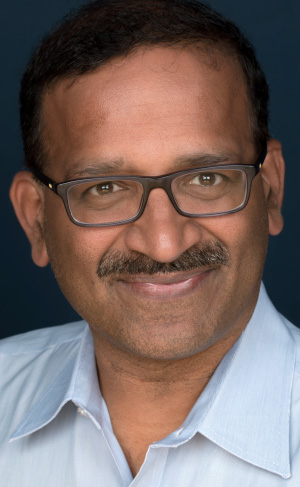 India is one of the world's fastest growing economies, the global leader in outsourcing and the service computing, and home to over a billion people. But when I first met officials from the Indian government to discuss their plans for .IN, India had a total of just about 7,000 .IN registrations, fewer than most small countries have. ...(Compare to 100,000 names registered last month alone) This is one of the most rapid starts of any domain worldwide. In my conversations with senior officials of the Indian Government and the National Internet Exchange of India (NIXI) which manages the .IN Registry, they credited three key decisions that proved critical to the success of the domain's re-launch... more
- Ram Mohan
- Comments: 19
- Views: 44,504
Meta’s $10 Billion Plan to Build the World’s Largest Subsea Cable Network
Meta, the parent company of Facebook, Instagram, and WhatsApp, is embarking on an ambitious $10 billion project to construct a privately-owned, 40,000-kilometer subsea cable network. Dubbed the "mother of all submarine cables," this endeavor aims to bolster Meta's data infrastructure and sidestep geopolitical risks associated with traditional cable routes. more
- CircleID Reporter
- Comments: 0
- Views: 44,401
OneWeb Can’t Come Close to Replacing Starlink in Ukraine, but It Could Complement It
 Elon Musk assured us that he would not stop the Starlink service in Ukraine. But, given his feud with Trump, his criticism of President Zelensky, and his rash actions with DOGE, can he be trusted? (His termination of USAID is estimated to have resulted in 340,000 deaths so far.) When askedabout Musk's influence, Josef Aschbacher, director general of the European Space Agency, said he declined to comment on "the internal politics of the United States and who should influence these decisions" but added "If changes happen and if our US partners and friends are changing their plans, of course we will be ready for plan B. more
- Larry Press
- Comments: 0
- Views: 44,351
Misconfiguration Brings Down Entire .SE Domain in Sweden
A incorrect configuration within Swedens .SE zone caused temporary shutdown of all websites under the country code top-level domain. Web monitoring company, Royal Pingdom, also located in Sweden reports: "Last night, a routine maintenance of Sweden's top-level domain .se went seriously wrong, introducing an error that made DNS lookups for all .se domain names start failing. The entire Swedish Internet effectively stopped working at this point. Swedish (.se) websites could not be reached, email to Swedish domain names stopped working, and for many these problems persist still..." more
- CircleID Reporter
- Comments: 1
- Views: 44,255
The SocialDNS Project… and Why DNS is Not the Phone Book of the Internet
In this article I will explain the motivations behind the SocialDNS Project. I will justify why the DNS system is NOT the phone book of the Internet. More concretely, DNS is not a public directory nor enables search mechanisms over meta-information related to domains. In this line, I will present the advantages of SocialDNS, a naming and directory system that aims to become the phone book of the Web. SocialDNS is NOT another alternative DNS root nor aims to replace the current DNS for resolving domain names. It complements the existing DNS to offer advanced services that are beyond the scope of the existing infrastructure for Web settings. more
- Pedro Garcia Lopez
- Comments: 7
- Views: 44,242