/ Most Viewed
2018 Cybersecurity Venture Capital Investment Reaches Record $5.3B, Nearly Double that of 2016
2018 proved to be an active year for cybersecurity investing, with record highs in dollars invested which included increased average deal size, continued rise of investment outside of the US, a busy M&A;and IPO market. more
- CircleID Reporter
- Comments: 0
- Views: 10,778
Assessing Intent to Cybersquat
 It, perhaps, does not have to be said that cybersquatting is an intentional tort. No one would expect the respondent to admit unlawful intention, but complainant's proof must nevertheless support that contention. The Panel in Hästens Sängar AB v. Jeff Bader / Organic Mattresses, Inc. FA2005001895951 (Forum July 31, 2020) reminds us that it takes more than bad faith use of a domain name to find cybersquatting. more
- Gerald M. Levine
- Comments: 0
- Views: 10,776
Building the Future of Enterprise - Notes from AWS re:Invent 2016
 I attended AWS re:Invent 2016 about three or four weeks ago. Being new to both AWS and to re:Invent I was an outsider again, observing with virgin eyes. This means I learned a lot. Hopefully it means I saw things a bit differently than those more fully entrenched in this new community. So while others have long since covered the product announcements and other major news from the event, I'll take this opportunity to touch on some of the things that struck me as descriptive and/or indicative of the greater trends at play here. more
- Chris Grundemann
- Comments: 0
- Views: 10,775
DNSSEC Workshop Streaming Live from ICANN 55 in Marrakech on Wednesday, March 9, 2016
 What is the current state of DNSSEC deployment around the world and also in Africa? How can you deploy DNSSEC at a massive scale? What is the state of using elliptic curve crypto algorithms in DNSSEC? What more can be done to accelerate DNSSEC deployment? Discussion of all those questions and much more can be found in the DNSSEC Workshop streaming live out of the ICANN 55 meeting in Marrakech, Morocco, on Wednesday, March 9, from 9:00 to 15:15 WET. more
- Dan York
- Comments: 1
- Views: 10,775
eco: 100K PCs Cleaned Through Anti-Botnet Center
 eco, the German ISP association, mentions on its website today that the 100,000th PC was cleaned from infection through its PC cleaning program. Since 15 September, German account holders could visit the website to download tools to clean up computers from digital infections. Botfrei ("botfree", translation WdN) is a cooperation between eco and the German government. First figures seem to prove that this is a successful public-private partnership, worth looking into for other countries as a best practice. more
- Wout de Natris
- Comments: 2
- Views: 10,775
Chinese APT Groups Exploit Global Domains in Sweeping Cyber Campaign
A years-long cyberespionage campaign by a Chinese state-sponsored group known as Salt Typhoon has revealed a striking escalation in both scale and technical sophistication. more
- CircleID Reporter
- Comments: 0
- Views: 10,773
Havana Can Have 5G Before Miami
 Compared to Miami, Havana is an Internet desert, but Havana may have 5G wireless connectivity before Miami. 5G architecture, US politics and policy, and the 5G timetable favor Havana. Let's start with 5G architecture. 5G will require many "small cells" because it uses high-frequency radio signals that don't travel as far as 4G signals and are more easily blocked by obstructions like trees and buildings. more
- Larry Press
- Comments: 0
- Views: 10,772
Call for Participation – ICANN DNSSEC and Security Workshop for ICANN76 Community Forum
Are you doing something interesting with DNS, DNSSEC, or routing security that you would like to share with the larger DNS community at the ICANN 76 meeting in March 2023? If so, please send a brief (1 -- 3 sentence) description of your proposed presentation to dnssec-security-workshop@icann.org by the close of business on Friday, 20 January 2023. Are you doing something interesting with DNS, DNSSEC, or routing security that you would like to share with the larger DNS community at the ICANN 76 meeting in March 2023? more
- Dan York
- Comments: 0
- Views: 10,770
A Simple Suggestion for President Biden Regarding the Cuban Internet
Last September, I asked what had happened to the proposal for a branch connecting the ARCOS undersea cable, which has a landing point in North Miami Beach, to Cojimar, Cuba. The consortium that operates the cable had applied for permission to connect Cuba in July 2018, and the FCC granted a request for streamlined processing, which should have taken less than 45 days, but nothing happened until September 2020 when the application was referred to a Justice Department committee... more
- Larry Press
- Comments: 0
- Views: 10,768
The Excruciating Slow Rise of DNSSEC: A Dialogue With Roy Arends About Myths, Realities and Hard Lessons
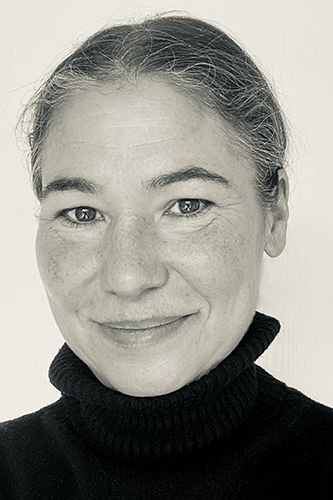 DNSSEC promised to secure DNS with cryptographic proof, yet messy rollouts, outages, and hype backlash ruined its reputation. This piece argues that storytelling and emotions shape adoption as much as specs, and that automation enables a reset. more
- Barbara Jantzen
- Comments: 0
- Views: 10,767
Six Approaches to Creating an Enterprise Cyber Intelligence Program
 As few as seven years ago, cyber-threat intelligence was the purview of a small handful of practitioners, limited mostly to only the best-resourced organizations - primarily financial institutions that faced large financial losses due to cyber crime - and defense and intelligence agencies involved in computer network operations. Fast forward to today, and just about every business, large and small, is dependent on the Internet in some way for day-to-day operations, making cyber intelligence a critical component of a successful business plan. more
- Josh Ray
- Comments: 0
- Views: 10,766
Now That Kurt Pritz Has Resigned over Conflict of Interest, Will a Transparent Investigation Follow?
 Yesterday ICANN announced that its new CEO Fadi Chehade accepted ICANN Chief Strategy Officer Kurt Pritz's resignation over conflict of Interests -- will a transparent investigation follow? Otherwise, what else and what next? In a statement on its ICANN website, Fadi Chehade states: "Kurt has submitted his resignation because of a recently identified conflict of interest". more
- Khaled Fattal
- Comments: 2
- Views: 10,766
Does Apple’s Cloud Key Vault Answer the Key Escrow Question?
 In a recent talk at Black Hat, Apple's head of security engineering (Ivan Krsti?) described many security mechanisms in iOS. One in particular stood out: Apple's Cloud Key Vault, the way that Apple protects cryptographic keys stored in iCloud. A number of people have criticized Apple for this design, saying that they have effectively conceded the "Going Dark" encryption debate to the FBI. They didn't, and what they did was done for very valid business reasons -- but they're taking a serious risk... more
- Steven Bellovin
- Comments: 0
- Views: 10,765
An Example of Effective Government Support for New Communication Technology
The October Senate Commerce, Science, and Transportation Committee hearing on the commercial satellite industry provides a current example of effective government support of new communication technology. The hearing focused on broadband access, primarily from low-Earth orbit (LEO) satellites. Witnesses from four companies - Intelsat, OneWeb, ViaSat and SpaceX - testified and the tone of the hearing was set by the opening statements of Committee Chairman John Thune and Ranking Member Bill Nelson. more
- Larry Press
- Comments: 0
- Views: 10,764
In Defense Of Face To Face
 I recently caused a stir in a small but passionate community. I was speaking about a topic I've discussed many times before: the need for more effective public input into the Internet Corporation for Assigned Names and Numbers, the nonprofit corporation that controls the Internet's protocols, addresses and domain name system. "We want public input into ICANN," I had said at a conference at Oxford University. Then, I referred to ICANN's new At-Large Advisory Committee, set up to foster public input and on which I sit: "We've got a mechanism where (the public) can have a seat on the task forces, liaisons to working groups, be part of the policy making process -- I see that in many ways as more important than having a seat on the board." more
- Esther Dyson
- Comments: 0
- Views: 10,762