/ Most Viewed
U.S. Government Officials Raise Concerns Over Intel’s Long Delay Informing Government on Chip Flaws
Latest reports suggest Intel Corporation did not inform U.S. cyber security officials about the so-called Meltdown and Spectre chip security flaws until they were leaked to the public six months after Intel was notified about the problem. more
- CircleID Reporter
- Comments: 0
- Views: 7,355
U.S. Senator Inquiring Into Friday’s Crippling Cyberattack
U.S. Sen. Mark R. Warner (D-VA), a member of the Senate Select Committee on Intelligence and co-founder of the bipartisan Senate Cybersecurity Caucus, has released a letter asking three federal agencies for information on the tools available that prevent cyber criminals from compromising consumer products, such as Internet of Things (IoT) devices. more
- CircleID Reporter
- Comments: 0
- Views: 7,353
Best Practices for Implementing IPv6 and Avoiding Traffic Exposures
 There has been a lot of discussion lately about the potential for IPv6 to create security issues. While there are definitely some security risks of IPv6 deployment, a carefully considered implementation plan can help mitigate against security risks. As we approach World IPv6 Launch tomorrow, I thought it prudent to share the below described incident that iDefense recently observed. more
- Rick Howard
- Comments: 0
- Views: 7,352
Rural America is Losing Patience
 From all across the country, I'm hearing that communities without broadband are tired of waiting for a broadband solution. Local broadband advocates and politicians tell me that folks with little or no broadband are hounding them about when they are going to see a broadband solution. A large part of the frustration is that folks have heard that broadband is coming to rural America but aren't seeing any local progress or improvement. more
- Doug Dawson
- Comments: 0
- Views: 7,351
Healthy Domains Initiative Isn’t Healthy for the Internet
 We had high hopes that the Domain Name Association's Healthy Domains Initiative (HDI) wouldn't be just another secretive industry deal between rightsholders and domain name intermediaries. Toward that end, we and other civil society organizations worked in good faith on many fronts to make sure HDI protected Internet users as well. Those efforts seem to have failed. more
- Mitch Stoltz
- Comments: 0
- Views: 7,348
ICANN Turning 25 - Share Your Memories!
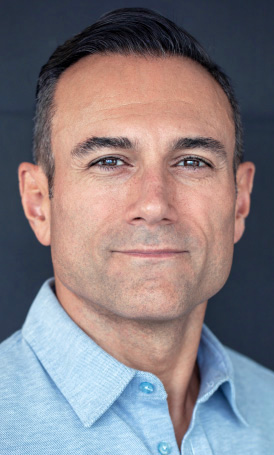 This month marks the 25th anniversary of the formation of the Internet Corporation for Assigned Names and Numbers (ICANN). A quarter of a century ago, on September 30, 1998, ICANN was officially incorporated as a California non-profit corporation. To commemorate this landmark event, ICANN will be hosting celebrations during ICANN78 in Hamburg, Germany, 21-26 October. more
- Ali Farshchian
- Comments: 1
- Views: 7,347
gTLD Applicant Strategy: Clarifying Financial Questions (Part 1)
 It is certainly proving to be a long and winding road for the 1923 gTLD applications submitted to ICANN. Glitches, delays and now a very high percentage of applications will very shortly be receiving clarifying (financial) questions on 26 November. Currently a very high percentage of applicants have not scored the required 8 points to pass financial evaluation. This is the next huge challenge for applicants. more
- Phil Buckingham
- Comments: 0
- Views: 7,347
Overview of the Global Domain Market, Afnic Study
Afnic, the French Network Information Centre and manager of the .fr TLD, today published its report on the global domain market in 2016. more
- CircleID Reporter
- Comments: 0
- Views: 7,341
Towards a More Fully Accountable and Transparent ICANN
 ICANN held its second international meeting of 2012 last week in Prague, Czech Republic. While the agenda focused heavily on issues related to new gTLDs and on welcoming incoming CEO Fadi Chehade, ICANN also conducted a community consultation on its accountability and transparency reviews. more
- Paul Diaz
- Comments: 2
- Views: 7,341
Technology: Doomsday or Godsend – the Choice Is Ours
 Following the American insurrection and the role the media played -- social media, particularly the "doomsday scenario," started to appear again in relation to technological developments. Only a few years ago, a group of hi-tech companies, including Tesla, warned against the negative aspects of artificial intelligence (AI). Other technologies that could seriously affect human developments include gene editing, nanotechnology and synthetic biology. more
- Paul Budde
- Comments: 0
- Views: 7,340
Internet Society Seeks Nominations for 2020 Board of Trustees
 Are you passionate about working toward a stronger, open Internet available to everyone? Do you have experience in Internet standards, technology, development or public policy? If so, please consider applying for a seat on the Internet Society Board of Trustees. The Internet Society serves a pivotal role in the world as a leader on Internet policy, technical, economic, and social matters, and as the organizational home of the Internet Engineering Task Force (IETF). more
- Dan York
- Comments: 0
- Views: 7,340
World Anti Counterfeiting Day… Staggering Costs Fueled by the Web
 Established in 1998 by the Global Anti-Counterfeiting Group (GACG), "World Anti Counterfeiting Day" is held annually in June to raise awareness of the international impacts of counterfeiting and piracy. According to the International Chamber of Commerce (ICC), the cost of counterfeiting is a $600 billion a year problem. MarkMonitor estimates the cost of online counterfeit trade at $200 billion annually. more
- Teresa Chen
- Comments: 0
- Views: 7,339
Broadband Labels are Here
On October 10, all ISPs in the United States were supposed to have implemented and posted broadband labels. The labels were required as part of the Infrastructure Investment and Jobs Act. Large ISPs had to post labels six months ago, and now the requirement is for all ISPs. I looked at the ISPs in a few counties I'm very familiar with, and I found a few ISPs in each county that have not posted labels that I can find on their website. more
- Doug Dawson
- Comments: 0
- Views: 7,337
IANA: Keeping the Ultimate Objective in Mind
 Later this week, ICANN's Chartering Organizations will indicate whether they will support the third draft proposal of the CCWG-Accountability Work Stream 1 Recommendations. This is a significant moment in the IANA transition process. Support for the accountability proposal by the ICANN community will mean that we are very close to a point when the transition can move to its next phase. more
- Kathy Brown
- Comments: 0
- Views: 7,335
Akram Atallah Named Head of ICANN’s New Generic Domains Division
In a post today, ICANN's CEO, Fadi Chehadé, has announced the creation of a new division within ICANN, called Generic Domains Division, in order "to handle the tremendous increase in scale resulting from the New gTLD Program." Akram Atallah, who is currently the Chief Operating Officer (COO), will become divisional President of the Generic Domains Division that will include gTLD Operations, DNS Industry Engagement, and Online Community Services. more
- CircleID Reporter
- Comments: 0
- Views: 7,332