/ Most Viewed
I Had a Dream: ICANN Has 2 Billion Reasons to Support Developing Countries
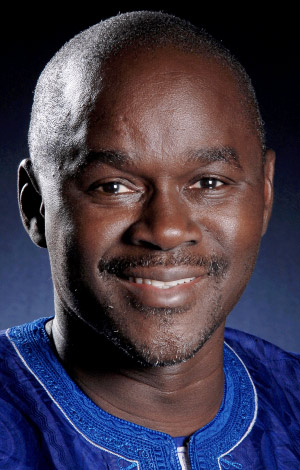 Last week, the 50th anniversary of Rev. Martin Luther King's famous "I have a dream" speech was marked with much fanfare. Well, I too had a dream the other day, almost two weeks ago. I dreamt I was in a conference. Which is no news. The conference was an ICANN-sponsored conference. No news there either; I've been to many ICANN meetings. And it was on food security! An ICANN-sponsored conference on food security? more
- Katim Seringe Touray
- Comments: 2
- Views: 12,431
2nd Round gTLDs: the Good, the Bad, and the Ugly
 This post outlines the advantages (good) and threats (bad) that can make or break a gTLD, and the eternal fact that some applications will doom themselves to failure (ugly). The Good... Waiting until the second round to apply for a gTLD may end up being a virtue for the following reasons... more
- Alex Tajirian
- Comments: 0
- Views: 12,430
Internet Security and the Multistakeholder Approach: Is It Attainable?
 Internet Security is a topic that has drawn a lot of attention over the past year. As awareness grows that cooperation is necessary, it dawns on people that there are many and very different stakeholders involved, stakeholders that may never have met before. Let alone have cooperated. An example of an approach is the National Cyber Security Council (NCSC) that was installed in The Netherlands on 30 June. This is a high level council that will give advice to public as well as private entities on how to better secure themselves and society at large against cyber attacks and how to become more resilient. However, without the right approach it is doomed to become a talking shop. more
- Wout de Natris
- Comments: 1
- Views: 12,430
Security Firm Recovers Over 272 Million Stolen Credentials from a Collector
The latest discovery came while researchers at a security firm found a young Russian hacker bragging in an online forum that he had collected and was ready to give away a far larger number of stolen credentials that ended up totalling 1.17 billion records, Reuters reports. more
- CircleID Reporter
- Comments: 0
- Views: 12,429
The Growing Risk of Space Debris: How Satellite Proliferation Is Polluting Low-Earth Orbit
 Low-orbit space is growing increasingly crowded. Starlink has over 7,100 satellites in orbit and has plans to grow to 30,000. Project Kuiper has plans for a constellation of 3,232 satellites. One Web's first-generation constellation has 648 satellites, with plans to grow to over 6,300 satellites. The Thousand Sails (Qianfan) constellation is planning for up to 15,000 satellites. Numerous countries and businesses are launching or planning for smaller constellations for a wide variety of purposes.
more
- Doug Dawson
- Comments: 0
- Views: 12,423
Who Are the Major New gTLD Applicants and… (Part Two: Uniregistry)
 This, the second in a series of articles looking at portfolio gTLD applicants, is focusing on Uniregistry. At the moment, the Uniregistry press machine is buzzing, like an angry bee, about two of the 50 TLDs in its portfolio: you may have read about .TATTOO and .SEXY. Yes! .SEXY but, according to Uniregistry, it is nothing to do with sex; it is about fashion, modelling and attitude. more
- Jean Guillon
- Comments: 2
- Views: 12,423
US Laws Remain Set to Govern Upcoming Multilingual Internet via New gTLDs
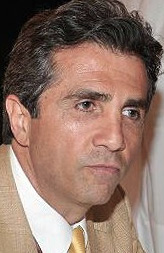 U.S. laws remain set to govern the coming multilingual internet through ICANN's new generic Top-Level Domains (gTLDs) yet the ramifications of this fact if you are Chinese, Arab, Indian, Russian or other are huge as ICANN published its 7th Applicant Guidebook in preparation for its board consideration on June 20th during the Singapore meeting. To many nations and citizens around the world, especially the non-English speaking communities, this will be seen as a strategically alarming direction for the global Internet. more
- Khaled Fattal
- Comments: 1
- Views: 12,423
New Generic Top-Level Domains and Internet Standards
 The recent decision by ICANN to start a new round of applications for new generic Top-Level Domains (gTLDs) is launching a round of questions on the IETF side about its consequences. One possible issue may be with vanity gTLDs like apple, ebay etc. Some expect that every Fortune 1,000,000 company will apply for its own TLD. My guess is rather the Fortune 1,000 for a start, but this does not change the nature of the issue, i.e. those companies may want to use email addresses like user@tld. more
- Patrick Vande Walle
- Comments: 1
- Views: 12,420
World Notices That Verisign Said Three Months Ago That They Had a Security Breach Two Years Ago
 The trade press is abuzz today with reports about a security breach at Verisign. While a security breach at the company that runs .COM, .NET, and does the mechanical parts of managing the DNS root is interesting, this shouldn't be news, at least, not now. Since Verisign is a public company, they file a financial report called a 10-Q with the SEC every quarter. According to the SEC's web site, Verisign filed their 10-Q for June through September 2011 on October 28th. more
- John Levine
- Comments: 2
- Views: 12,419
No Virginia, You Have No Duty to Secure Your WiFi Access Point
 Every now and again a report flies across the network about the police breaking down someone's door and attempting to arrest the home owner for bad things online - assuming that whatever happened from that person's Internet connection is their fault. Now there are lots of problems with this - lots of problems. But one of the big ones is that anyone can access an open access point... more
- Robert Cannon
- Comments: 0
- Views: 12,418
Microsoft Announces $5 Billion Investment in IoT Over the Next Four Years
Microsoft will invest $5 billion in the Internet of Things over the next four years, said Julia White, Corporate Vice President, via a blog post today. more
- CircleID Reporter
- Comments: 0
- Views: 12,416
ICANN Issues Guidance to Domain Registrars and Registries in Light of Hurricane Maria
 ICANN has issued a guidance notice to registrars and registries in relation to Hurricane Maria, which caused massive damage throughout the Caribbean. This isn't the first time that this has happened, with a previous incident in Asia triggering action from both registrars and registries to give domain name registrants impacted by the natural disaster breathing space. more
- Michele Neylon
- Comments: 0
- Views: 12,414
Trademark Overreaching and Faux Cybersquatting Claims
 Trademarks can be strong in two ways: either inherently distinctive (arbitrary or fanciful marks), or composed of common elements that have acquired distinctiveness (descriptive or suggestive marks). Trademarks can also be weak in two ways: either composed of common elements, or lacking significant marketplace presence other than in their home territories. Panelists have seen them all, even by respondents alleging trademark rights registered later in time to complainant's. more
- Gerald M. Levine
- Comments: 1
- Views: 12,414
Trademark Clearinghouse Debate is Not About the Trademark Clearinghouse!
 A comment period on the "strawman", a proposal to update the Trademark Clearinghouse (TMCH), is currently underway. Originally planned to end on January 11, it has been extended by ICANN to February 5. The comment portal has so far received 89 email contributions. A fair number, but the real story is how many major brands have spoken out on the proposed amendments to the TMCH model. more
- Stéphane Van Gelder
- Comments: 1
- Views: 12,407
Google Playing to Win in the 700 MHz Auctions
 Many say Google will bid to lose in the upcoming 700 MHz auctions and many more are equivocating. The idea is Google's entry alone will induce enough openness, and besides they couldn't afford to become an operator. This shows a total lack of understanding! more
- Brough Turner
- Comments: 1
- Views: 12,406