/ Most Viewed
Framing New gTLDs’ Marketing Message
 In an earlier essay, I outlined a focused, cooperative marketing strategy that would be a first step for marketing new gTLDs. After that first initiative, gTLD registries' marketing strategy must focus on the complementarities between .com, and new neutral (such as .global and .web) and branding and labeling gTLDs. The legacy domains and the newcomers can work together nicely. If we don't realize this, all Internet users will lose out. more
- Alex Tajirian
- Comments: 0
- Views: 9,846
Observations in and Around the UN Broadband Commission
 The 7th meeting of the UN Broadband Commission in Mexico City was again a good combination of announcements about new plans, results of previously undertaken activities, and views on the future of broadband. Very noticeable was the enthusiasm and acknowledgement of the impact of ICT, and of broadband in particular. In September 2012 the Commission launched its working group on gender equality. Research undertaken by the various members of the workgroup provided somewhat similar results. more
- Paul Budde
- Comments: 0
- Views: 9,845
W3C Re-Launches as a Public-Interest Non-Profit Organization
The World Wide Web Consortium (W3C) formed a new public-interest non-profit organization in 2023, allowing additional partners from around the world beyond Europe and Asia. The organization preserves the existing core process and mission of the Consortium, which is to develop open web standards with contributions from W3C Members, staff, and the international community. more
- CircleID Reporter
- Comments: 0
- Views: 9,844
Indonesia’s Largest Telecom Provider Leaks Large Portions of the Global Routing Table
Earl Zmijewski from Renesys reports: Yesterday, Indosat, one of Indonesia’s largest telecommunications providers, leaked large portions of the global routing table multiple times over a two-hour period. This means that, in effect, Indosat claimed that it “owned” many of the world’s networks. Once someone makes such an assertion, typically via an honest mistake in their routing policy, the only question remaining is how much of the world ends up believing them and hence, what will be the scale of the damage they inflict? more
- CircleID Reporter
- Comments: 0
- Views: 9,844
Live On Monday, 25 June - DNSSEC Workshop at ICANN 62 in Panama
 With the DNSSEC Root Key Rollover coming up on October 11, how prepared are we as an industry? What kind of data can we collect in preparation? What is the cost-benefit (or not) of implementing DANE? What can we learn from an existing rollover of a cryptographic algorithm? All those questions and more will be discussed at the DNSSEC Workshop at the ICANN 62 meeting in Panama City, Panama, on Monday, June 25, 2018. more
- Dan York
- Comments: 0
- Views: 9,843
The Role of FttH in the Development of 5G
As the roll out of FttH remains a slow process, it is no wonder that more and more people are looking towards mobile as a potential alternative. Obviously, mobile communication has improved over recent years in providing excellent access to broadband; and it has also become more affordable. At the same time, there is the fabulous hype about 5G, and the PR and media machines of the vendors involved make you believe that this will become a real competitor to the slow moving FttH developments. more
- Paul Budde
- Comments: 0
- Views: 9,843
Case Studies from the UN Broadband Commission
The Broadband Commission for Digital Development, in partnership with ITU, has released its first country case studies looking in-depth at the state of broadband development in four economies and examining links between broadband and the UN Millennium Development Goals. The case studies look at the effect of broadband connectivity on economic growth and access to basic services like education and health. They offer regulatory guidance and best practices, showcasing success stories and lessons learned. more
- Paul Budde
- Comments: 0
- Views: 9,843
Nov 25th Deadline To Nominate Technical Community Reps for IGF Multistakeholder Advisory Group (MAG)
Would you (or someone you know) be interested in representing the "technical community" on the Multistakeholder Advisory Group (MAG) of the Internet Governance Forum (IGF)? If so, the deadline to nominate someone (including yourself) is Monday, November 25, 2013. Under-Secretary-General Wu Hongbo of UNDESA has issued a statement on the Internet Governance Forum (IGF) Multistakeholder Advisory Group (MAG) renewal process for 2014 with the stated aim of rotating one third of the MAG members. more
- Dan York
- Comments: 0
- Views: 9,842
ICANN’s Comment Period on Accountability Process Seeks Scope Limitations
 Bowing to unprecedented community pressure in the form of a unanimous letter questioning its staff-developed Accountability Process, as well as a reconsideration request filed with the Board, on September 5th ICANN issued a notice titled "Public Comment Invited: Enhancing ICANN Accountability Process". The notice opens a 21-day public comment period on that staff proposal. However, ICANN staff apparently cannot resist asserting some form of top-down control even what that very conduct is at issue, and the notice and accompanying explanation contain attempts to restrict and unduly channel the scope of community comment. more
- Philip S. Corwin
- Comments: 1
- Views: 9,840
Long-held Domain Names Transferred to Complainants
 There has lately been a number of long-held investor registered domain names transferred to complainants under the Uniform Domain Name Dispute Resolution Policy (UDRP). Two of the domain names were registered 23 years ago. This has provoked several commentators to complain that the UDRP is tilted in favor of mark owners and trademark-friendly panelists expressing hostility to the domain industry. I think we have to dig deeper than this. more
- Gerald M. Levine
- Comments: 0
- Views: 9,839
AFRINIC at the Crossroads: ISPA Endorses Candidates Ahead of Pivotal Board Election
After three years of turmoil, AFRINIC - the regional internet registry for Africa - has opened online voting for a new board, marking what could be a turning point for the embattled organisation. The election, running from September 10 to 12, follows a failed attempt earlier this year that was annulled amid allegations of vote manipulation and procedural irregularities. more
- CircleID Reporter
- Comments: 0
- Views: 9,837
Navigating the Multistakeholder Approach: The ICANN Community’s Role in Global Internet Governance
 In a world where the internet is central to communication, innovation, and economic growth, governing this vast digital ecosystem is a complex challenge. The multi-stakeholder approach, which involves governments, private entities, civil society, technical experts, and end-users, has long served as the cornerstone of Internet governance, ensuring that decision-making remains open and inclusive. more
- Pari Esfandiari
- Comments: 0
- Views: 9,836
Security Experts, Privacy Advocates Hopeful Rollout of 5G Can Eliminate Surveillance Vulnerabilities
Security experts and privacy advocates see the rollout of the new 5G wireless network as a possible solution to eliminate surveillance vulnerabilities that allow spying on nearby phone calls. more
- CircleID Reporter
- Comments: 0
- Views: 9,835
Building a Secure Global Network
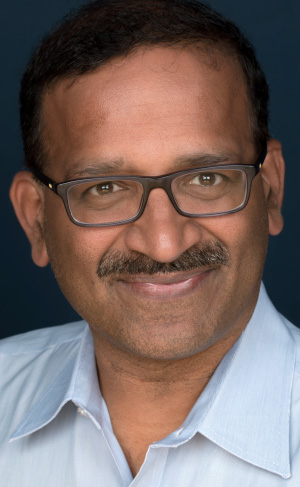 Recently, the DNS has come under an extensive attack. The so-called "DNSpionage" campaigns have brought to light the myriad methods used to infiltrate networks. These attacks employed phishing, system hopping via key exfiltration, and software zero day exploits, illustrating that many secure networks may not be fully protected. more
- Ram Mohan
- Comments: 0
- Views: 9,834
Rodney Joffe Wins a Well-Deserved Mary Litynski Award
 Every year M3AAWG gives an award for lifetime work in fighting abuse and making the Internet a better place. Yesterday at its Dublin meeting they awarded it to Rodney Joffe, who has been quietly working for over 20 years. I can't imagine anyone who deserves it more. more
- John Levine
- Comments: 0
- Views: 9,834