/ Most Viewed
Networks - The Next Challenge in Digital Transformation
As digital transformation has been picking up momentum, leading analysts such as 451 Research have suggested that hybrid multi-clouds and automated DevOps will become key constituents powering enterprises in the new era. At the heart of these enabling technologies lies Lifecycle Service Orchestration (LSO) designed for near-autonomous application deployment across hybrid infrastructures consisting of traditional on-premise data centers and public clouds. more
- Juha Holkkola
- Comments: 0
- Views: 12,599
Number of Chinese Internet Users Reaches 829 Million, More Than Double the Population of the US
Latest update from the China Internet Network Information Center (CNNIC) reports the total number of Chinese internet users reached 829 million at the end of 2018. more
- CircleID Reporter
- Comments: 0
- Views: 12,595
Neelie Kroes, the EU, Cloud Computing, Regulation and Good Ears
 In her blog EU Commissioner Neelie Kroes blogs on her stance on cloud computing. In short: this is a good development which the EU will embrace and advocate, but may need regulation in order to ensure a safe environment for industry and individuals in the cloud. Here's some thoughts on that. more
- Wout de Natris
- Comments: 1
- Views: 12,594
March 2019: Which New gTLDs Are Becoming Mainstream?
 I went through the exciting exercise of checking all March 2019 new gTLD reports to extract which domain name extension shows an interesting learning curve (or something strange happening). This is what I noticed for the 20 categories of TLDs... In the list of new gTLDs for Politics, the first new gTLD to have been delegated from the ICANN new gTLD program - .GURU (63,000) - lost 2,000 registrations since January 2018 (not 2019). more
- Jean Guillon
- Comments: 0
- Views: 12,592
Next on the US Telecoms Agenda: Downgrading Broadband
 The American industry lobby (AT&T, Verizon, and Comcast) successfully pushed the regulator to get rid of net neutrality, but they are not stopping there. They can sense the opportunity under the Trump Administration to roll further back any regulations that stand in the way of maximising their profits. As all three largely enjoy geographic monopolies in their regions of operation, there is little competition driving innovation forward, so their aim is to milk the networks that they currently have in place for as long as possible. more
- Paul Budde
- Comments: 1
- Views: 12,591
Nobody Has Proposed a Sustainable Model for Internet Governance Yet
 The idea that the US would maintain a strategic position in the Internet was always a pipe dream. Allowing the US to pick the DNS contractors is one thing, allowing the US the power to arbitrarily shut countries off the net is quite another. And that is what deployment of DNSSEC and the rPKI under the current models would do. The idea that some US congressman would promote a bill to force ICANN to drop Cuba, Palestine or the enemy of the moment off the Internet is really not far fetched. The US government was just shut down for over two weeks in a bizarre act of political theater. more
- Phillip Hallam-Baker
- Comments: 1
- Views: 12,591
The Cold-War Fight Against Domaining Continues
 "First they ignore you, then they laugh at you, then they fight you, then you win!" quote by Gandhi pretty much summarizes the evolution of the domain name monetization and development business. I have watched this business come of age for more than half a decade... In the beginning nobody cared... then when people started talking about how great it was, 'smart people' and the "legitimate web" laughed. Then the trucks with money showed up... A significant double-digit percentage of global Internet traffic is now owned by domain holders with generic names. So the fight is on. more
- Frank Schilling
- Comments: 4
- Views: 12,590
If You Build It, They Will Come.
 Only two years after signing the DNS root zone, the powerful lure of a secure global infrastructure for data distribution is starting to reveal itself. It is illustrated clearly by two proposed technical standardizations that seek to leverage secure DNS. To some degree these developments highlight the strength of DNS institutions and how they might fill gaps elsewhere in the Internet's governance. But an increasing reliance upon and concentration of power in the DNS also makes getting its global governance correct even more important. more
- Brenden Kuerbis
- Comments: 2
- Views: 12,589
Verizon: Voice is Dying
 Ivan Seidenberg, Verizon CEO, saying "voice is dying" is a defining moment in telecom history. He didn't use those words, but his comments at Goldman Sachs are clear "we have to pivot and make a shift from the voice business to the data business and eventually to the video business. ... we must really position ourselves to be an extremely potent video-centric asset." more
- Dave Burstein
- Comments: 0
- Views: 12,583
Tucows Comments on ICANN Applicant Guidebook
 The latest ICANN Applicant Guidebook was released in mid-April and covers the introduction of new generic Top Level Domains (gTLD). The introduction of new gTLDs has been an ongoing conversation for more than a decade. We have an opportunity to approve the final draft in time for consideration of the new gTLD implementation program during the ICANN Board meeting, which will be held on Monday, 20 June 2011, in Singapore. We submitted our comments yesterday and wanted to share them with you. more
- Elliot Noss
- Comments: 2
- Views: 12,582
Facebook and Apps vs. Domains
 This debate never got heated during the NewDomains.org conference in Munich last month. One might speculate that it was largely because most in the audience and on the panel, support and believe in the existence of both. There is no need to make a direct either/or comparison. What sets Facebook and Apps apart from existing popular Top-Level Domains (TLDs) is the concept of a closed environment in which users can interact with the technology and each other in a dedicated space. more
- Jennie-Marie Larsen
- Comments: 0
- Views: 12,580
Facebook Announces Global Digital Currency, Financial Infrastructure Built on Blockchain Technology
Facebook today announced a newly formed subsidiary, named Calibra, to provide financial services. The first product Calibra will introduce, according to the company, is a digital wallet for Libra. more
- CircleID Reporter
- Comments: 0
- Views: 12,579
What Is the Potential Business Impact of New gTLDs On Existing TLDs?
 How will the business of existing top-level domains (TLDs) be impacted by the new gTLDs? Someone asked me this simple question and I was very surprised to see that my online searches couldn't easily find many detailed articles or research related to that point. more
- Dan York
- Comments: 2
- Views: 12,578
First Broad Internet Census Since 1982 Reveals Surprising Number of Unused IPv4 Addresses
In the upcoming Internet Measurement Conference being held next week in Vouliagmeni, Greece, a team of six researchers will be presenting a paper called "Census and Survey of the Visible Internet," based on a comprehensive census of more 2.8 billion allocated IP addresses on the Internet. The research is claimed to be the first comprehensive census of its kind in more than two decades. more
- CircleID Reporter
- Comments: 5
- Views: 12,578
Calling Africa: ICANN’s New Approach to Africa Is a Welcome and Significant Opportunity
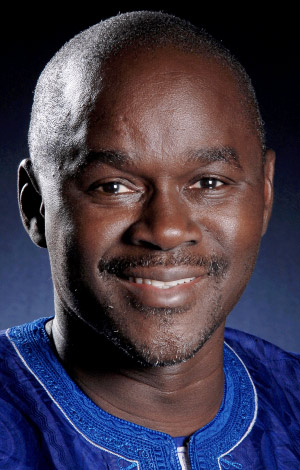 The announcement last month of a new approach by the Internet Corporation for Assigned Names and Numbers (ICANN) to Africa is welcome, and significant for a number of reasons. Africa must participate in ICANN's activities to help shape its policies, and benefit from the domain name industry (estimated at $2 billion in 2008), where it lags behind other regions, given the few African registrars, and that there are no generic top-level domain names (gTLDs) registries that are African. more
- Katim Seringe Touray
- Comments: 1
- Views: 12,577