/ Most Commented
FCC Proposes Framework for Direct Satellite Access to Cell Phones - Setting the stage for ‘Single Network’ Connectivity
The Federal Communications Commission (FCC) has proposed rules and guidelines to enable satellite companies like SpaceX, T-Mobile, AST Spacemobile, and Lynk to offer satellite services directly to cell phones. more
- CircleID Reporter
- Comments: 0
- Views: 13,196
Analysis of 7.5 Trillion DNS Queries Reveals Public Resolvers Dominate the Internet
A recent report by NS1 provides a comprehensive look at global DNS traffic trends. It reveals that public resolvers dominate the internet, accounting for nearly 60% of recursive DNS usage. Telecom giants represent nearly 9%, with Google the clear front-runner at a little over 30%, followed by Amazon Web Services at 16%. more
- CircleID Reporter
- Comments: 0
- Views: 22,128
Amazon Announces Project Kuiper Customer Terminals with Speeds up to 1Gbps
Amazon has announced the development of a range of customer terminals for its broadband satellite network, Project Kuiper. The company's first device is a "standard" customer terminal that measures less than 11 inches square and one inch thick and weighs less than five pounds. more
- CircleID Reporter
- Comments: 0
- Views: 11,059
SpaceX and T-Mobile to Test Satellite-To-Cell Service This Year
SpaceX and T-Mobile are set to begin testing their satellite-to-cell service this year, an executive of Elon Musk's company confirmed Monday. Jonathan Hofeller, SpaceX vice president of Starlink Enterprise Sales, made the announcement during a panel at the Satellite 2023 conference in Washington, D.C. more
- CircleID Reporter
- Comments: 0
- Views: 10,115
Submarine Cable Resiliency in the Face of Disruptions
 I have on my desk a rather small tube. It's a little under 2cm in diameter, 6 cm long, and looks like it's made from a dull white polycarbonate material. At the end, I can see a copper inner tube, and inside that, another polycarbonate layer, and then a smaller steel tube that holds a thin steel thread and some fibre optic cables. There are no layers of steel jacketing, nor any other additional wrapping at all. more
- Geoff Huston
- Comments: 0
- Views: 9,773
Grenadian Prime Minister Calls for Caribbean Businesses to Invest in AI
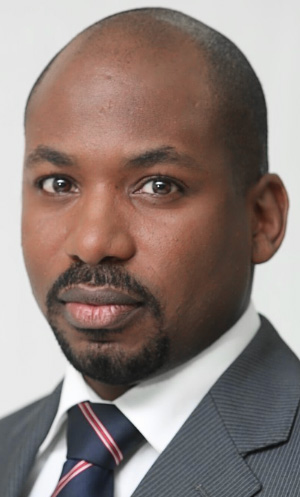 Grenadian Prime Minister Dickon Mitchell is calling for Caribbean policymakers and business leaders to recognise the significance of artificial intelligence technologies. Artificial intelligence, or AI, refers to the ability of computer systems to do tasks that typically require human intelligence, such as learning, reasoning, problem-solving, and decision-making. more
- Gerard Best
- Comments: 0
- Views: 5,862
Quantifying the Benefits of Telemedicine
 There was a recent article in JAMA Network Open, part of the monthly journals of the American Medical Association, that reported on a large study to quantify the benefits of using telemedicine with cancer patients. The study was conducted at National Cancer Institute - Designated Comprehensive Cancer Center in Florida from April 2020 through June 2021. The study wanted to quantify the cost savings for patients that were able to conduct visits via telehealth rather than drive to the cancer center. more
- Doug Dawson
- Comments: 0
- Views: 5,535
Caribbean Infrastructure Investment Must Keep Pace With Global Digital Trends
Caribbean islands are known for white-sand getaways, but one of the region's best-kept secrets remains buried under its picturesque beaches. That hidden treasure is the Caribbean's complex network of subsea Internet cables, worth their weight in gold because they connect these small-island nations to each other and to the global Internet. With that Internet connectivity comes the hope of a better life for millions of Caribbean citizens, and regional ambitions of global competitiveness. more
- Gerard Best
- Comments: 0
- Views: 7,532
OARC-40: Notes on the Recent DNS Operations, Analysis, and Research Centre Workshop
OARC held a 2-day meeting in February, with presentations on various DNS topics. Here are some observations I picked up from the presentations in that meeting... In a world where every DNS name is DNSSEC-signed, and every DNS client validates all received DNS responses, we wouldn't necessarily have the problem of DNS spoofing. Even if we concede that universal use of DNSSEC is a long time off ... more
- Geoff Huston
- Comments: 0
- Views: 19,098
Connecting Every Home in Africa - Starlink Backhaul?
 The vision of Kenyan ISP Poa! Internet is "to bring internet to every home in Africa." Poa! offers unlimited, uncapped, 4 Mb/s fixed wireless connectivity to homes for 1,500 KSh ($11.64) per month plus a one-time installation fee of 3,500 KSh ($27.16). But wait, there's more. They provide a dual-SSID router, and the home SSID is used by trusted family members, and the open street SSID is for others. Street users get 100 MB of free data each day and are charged 15 KSh ($.16) per GB with no expiry .data if they exceed 100 MB on a given day. more
- Larry Press
- Comments: 0
- Views: 10,991
A Snapshot of the Domain Industry in 2023
 The year 2022 was a turning point. We started emerging from the covid emergency and could return to traveling and meeting our peers at industry events worldwide. But it was also a year of taking stock, with numbers returning to pre-covid levels. After two years of sky-high domain registrations, figures returned to pre-pandemic levels in 2022. The domain sector shows a good mix of strength and adaptability to change compared to other industries. more
- Simone Catania
- Comments: 0
- Views: 18,498
Suspected Chinese Interference Causes Internet Outages in Taiwan
Residents of Matsu, an outlying island of Taiwan, have been relying on a very limited internet connection for the past month after two submarine cables leading to Taiwan's main island were cut. This disruption to their lives has also caused significant implications for national security. more
- CircleID Reporter
- Comments: 0
- Views: 6,348
Freenom Halts Domain Name Registrations After Meta Lawsuit
Freenom, the domain name registrar famous for offering free domain names, has stopped allowing new domain name registrations. This action comes just days after the Dutch registrar was sued by social media giant Meta for allegedly ignoring abuse complaints about phishing websites and monetizing the traffic to those domains. more
- CircleID Reporter
- Comments: 0
- Views: 21,115
New York City’s Broadband Reversal
New York City has done a 180-degree turnaround on the concept of the City providing broadband to low-income households. In 2020, then-May Bill de Blasio announced a plan to bring affordable broadband to low-income households. That Master Plan said that the City would make a $157 million infrastructure investment to provide broadband to around 600,000 homes that includes 200,000 residents of public housing. more
- Doug Dawson
- Comments: 0
- Views: 5,772
Canadian International Pharmacy Association Calls for Ban of Online Sale of Opioids
 The wide availability of dangerous and addictive drugs is ravaging society. Such devastation is bringing ever-increasing attention from legislators, regulators and from families who have lost loved ones. The Canadian International Pharmacy Association (CIPA) believes that the online marketing and sales of such products should be banned immediately. We call on governments, technology platforms, and the ICANN community to act quickly and bring an end to opioid sales online. more
- Tim Smith
- Comments: 0
- Views: 8,152