
Welcome:
Login
|
Sign Up
|
About CircleID
Follow:
|
|
|

 SpaceX started with their Falcon 1 booster followed by several versions of the Falcon 9. The Falcon Heavy will fly later this year, and the rocket that will take the first person to Mars is called, for now, the Big F*ing Rocket or BFR. The 150-ton BFR payload will be ten times that of the Falcon 9. It will have an extra landing-guidance engine for reliable reusability and SpaceX also expects to be able to soft-land and reuse the second-stage payload rocket as well as its protective nose cone, substantially reducing cost per launch. more
 The tremendous demand for, and profitability of mobile telephony supports legislative and regulatory efforts to refarm spectrum with an eye toward reallocating as much as possible for wireless telephony and data services. But there is a downside that no one seems to acknowledge. In light of past FCC practice and the behavior of incumbent wireless carriers I expect two anticompetitive outcomes to occur with the onset of any more spectrum. more
 Nicholas Thompson at Wired Blog sums up yesterday's Wall Street Journal piece on Google. To summarize his summary: Google's edge caching isn't new or evil; Lessig didn't shift gears on NN; Microsoft and Yahoo have been off the NN bandwagon since 2006; The Obama team still supports NN; Amazon's Kindle support is consistent with its NN support. Yet... yet... more
I have been following satellite Internet service since the 1990s, but I was surprised when I learned last week that Amazon had filed an application for a 3,236-satellite constellation of low-earth orbit Internet service satellites - Project Kuiper. I shouldn't have been surprised - Amazon was an infrastructure company from the start. In his first post-IPO letter to shareholders in 1997, Jeff Bezos pointed out that their distribution center capacity grew from 50,000 to 285,000 square feet and said their goal remained... more
 Australia will be an interesting test market for VDSL. With a new government and the broadband infrastructure company NBN Co basically in agreement, it is most likely that VDSL will be used to bring for example fast broadband to multi-dwelling units (MDUs). It was mainly for political reasons that the previous government stopped NBN Co deploying the VDSL technology in MDUs for this purpose. Whether or not any more VDSL will be deployed beyond that will largely depend on the NBN Co review of its current plan. more
 Today, December 14, 2011, the US Federal Communications Commission (FCC) is holding the second of two workshops on the transition of the PSTN to new technologies. The workshop started streaming live this morning at 9:30am US Eastern. The FCC's note about the workshops mentions that people watching the live stream can send in questions to panelists using either of two methods... more
 I've written several times recently in blogs that there is a growing backlog in buying fiber cable. Some of the backlog is due to the general supply chain malaise that seems to be affecting almost everything we buy. During the recent gas shortages in North Carolina, I found out that there is a shortage of truck drivers. Apparently, many truck drivers found something else to do during the pandemic, and now there is a shortage of drivers to deliver the many goods that are shipped by truck. more
 NANOG 65 was once again your typical NANOG meeting: a set of operators, vendors, researchers and others for 3 days, this time in Montreal in October. Here's my impressions of the meeting... The opening keynote was from Jack Waters from Level 3, which looked back over the past 25 years of the Internet, was interesting to me in its reference to the "Kingsbury Letter". more
SpaceX and OneWeb get a lot of publicity and have ambitious plans, but Telesat is the first low-Earth orbit (LEO) satellite Internet service provider to begin testing with potential resellers. Last January, Telesat launched a demonstration satellite and it is now ready for testing. Maritime connectivity provider OmniAccess and Australian ISP Optus had committed to testing the system previously and this week they were joined by in-flight entertainment company Global Eagle Entertainment. more
2016 has seen a steady flow of announcements on successful Network Functions Virtualization (NFV) Proof-of-Concept deployments, mostly focused on virtualizing Customer Premise Equipment (vCPE). This has been a relatively straight forward starting point because unlike many other NFV applications, the vCPE use case does not involve complex activities like having to scale in or out individual services. more
One thing I enjoy about following Dyn Research (formerly Renesys) on Twitter is that they provide quite interesting graphics and charts about Internet outages. They've been tracking North Korea's Internet access quite closely over the past week and their tweets have been quite enlightening. Back on December 22, for instance, DynResearch tweeted a chart showing a 9-hour, 31-minute outage... more
I recently used Starlink on a cruise along the coast of Northwest Africa, and I'll summarize my experience below, but first let me explain why I put some in the title of this post. I posted the following request on the Reddit Cruise group: "What has been your experience of Starlink Internet service on Seabourn or other cruise lines? How was latency? Do video chats work smoothly? Games? etc." more
 Early this month I attended the 3rd Internet Governance Forum in Hyderabad, India. The overall theme of the 4-day meeting was "Internet for All"... Last Friday, I spent a couple of hours in the morning on email before I got cutoff around 10am. I have 2 DSL lines at home through 2 different ISPs, I tried both lines but they were both down. I thought something wrong happened at the local exchange and decided to turn off my computer and enjoy my weekend. The last thing I could have thought about then was that what happened back in January 2008 was happening again in less than a year! more
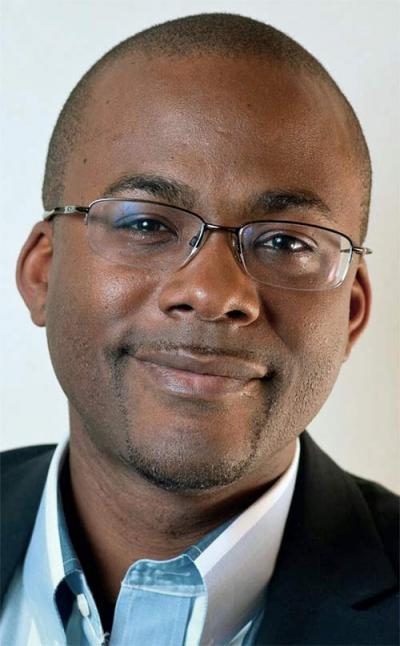 2011 has been a significant year for the technology sector globally. Information technology is touching more people in more ways than ever before. Developed markets will be considering a 2012 in which business innovation, competitiveness, and service differentiation are built on ubiquitous broadband, cloud computing, smarter mobile computing, and an increasing plethora of Internet-connected devices. By contrast, securing the technology future for developing markets demands that attention be placed on more fundamental issues. more
 The network layer of the Internet routes packets regardless of the underlying communication media (Wifi, cellular telephony, satellites, or optical fiber). The underlying physical infrastructure of the Internet includes a mesh of submarine cables, generally shared by network operators who purchase capacity from the cable owners. As of late 2020, over 400 submarine cables interconnect continents worldwide and constitute the oceanic backbone of the Internet. more
A World-Renowned Source for Internet Developments. Serving Since 2002.