
Welcome:
Login
|
Sign Up
|
About CircleID
Follow:
|
|
|


|
||
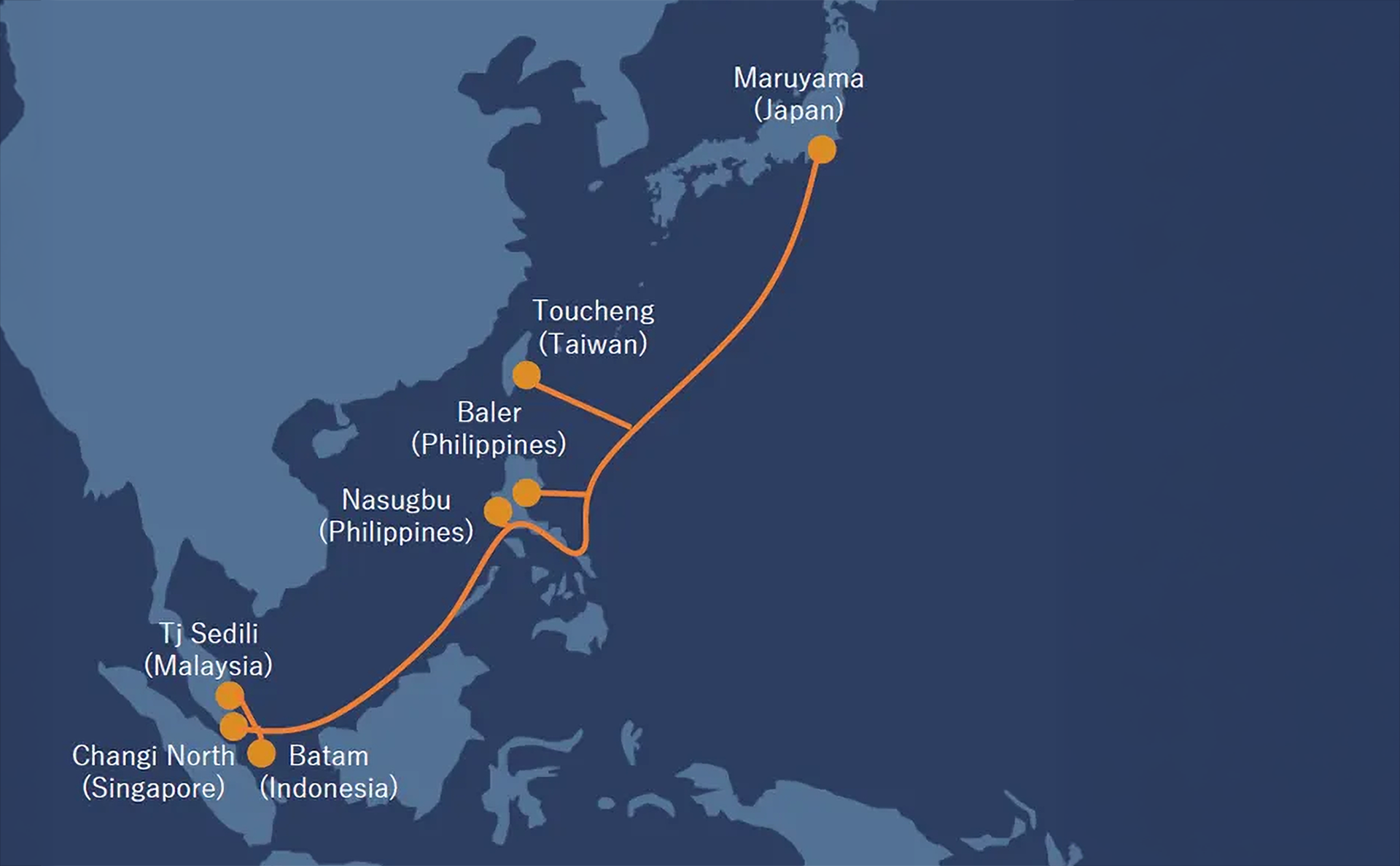
The 8,000-kilometre Candle submarine cable has reached a construction milestone in Indonesia, with a landing-stage “golden buoy” brought ashore at Tanjung Bemban on Batam on September 11. The system will link Indonesia, Singapore, Malaysia, the Philippines, Taiwan and Japan, with commercial service planned for 2028.
Construction began in December 2024, rather than this month. A September 17 report described XLSmart as beginning construction, but Indonesian reporting on the Batam landing says work on Candle started in December 2024. The new development is the Batam landing milestone, part of the continuing deployment of the regional system.
Candle is being developed by a consortium that includes XLSmart, Meta, SoftBank, IPS, Telekom Malaysia and Globe Telecom, which joined this year. NEC is supplying the system. The original project specification calls for 24 fiber pairs, compared with the 16 to 20 pairs SoftBank says are typical of existing systems. SoftBank’s Candle announcement
The system is designed for up to 570 terabits per second of total capacity. Globe disclosed that figure when it joined the consortium in April, linking the additional capacity to demand from cloud computing, AI and other data-intensive services. Globe’s consortium announcement
The route also adds geographic diversity. Candle is planned to land at Maruyama in Japan, Toucheng in Taiwan, Baler and Nasugbu in the Philippines, Batam in Indonesia, Sedili in Malaysia and Changi North in Singapore. The two Philippine landings are on opposite sides of Luzon: Globe said its Nasugbu landing in Batangas will complement the Baler landing on the eastern seaboard, providing alternative paths intended to reduce exposure to natural hazards and single points of failure.
Candle combines hyperscaler investment with carrier-owned landing infrastructure. Meta participates alongside incumbent and regional telecom operators, while local partners provide access into domestic networks. In the Philippines, Globe is both an investor and landing party at Nasugbu, while IPS subsidiary InfiniVAN is the landing party at Baler. Telekom Malaysia has similarly described the system as adding redundant regional routes. Telekom Malaysia’s project announcement
Sponsored byIPv4.Global

Sponsored byVerisign

Sponsored byVerisign

Sponsored byDNIB.com

Sponsored byWhoisXML API

Sponsored byCSC

Sponsored byRadix


A World-Renowned Source for Internet Developments. Serving Since 2002.