
Welcome:
Login
|
Sign Up
|
About CircleID
Follow:
|
|


|
||
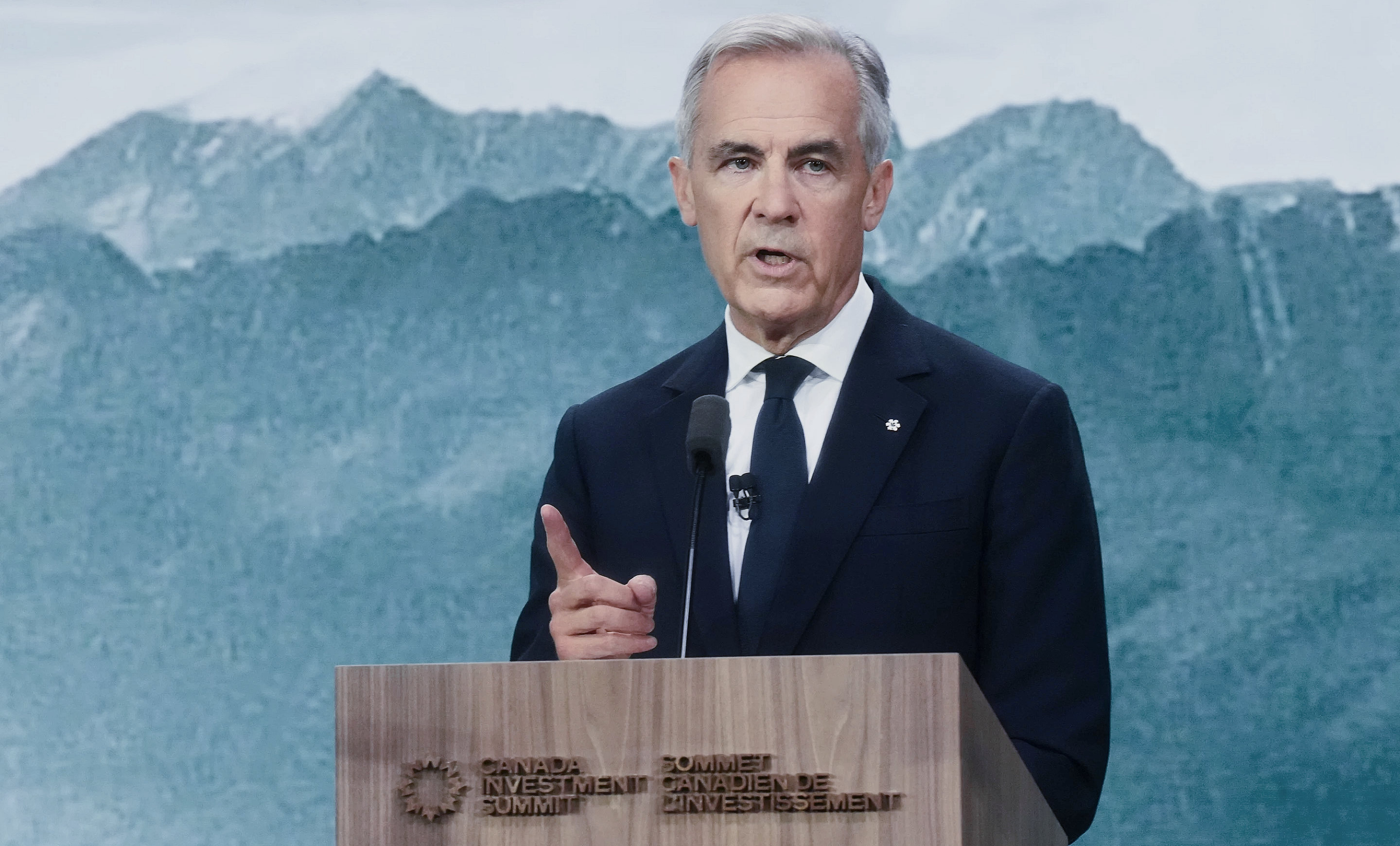
Canada plans to help finance a national broadband backbone spanning the country and providing more direct international connections to Europe and Asia, part of a broader federal push to expand infrastructure under Canadian control.
The proposed backbone would run “coast to coast to coast.” Prime Minister Mark Carney announced the project Tuesday at the Canada Investment Summit in Toronto, describing it as “sovereign” infrastructure with more direct and secure overseas links. The government has not yet disclosed the network’s route, capacity, cost, ownership structure or timetable.
The federal contribution would come as Ottawa seeks to attract private capital for infrastructure. Carney said the government intends to offer long-term concessions for private investment in Canada’s four largest airports while retaining public ownership of the underlying assets, then reinvest some of the proceeds in transportation and the broadband backbone. The government separately said the airport initiative could raise tens of billions of dollars.
Ottawa is also lowering the tax cost of new fibre investment. A proposed Productivity Mega Deduction would allow businesses to immediately expense most new capital investment acquired from September 15, including fibre and other network infrastructure. About two-thirds of capital investment would qualify, compared with roughly 15% under the previous incentive. The Department of Finance estimates the measure will cost $36 billion over five years and reduce Canada’s marginal effective tax rate on new business investment from about 13% to 6.4%.
The backbone extends a connectivity policy already set out in Canada’s National Artificial Intelligence Strategy in June. That strategy calls for diverse, high-capacity fibre and satellite connections linking Canadian infrastructure across the country, alongside expansion of domestic compute and cloud capacity. It says underlying infrastructure should operate under Canadian control and Canadian law rather than depend on foreign-controlled platforms that could be restricted or withdrawn.
The sovereignty objective concerns both domestic resilience and international connectivity. Canada’s AI strategy explicitly ties high-capacity fibre and satellite networks to resilience against disruption, while Carney’s new announcement adds direct links toward Europe and Asia. The government has not yet specified whether the backbone would involve construction of new terrestrial or subsea fibre, use existing carrier infrastructure, or combine new and existing networks.
The announcement therefore establishes federal financing and tax policy behind the project, but leaves its network architecture and commercial model to be defined.
Sponsored byDNIB.com

Sponsored byWhoisXML API

Sponsored byVerisign

Sponsored byRadix

Sponsored byCSC

Sponsored byVerisign

Sponsored byIPv4.Global


A World-Renowned Source for Internet Developments. Serving Since 2002.