
Welcome:
Login
|
Sign Up
|
About CircleID
Follow:
|
|


|
||
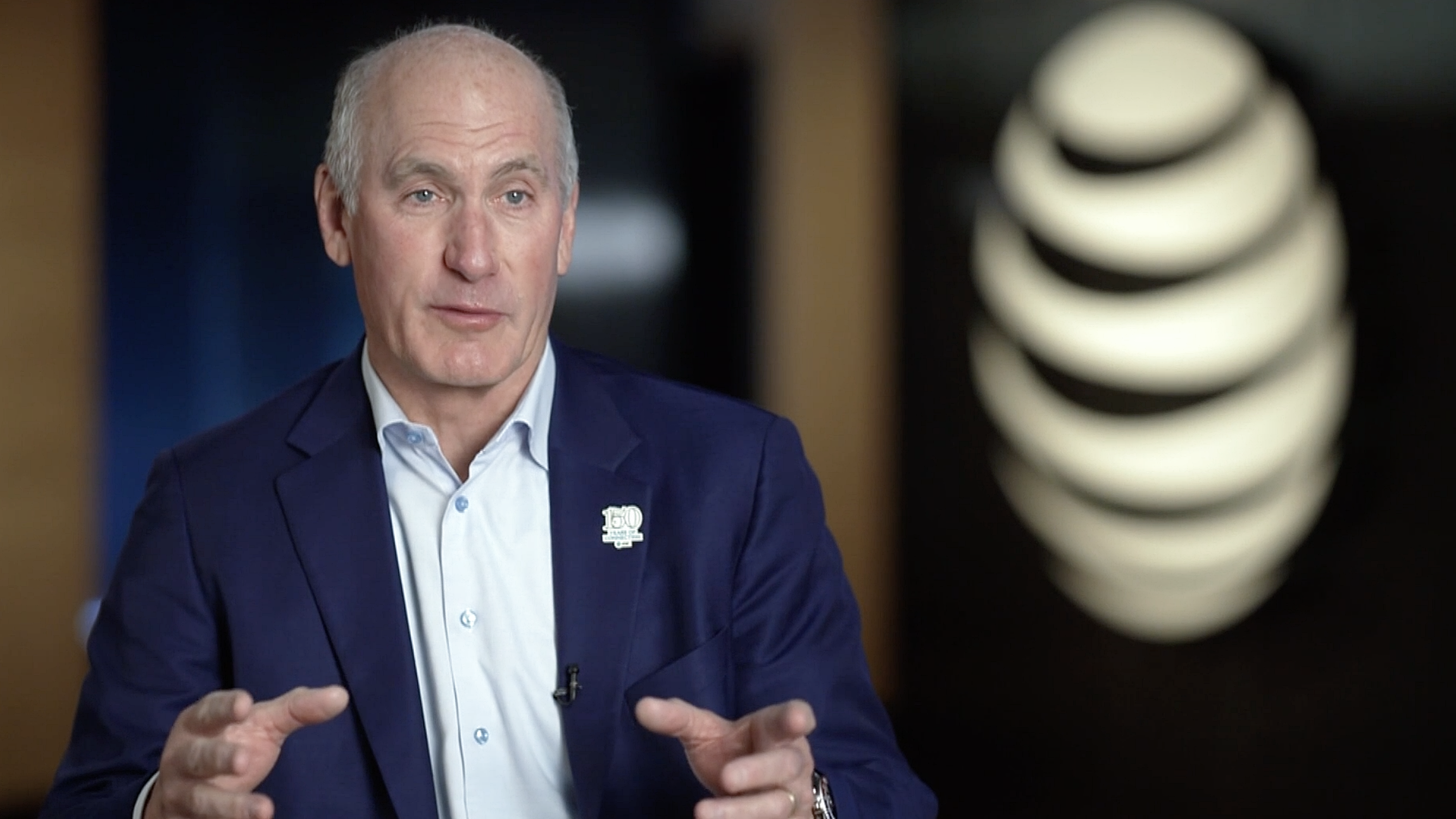
AT&T CEO John Stankey has challenged the economics of SpaceX’s expanding mobile strategy, arguing that a proposed combination of Starlink satellite connectivity and terrestrial cellular equipment would cost roughly as much as building a conventional mobile network.
In an Axios interview published September 29, Stankey called the approach “not a viable strategy,” while defending AT&T’s continued investment in fiber and terrestrial wireless infrastructure. His assessment comes as SpaceX moves beyond Starlink’s existing direct-to-cell service toward a broader mobile architecture backed by additional spectrum and potentially thousands of new satellites.
SpaceX is pursuing both satellite and terrestrial capacity. Federal Communications Commission records show that SpaceX has applied for authority for a new non-geostationary satellite system of up to 15,000 satellites dedicated to direct-to-device connectivity. The FCC also approved spectrum assignments from EchoStar to SpaceX in May, accompanied by terrestrial buildout commitments from SpaceX.
The fact that this distinction is important is that Stankey’s criticism goes beyond the issue of direct satellite-to-phone service; he specifically challenged the economics of installing cellular base stations together with Starlink terminals at homes and businesses, the satellite network being used to provide the backhaul. Stankey maintained that the number of installations required to achieve meaningful mobile capacity would cancel out a large part of the supposed cost advantage compared with conventional cellular infrastructure, and he also brought up questions concerning obtaining the property owners’ consent to transmit cellular signals from those sites.
Current direct-to-cell technology has substantial capacity constraints. A 2025 measurement study of Starlink’s direct-to-cell network, based on crowdsourced U.S. observations, estimated mobile-data performance at about 4 Mbps per satellite beam under outdoor conditions. The researchers said capacity could potentially rise to about 24 Mbps per beam with additional spectrum and changes in allowable power levels. Those figures describe shared beam capacity rather than individual-user throughput.
The measurements do not establish that SpaceX’s broader mobile strategy is uneconomic. They do illustrate why additional spectrum, satellites and terrestrial infrastructure could become important if Starlink is to progress from filling cellular coverage gaps toward competing for higher-volume mobile traffic.
The FCC has treated direct-to-device service primarily as complementary to terrestrial networks, while leaving open the possibility of broader competition. In approving the SpaceX-EchoStar spectrum transaction, the commission said increased direct-to-device capacity could supplement existing mobile networks, particularly in hard-to-reach areas, and potentially create additional retail wireless competition over time.
Stankey’s forecast is still that of a major network operator which has its own competing investments and satellite partnerships. AT&T has been extending its fibre network while at the same time working with AST SpaceMobile to provide direct satellite-to-phone coverage. Whether or not SpaceX can change the cost equation will depend less on the extent of its satellite coverage than on the amount of usable capacity it can offer, the extent to which it will need to deploy terrestrial equipment, and the final cost of those deployments.
Sponsored byWhoisXML API

Sponsored byIPv4.Global

Sponsored byVerisign

Sponsored byVerisign

Sponsored byCSC

Sponsored byRadix

Sponsored byDNIB.com


A World-Renowned Source for Internet Developments. Serving Since 2002.