
Welcome:
Login
|
Sign Up
|
About CircleID
Follow:
|
|


|
||
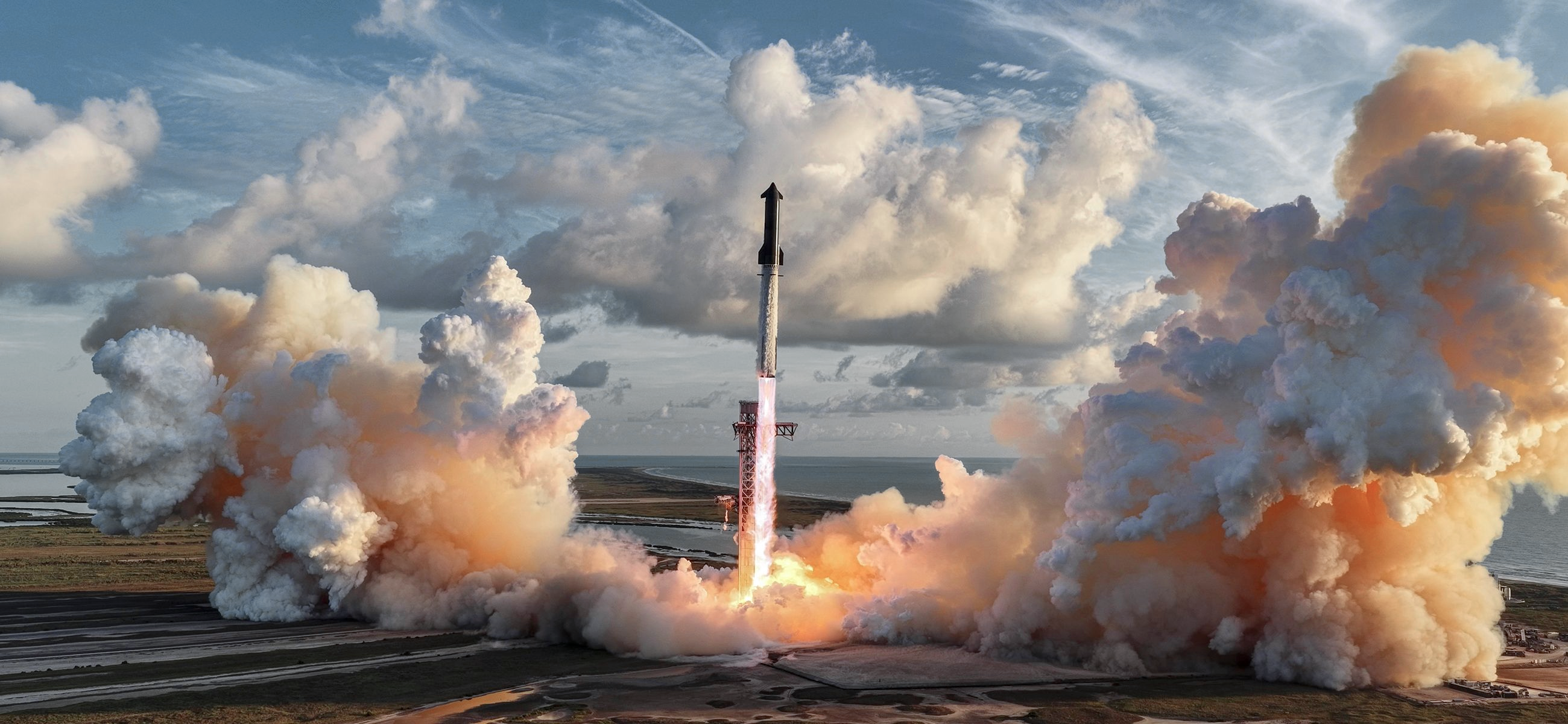
SpaceX deployed the first 26 Starlink V3 satellites into orbit Monday aboard Starship, beginning the orbital rollout of a new satellite generation that the company says can substantially increase the capacity of its broadband network.
The satellites were carried on Starship Flight 14, which lifted off September 28 from SpaceX’s Starbase facility in Texas and became the rocket’s first mission to reach orbit. Space.com reported that deployment began about 35 minutes after launch and that all 26 satellites had been released by 13:54 UTC.
SpaceX says each V3 satellite is designed to add 1 terabit per second of capacity to the Starlink constellation. According to the company’s mission plan, the 26 satellites therefore represent up to 26 Tbps of additional constellation capacity—about 10 times what SpaceX says is added by a Falcon 9 launch carrying V2 Mini satellites.
That figure describes designed capacity, not measured capacity now available to users. SpaceX said the satellites must deploy their antennas and solar arrays, establish radio-frequency and laser links, raise their orbits using onboard propulsion, and complete on-orbit checkouts before entering service. The company said before launch that customer service could begin within a few weeks of deployment.
The deployment establishes the payload milestone, but the network impact remains to be measured. Independent evidence of how many of the 26 satellites complete checkout, when they enter service and how much usable capacity they add will provide a clearer measure of the upgrade’s effect on Starlink performance.
The larger V3 spacecraft are intended to be launched aboard Starship rather than Falcon 9, tying Starlink’s next phase of network expansion to SpaceX’s ability to operate its much larger launch vehicle. Starship’s first 13 flights had followed suborbital trajectories; Flight 14 was the first to place Starship and an operational Starlink payload into orbit.
Flight 14 ended substantially earlier than planned. SpaceX had planned a mission lasting nearly 10 hours and approximately six Earth orbits, but returned the upper stage after assessing its condition in orbit. Space.com reported that Ship 41 splashed down in the northern Pacific at about 15:58 UTC, roughly three hours after launch. The shortened mission did not prevent completion of the Starlink deployment.
Sponsored byVerisign

Sponsored byIPv4.Global

Sponsored byWhoisXML API

Sponsored byDNIB.com

Sponsored byCSC

Sponsored byVerisign

Sponsored byRadix


A World-Renowned Source for Internet Developments. Serving Since 2002.