
Welcome:
Login
|
Sign Up
|
About CircleID
Follow:
|
|


|
||
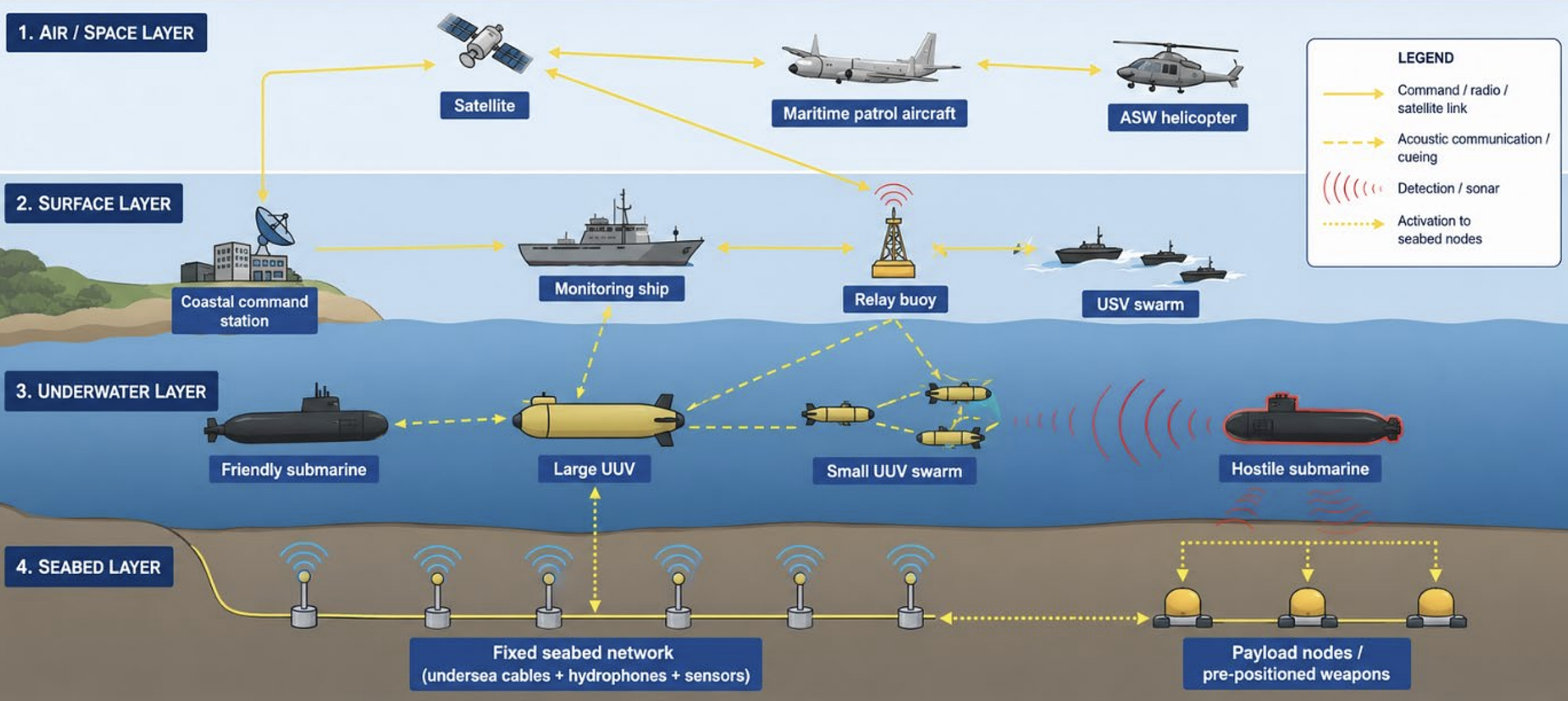
Undersea cable projects owned by Google and Meta rank among the most vulnerable to potential sabotage in the Pacific, according to a new risk assessment commissioned by a U.S. congressional advisory body. Separate research tracking Chinese scientific vessels has identified unusual surveying activity near submarine cable routes, adding to concerns about the security of infrastructure carrying international Internet traffic.
The September report, prepared by the China Strategic Risks Institute for the U.S.-China Economic and Security Review Commission, introduces a Trans-Pacific Cable Gray Zone Vulnerability Index. It ranks cable systems by factors including water depth, shipping traffic, ownership, proximity to Chinese maritime claims, and connections to Taiwan.
Google’s TPU and Meta’s ORCA cables rank third and fifth, respectively. The E2A system, partly owned by Verizon, ranks second. All three are still under development. The Trans-Pacific Express cable tops the index, which identifies Taiwan, Japan, and the Philippines as particularly exposed because of their geographic position, contested waters, and heavily trafficked shipping routes.
Chinese research vessels have also attracted scrutiny. An October 8 study by the Center for Strategic and International Studies (CSIS) examined movements of more than 200 research vessels from 2020 through December 2025. Researchers found that Chinese vessels spent a statistically significant share of their observed time near subsea infrastructure on the high seas compared with most other national research fleets.
The study highlighted two Chinese research vessels, Xiang Yang Hong 06 and Ke Xue, whose movements included repeated survey-like patterns near strategically important cable systems. Ke Xue also operated near Russia’s government-owned Polar Express cable in the Bering Sea, suggesting that Chinese interest in mapping underwater infrastructure may extend beyond Western networks. The researchers cautioned that vessel movements alone do not establish the intent of individual missions.
Even a single cable outage could strain available trans-Pacific capacity. The congressional report’s modeling indicates that losing a major connection could force traffic between the United States and East Asia onto longer routes with higher latency. Simultaneous disruptions could exceed available network capacity, affecting cloud services, financial transactions, and other latency-sensitive applications.
The assessment examines China’s growing ability to operate at extreme ocean depths, including autonomous underwater platforms and dual-use technologies with potential military applications. It describes cable interference as a possible gray-zone tactic, allowing disruption without openly initiating armed conflict.
Most submarine cable damage worldwide remains accidental, commonly involving fishing equipment, anchors, or natural events. Neither study establishes that the observed Chinese research activity resulted in sabotage.
The congressional report recommends closer maritime surveillance with regional allies, expanded cable redundancy, improved incident-response coordination, and investment in cable repair capacity. It also identifies aging and limited repair fleets as a constraint on restoring connectivity following major disruptions.
Sponsored byDNIB.com

Sponsored byWhoisXML API

Sponsored byVerisign

Sponsored byIPv4.Global

Sponsored byRadix

Sponsored byCSC
Sponsored byVerisign


A World-Renowned Source for Internet Developments. Serving Since 2002.