
Welcome:
Login
|
Sign Up
|
About CircleID
Follow:
|
|


|
||
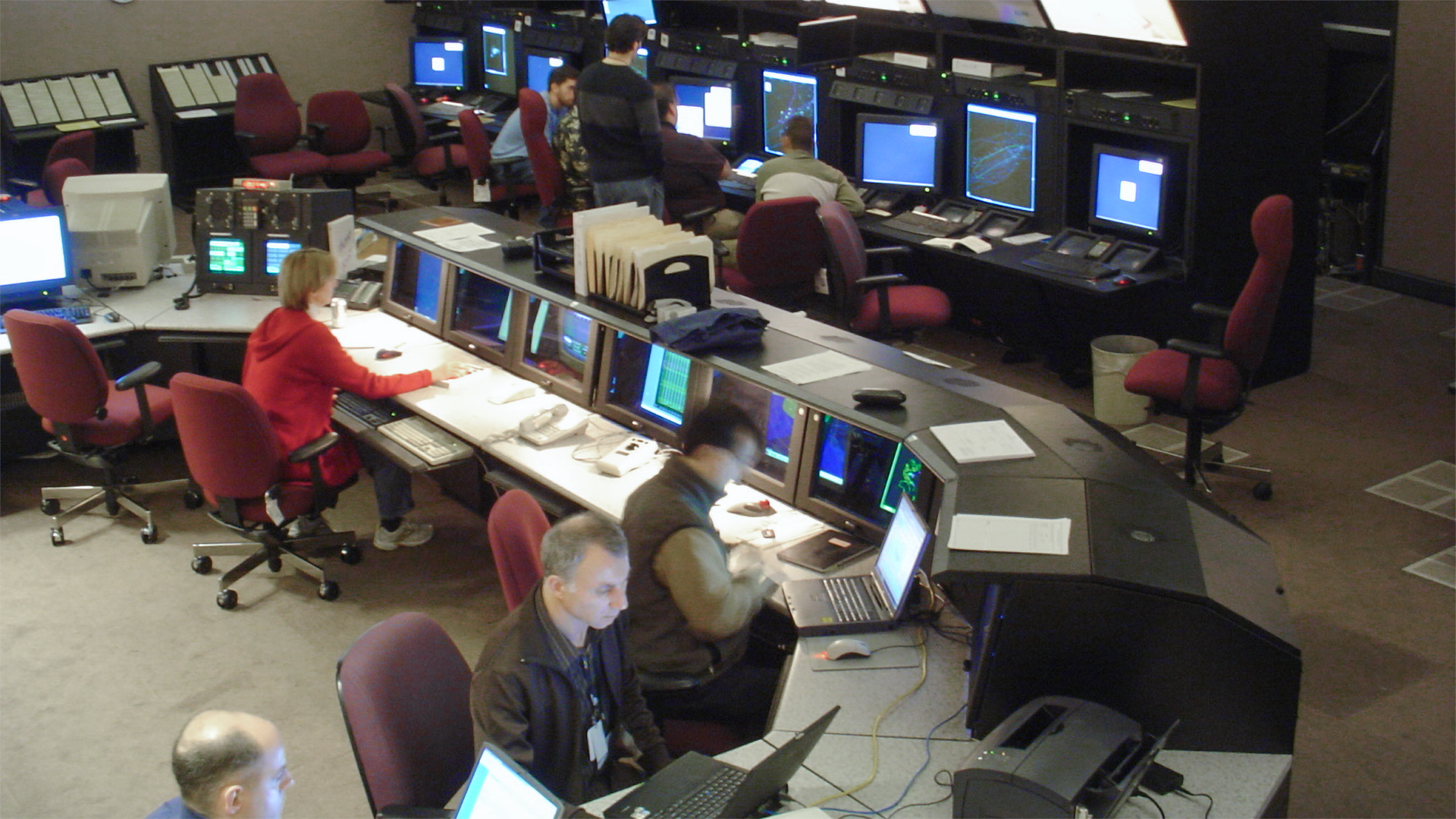
A nationwide suspension of flight departures in the United States on Friday, November 13, 2026, disrupted domestic and international air travel after a telecommunications failure affected air traffic control systems. The Federal Aviation Administration (FAA) restored operations after approximately four and a half hours, but the precise cause remains under investigation.
The disruption involved unstable radar and communications data. U.S. Transportation Secretary Sean Duffy said aging telecommunications switches and routers became overloaded, producing inconsistent information across air traffic control facilities. The problem affected all 22 regional centers responsible for managing aircraft in U.S. airspace, prompting the FAA to suspend departures as a safety precaution. Aircraft already airborne were permitted to continue flying and land.
The FAA issued its nationwide ground-stop order at 3:54 p.m. U.S. Eastern time (20:54 UTC) and formally canceled it at 8:19 p.m. (01:19 UTC Saturday). The disruption extended beyond U.S. borders, with international departures bound for the United States temporarily restricted and airlines worldwide adjusting schedules. Thousands of flights were canceled or delayed, with disruptions continuing into Saturday.
The suspected failure involves a dedicated telecommunications network, not the public Internet. The FAA Telecommunications Infrastructure (FTI) network connects air traffic control facilities and carries essential operational data. Operated by defense contractor L3Harris, the network combines aging telecommunications equipment with newer technologies as the agency works to modernize its infrastructure.
According to Duffy’s preliminary account, newer equipment remained operational while older switches experienced problems. Technicians restored stability by reducing the load on legacy systems. Homeland Security Secretary Markwayne Mullin suggested that software updates and newer equipment may have overwhelmed the older infrastructure.
The underlying technical cause has not been confirmed. CBS News reported that a software update triggered a network reboot preceding the failure. Neither the FAA nor L3Harris has publicly confirmed that sequence. U.S. officials reported no evidence of a cyberattack, although the investigation remains ongoing.
The outage comes during a major infrastructure transition. In August, the FAA selected telecommunications company AT&T to build a replacement for the FTI network. The U.S. Government Accountability Office, a congressional oversight agency, warned in September that accelerating modernization could increase operational risks without adequate planning and oversight.
The incident highlights a broader infrastructure challenge. Although the affected systems are separate from the public Internet, they depend on many of the same underlying networking principles, including reliable routing, switching, transmission, and interoperability. The disruption raises questions familiar to operators of critical networks worldwide: how legacy and modern technologies can coexist safely, how failures can propagate across interconnected facilities, and how essential services can remain available during infrastructure transitions.
Duffy has requested $50 billion from the U.S. Congress for a broader air traffic control modernization program. Investigators have yet to establish what triggered the reported overload, why its effects extended across the national network, and what safeguards are needed to prevent a recurrence.
Sponsored byRadix

Sponsored byVerisign

Sponsored byWhoisXML API

Sponsored byDNIB.com

Sponsored byCSC

Sponsored byIPv4.Global

Sponsored byVerisign


A World-Renowned Source for Internet Developments. Serving Since 2002.