
Welcome:
Login
|
Sign Up
|
About CircleID
Follow:
|
|


|
||
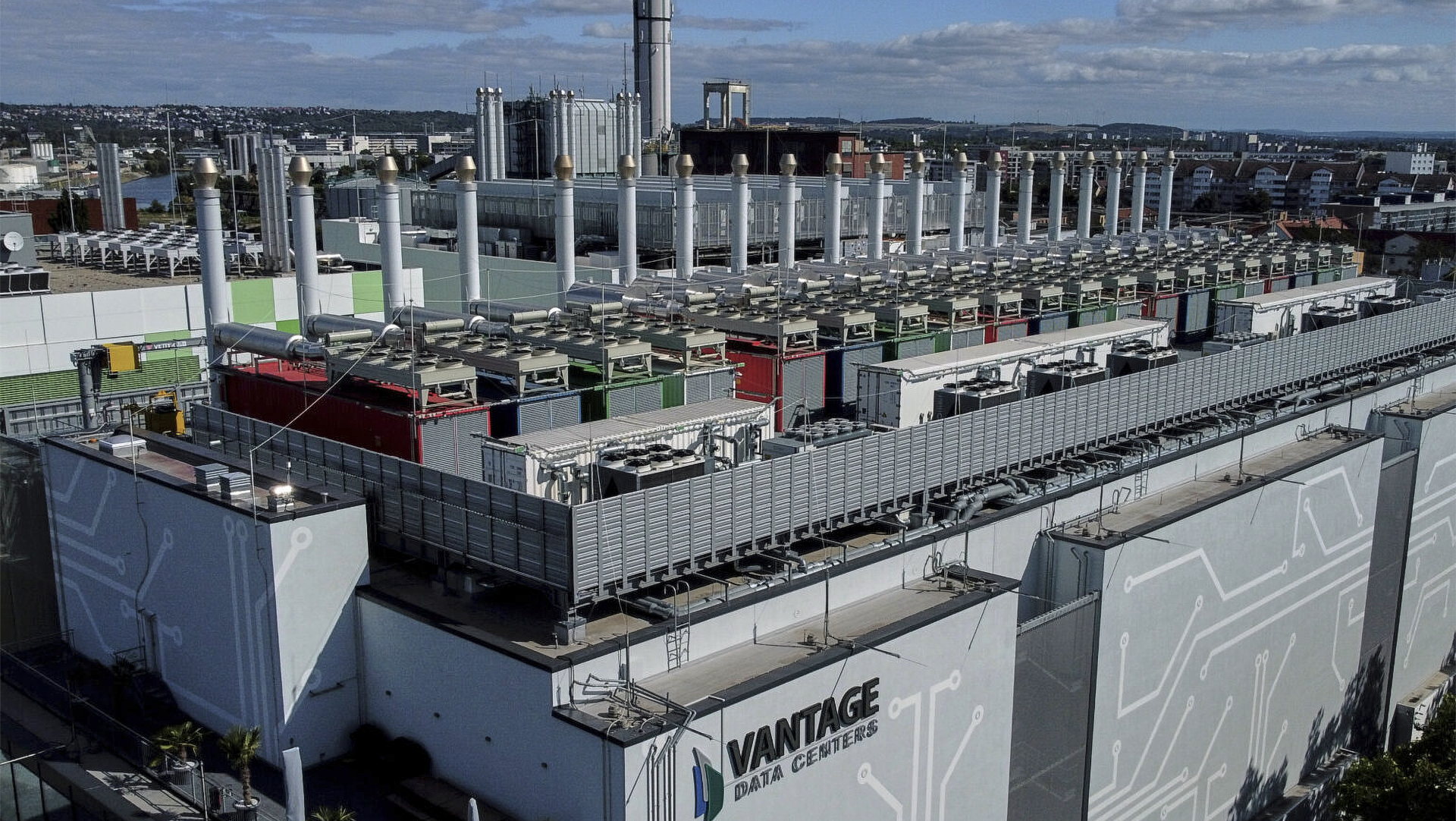
The European Commission has set up a common sustainability rating system for large data centers and is introducing electronic labels that assess the facilities in terms of their energy and water efficiency as the European Union gets ready for a rapid increase in cloud and AI computing capacity.
Under the delegated regulation adopted September 21, data centers covered by existing EU reporting requirements will receive labels generated from information operators submit to the European database on data centers. The rules generally cover facilities with installed IT power demand of at least 500 kW. The regulation is subject to a two-month scrutiny period by the European Parliament and Council.
The labels turn two widely used efficiency measures into A-to-G grades. Power Usage Effectiveness, or PUE, receives an A for values of 1.15 or lower and a G above 1.9. Water Usage Effectiveness, or WUE, receives an A at 0.1 liters per kilowatt-hour or lower and a G above 1.0. Labels will also identify the facility’s location and size category and indicate grid-flexibility capability and readiness to reuse waste heat. The database is to generate the first labels by August 15, 2027.
The design makes comparisons possible, but not entirely context-free. The regulation requires an accompanying explanation covering factors including climate, facility size and age, trade-offs between PUE and WUE, and the significance of water efficiency in areas with different levels of water stress. The Commission says the scheme is intended particularly to support comparisons among data centers in the same region.
Water-efficiency bands were a subject of industry lobbying. In a July filing recorded in Germany’s federal lobbying register, Microsoft supported PUE and WUE ratings but argued that proposed WUE bands needed recalibration because climate, cooling technology and geography can materially affect the metric. Microsoft proposed a scale with the best rating below 0.3 and the worst above 2.0. The final regulation instead sets A at 0.1 or below and G above 1.0.
The scheme builds on reporting obligations introduced under the EU Energy Efficiency Directive rather than imposing efficiency limits itself. The Commission estimates EU data centers consumed 68 TWh of electricity in 2024 and could reach 114 TWh, or 3.2% of EU electricity demand, by 2030.
The next stage under consideration is setting binding performance requirements. The Commission has launched a 12-week consultation regarding possible minimum performance standards, with a legislative proposal to be prepared in the second quarter of 2027. Responses are required by 14 December.
Sponsored byWhoisXML API

Sponsored byIPv4.Global

Sponsored byVerisign

Sponsored byVerisign

Sponsored byCSC

Sponsored byRadix

Sponsored byDNIB.com


A World-Renowned Source for Internet Developments. Serving Since 2002.