
Welcome:
Login
|
Sign Up
|
About CircleID
Follow:
|
|

 Last year I wrote a post right after Thanksgiving entitled: "While You Were Eating You're Turkey Homeland Security Was Seizing 9 Domains". Well I could have repeated the headline today except the number would be 131 domains rather than just 9. Looks like Homeland Security is going to make domain seizures on Thanksgiving as common in the US as Turkey and Stuffing. more
 In a move that shouldn't come as a surprise to anyone, the EU Commission has given a rather mixed welcome to the IANA bid. While they obviously like a lot of what they are seeing, they're also not overly impressed with the contract only being open to US companies. more
 There may be no better illustration of how far we've come in Internet governance, than this: twice in the past 30 days, the global Internet community has gathered in sub-Saharan Africa to plot a path to bring the Internet to its next billion users. Just weeks after wrapping up the sixth annual Internet Governance Forum (IGF) in Kenya, Internet stakeholders from around the world traveled back to Africa for ICANN's 42nd meeting in Dakar, Senegal. more
 It has been about six months since I got together with four of my friends from the DNS world and we co-authored a white paper which explains the technical problems with mandated DNS filtering. The legislation we were responding to was S. 968, also called the PROTECT-IP act, which was introduced this year in the U. S. Senate. By all accounts we can expect a similar U. S. House of Representatives bill soon, so we've written a letter to both the House and Senate, renewing and updating our concerns. more
 In the wake of Google's settlement with the Department of Justice for permitting advertising by illegal online pharmacies, what are the legal implications for Domain Name Registrars and ISPs in the US and elsewhere? In short, if you're a Registrar or ISP, it's a new ballgame. Here's why it's critical for you to steer clear of criminal and civil liability by making sure your registration services aren't used by rogue online pharmacy criminals. (And, here's how to do it.) more
 In preparation for Monday's Joint Applicant Support (JAS) Working Group call, I spent some time reviewing various documents in connection with what are ICANN's actual costs in reviewing top-level domain name applications. One thing that caught my attention was the following metric in Rod Beckstrom's most recent CEO Monthly One Page Metric Report. more
 The most notable thing about the EC Papers on ICANN, which were leaked by Kieren McCarthy last week, is that they are designed to completely subordinate ICANN as an institution. We have not seen such a comprehensive attack by a government on ICANN since the World Summit on the Information Society. One can infer that this is payback for the Board's decision to not treat the EC's views, expressed in its Governmental Advisory Committee (GAC), as binding instructions rather than as nonbinding advice. more
 In an age where the world has gone global in many forms and guises, the political attention is more and more focussed on national, populist issues, that arise from fear for the unknown. I can't deny it: the future undoubtedly contains many uncertainties. This usually comes with a general public that's afraid and in fear of things they cannot oversee. Thus it is easily aroused by a populist leader who feeds on this fear and throws flammable material on the already smouldering fire. In a time where leadership is called for, it seems lacking. The Internet governance discussion demands visionary leadership on a cross border level and it needs it soon. more
 In the US administration, we see important people like incoming Secretary of Defense Leon Panetta say at his Senate confirmation hearing that "a strong likelihood that the next Pearl Harbor" could well be a cyberattack that cripples the U.S. power grid and financial and government systems. He also said that cybersecurity will be one of the main focuses of his tenure at the Pentagon. But when you look at what is actually happening in cyber security, there is more position jockeying than there is real progress. more
 The best part is ... this isn't one of those 'now that I've got your attention' tricks, like one of those old "free beer" posters; there really is a ton of stuff happening above the 49th parallel this summer. To begin with, as a precursor to Canada's Anti-spam Law coming into effect later this year, the Office of the Privacy Commissioner, the Canadian Radio-television Telecommunications Commission, and Industry Canada have all issued regulations, the latter two in draft form with an RFC. more
Internet Security is a topic that has drawn a lot of attention over the past year. As awareness grows that cooperation is necessary, it dawns on people that there are many and very different stakeholders involved, stakeholders that may never have met before. Let alone have cooperated. An example of an approach is the National Cyber Security Council (NCSC) that was installed in The Netherlands on 30 June. This is a high level council that will give advice to public as well as private entities on how to better secure themselves and society at large against cyber attacks and how to become more resilient. However, without the right approach it is doomed to become a talking shop. more
 The Internet has done as much as the jet engine to shrink the distance between where we are and where we want to go. Even the propeller-type connectivity of dial-up was a giant leap forward. But as much as the technology has allowed us to go with ease to any place we choose - to learn, to be heard, to promote - equally powerful is the platform's ability to help us gather. The phenomena of social media services like LinkedIn and Facebook are present day proof of this human urge. more
Despite all signs pointing to a launch of the new generic Top-Level Domains (gTLDs) program in Singapore, it seems like ICANN could not help poking the Government Advisory Committee (GAC) in the eye one last time. In the latest installment of how a California not for profit technical coordinating body knows best, we have the ICANN Evidence of "Use" Requirement for Trademark Protection document. more
I've just arrived in Singapore, where ICANN's board will almost surely vote to launch an unprecedented expansion plan for generic top-level domains (gTLDs). As the new gTLDs start lighting-up over the next two years, we'll look back on this week as the "end of the beginning" since it ended several years of planning for the actual expansion. After the vote the real work begins: evaluating applications, implementing new mechanisms, and contract compliance on a scale far greater than ICANN has ever seen. more
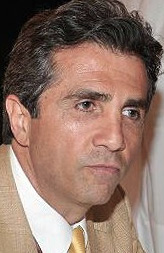 U.S. laws remain set to govern the coming multilingual internet through ICANN's new generic Top-Level Domains (gTLDs) yet the ramifications of this fact if you are Chinese, Arab, Indian, Russian or other are huge as ICANN published its 7th Applicant Guidebook in preparation for its board consideration on June 20th during the Singapore meeting. To many nations and citizens around the world, especially the non-English speaking communities, this will be seen as a strategically alarming direction for the global Internet. more
A World-Renowned Source for Internet Developments. Serving Since 2002.