
Welcome:
Login
|
Sign Up
|
About CircleID
Follow:
|
|


|
||
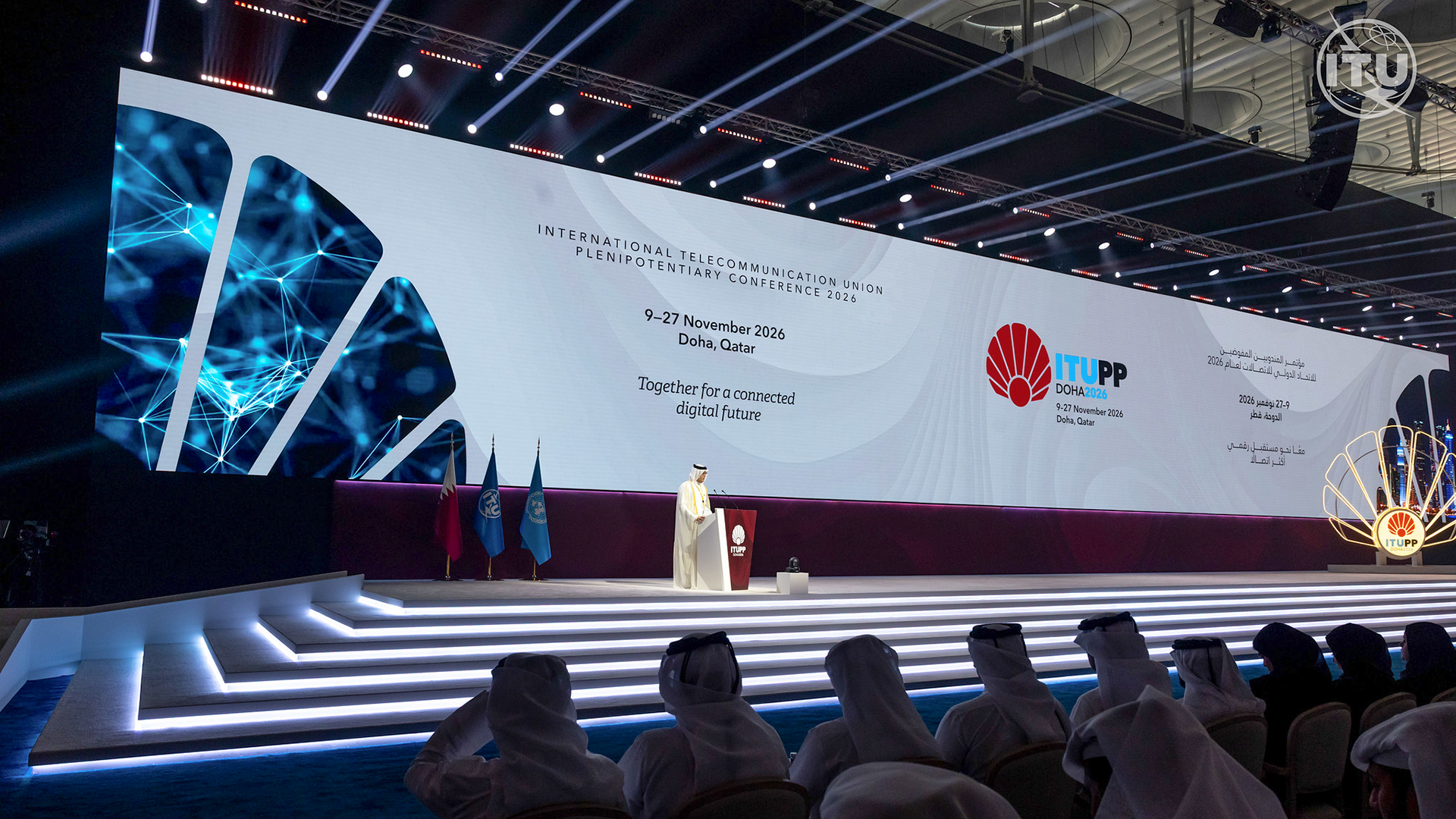
The International Telecommunication Union (ITU) concluded its Plenipotentiary Conference in Doha, Qatar, on November 27, with governments agreeing to strengthen global communications infrastructure, expand Internet access and advance international standards for artificial intelligence.
Representatives from 179 of the ITU’s 194 member states attended the three-week conference, known as PP-26, with 158 signing its Final Acts, according to the agency’s closing announcement. Held every four years, the conference is the UN agency’s highest decision-making body.
Submarine cables feature alongside terrestrial and satellite networks in the ITU’s resilience agenda. Governments agreed to strengthen international cooperation through research, technical assistance and the sharing of operational practices.
Other priorities include AI standards for security and interoperability, building technical expertise in developing countries, making Internet access more affordable and improving communications infrastructure for disaster response.
The extent of the ITU’s role in governing the Internet was a point of contention ahead of the conference. Proposals submitted to PP-26 addressed the agency’s involvement in IP-based networks, DNS security, Internet identifiers and the economics of network interconnection.
One area of disagreement concerned Resolution 146 and the future of the International Telecommunication Regulations (ITRs). As the Internet Society noted in its pre-conference assessment, some proposals sought to reopen treaty negotiations while others called for ending the review process. The organization opposed renewed negotiations, citing divisions over Internet-related provisions at the 2012 World Conference on International Telecommunications.
The Internet Society also opposed proposals to expand the ITU’s remit into areas of Internet architecture and identifier management handled by existing multistakeholder institutions and technical standards bodies.
The ITU’s closing announcement does not detail how these proposals were resolved. Access to the provisional Final Acts, posted on November 27, is restricted to authorized ITU users.
The conference approved the agency’s strategic and financial plans for 2028–2031. India will host the next Plenipotentiary Conference in 2030, and Uzbekistan will host the World Telecommunication Standardization Assembly in 2028.
Sponsored byVerisign

Sponsored byVerisign

Sponsored byRadix

Sponsored byDNIB.com

Sponsored byCSC

Sponsored byIPv4.Global

Sponsored byWhoisXML API


A World-Renowned Source for Internet Developments. Serving Since 2002.