
Welcome:
Login
|
Sign Up
|
About CircleID
Follow:
|
|



|
||
|
||
The fourth At-Large Summit in Lisbon will focus on inclusion, trust and the connections between Internet users and ICANN.
The DNS is part of the infrastructure people rely on whenever they use the Internet. Its policies, however, are developed through ICANN processes that many users rarely encounter. Questions about domain name registration, DNS security and access to Internet identifiers can have consequences far beyond the organizations directly involved in those discussions.
From 15 to 18 March 2027, the fourth At-Large Summit (ATLAS IV) will bring the global At-Large community together during ICANN88 in Lisbon. Its theme, “Building Inclusion and Trust in and through the At-Large Loop,” addresses how users can contribute to ICANN discussions and stay informed about their outcomes.
ATLAS stands for At-Large Summit, a periodic gathering of the community representing individual Internet users within ICANN. The At-Large community works through accredited At-Large Structures (ALSes), individual members and five Regional At-Large Organizations (RALOs). Their perspectives feed into the At-Large Advisory Committee (ALAC), which advises ICANN on matters affecting end users.
At-Large creates opportunities for civil society groups, Internet associations and interested individuals to engage with subjects often dominated by technical and commercial specialists. Its regional networks help connect local concerns with ICANN’s global discussions. Those connections need constant attention: meeting schedules, specialized terminology and language barriers can discourage participation, even among people who are directly affected by the issues.
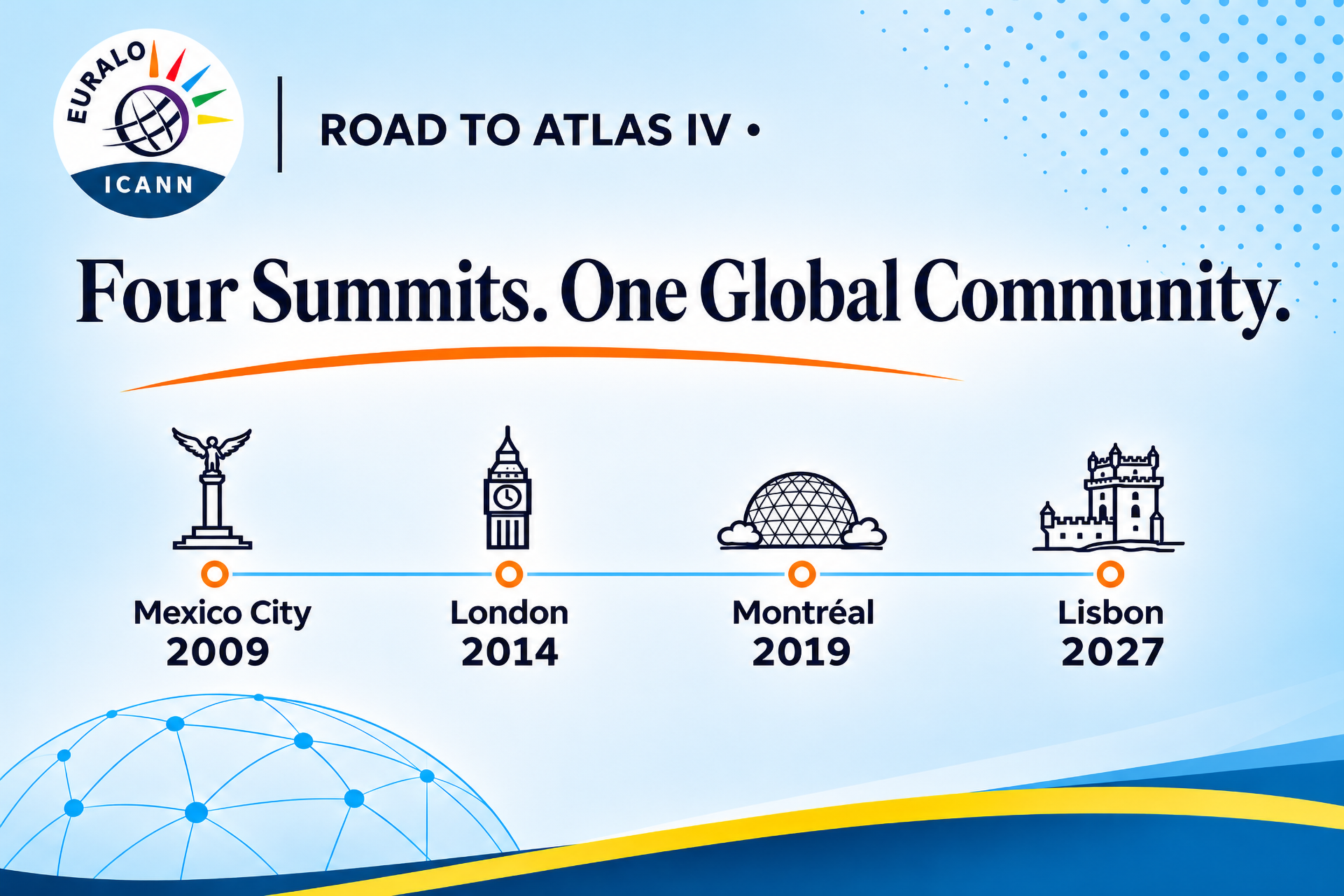
The first summit took place in Mexico City in 2009, during ICANN34. It brought together 93 leaders from 102 accredited At-Large Structures and helped consolidate the young regional system. Working groups addressed community engagement, ICANN governance, accountability, new gTLDs and DNS security.
Five years later, ATLAS II in London placed greater emphasis on recommendations. Under the theme “Global Internet: The User Perspective,” participants produced a declaration containing 43 recommendations and 10 observations on ICANN practices, accountability and end-user involvement.
In 2019, ATLAS III in Montréal focused on developing future leaders. Sixty selected participants took part in training on policy engagement, outreach, communication and collaboration. The emphasis was on equipping community members to play a sustained role in ICANN.
Lisbon follows these efforts with a focus on the relationship between At-Large and the communities it serves. That relationship is central to this edition’s theme.
Inclusion means expanding opportunities to participate in the Internet and in the discussions that affect it. Within ICANN, that requires making policy issues accessible to people from different countries, languages and professional backgrounds, including those with limited experience of Internet governance.
Trust concerns the safety and reliability of the DNS and confidence in the institutions and processes responsible for its coordination. Technical protections matter, as do transparent decision-making and clear communication with the people who depend on the system.
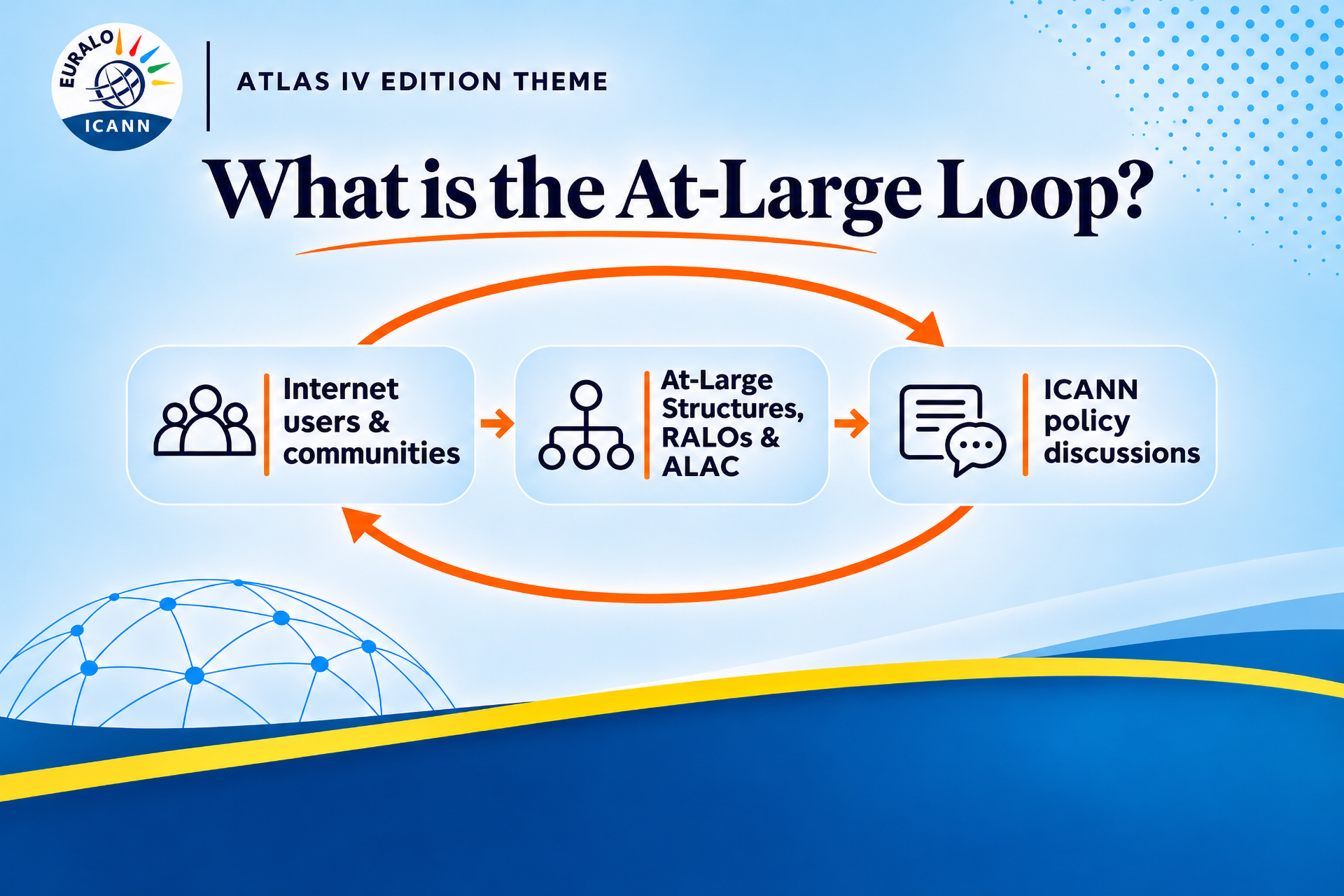
The At-Large Loop links these priorities to a practical process. Individuals and local organizations raise questions, share experiences and contribute perspectives through their At-Large Structures and regional communities. RALOs and ALAC carry relevant input into ICANN discussions. Information about policy developments and outcomes then needs to reach those same communities, allowing further questions and feedback.
Keeping that exchange active across five regions and many languages is demanding. A consultation or statement is only one stage. Local communities also need explanations they can use, opportunities to respond and visibility into what followed from their contributions.
For Natalia Filina, Secretary of EURALO, these links are essential to the summit’s work:
“One of the greatest strengths of the At-Large community is its diversity of people, backgrounds, and experiences. ATLAS IV offers a valuable opportunity to build on this diversity, encourage knowledge sharing, and strengthen cooperation between our regional communities. For EURALO, I believe the summit can help us create stronger connections between individual members, At-Large Structures, and the broader ICANN ecosystem. The At-Large Loop reminds us that representation is not simply about bringing users’ voices into policy discussions, but also about maintaining an ongoing dialogue and making sure information and outcomes reach our communities. I hope we can use ATLAS IV to make this exchange more effective and inclusive.”
The European region illustrates the challenge. EURALO works across an environment with substantial linguistic, regulatory and socioeconomic differences. Sustained contact among Internet associations, civil society, technical communities and individual users is essential if regional perspectives are to reach ICANN and the results are to come back in useful form.
ATLAS IV comes at a time of rapid change in the domain name industry. Artificial intelligence, new online services and digital identity initiatives are raising questions about how users access and trust Internet resources. The changing vocabulary of the next generation of domains, explored in my recent CircleID article on 2026 new gTLD strings, is one indication of how quickly the Internet’s priorities can shift.
For the At-Large community, the value of the summit will depend on what continues after the participants leave Lisbon. Clearer explanations of DNS policy, stronger regional contacts, active local consultations and timely feedback would help make engagement more useful for newcomers and experienced volunteers alike.
The fourth summit provides an opportunity to review what has worked since Mexico City and to agree on practical improvements. If the At-Large Loop becomes easier to follow and more reliable, users will have better opportunities to understand ICANN’s work and contribute to the decisions that affect their experience of the Internet.
Further information: ATLAS IV official site | Get involved in At-Large
Sponsored byIPv4.Global

Sponsored byVerisign
Sponsored byDNIB.com

Sponsored byVerisign

Sponsored byWhoisXML API

Sponsored byRadix

Sponsored byCSC
A World-Renowned Source for Internet Developments. Serving Since 2002.