
Welcome:
Login
|
Sign Up
|
About CircleID
Follow:
|
|


|
||
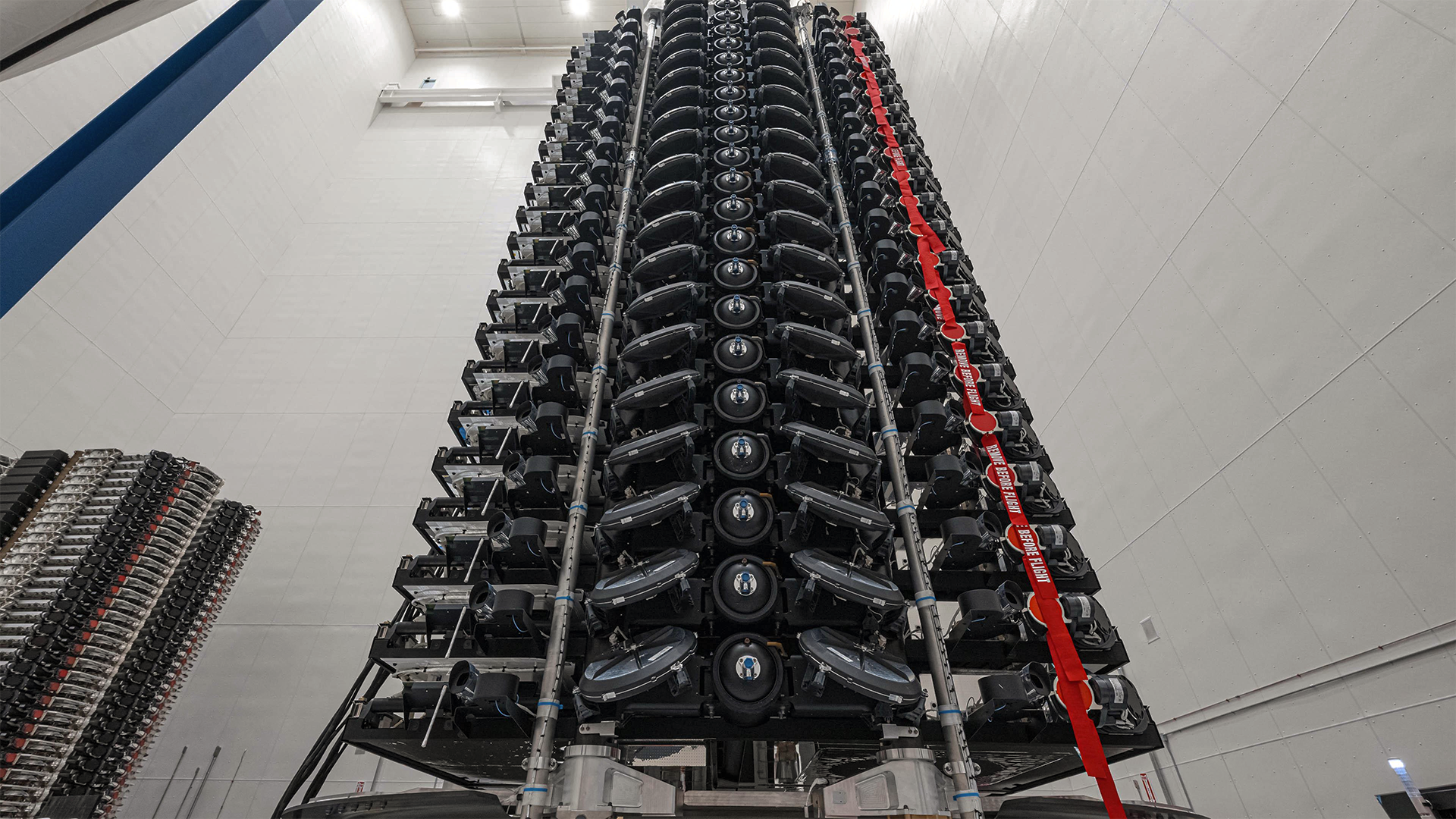
The U.S. Federal Communications Commission (FCC) on November 25 granted conditional authorization for SpaceX to deploy and operate up to one million satellites designed to function as orbital data centers, bringing large-scale AI computing infrastructure into a regulatory environment already occupied by satellite broadband and other communications networks.
The proposed constellation, called Starmind, would operate in low Earth orbit at altitudes ranging from 500 to 1,002 kilometers. Under the FCC’s authorization order, the satellites would rely primarily on optical communications, with radio frequencies reserved for backup and emergency operations.
The authorization limits SpaceX’s use of radio spectrum. The FCC granted access to two Ka-band frequency ranges: 18.8–19.3 GHz for downlinks and 28.6–29.1 GHz for uplinks. Their use is restricted to backup and emergency telemetry, tracking, and command operations rather than routine data transmission.
SpaceX must coordinate with existing and future fixed-satellite service operators using these frequencies. It cannot claim protection against interference from other operators and must immediately suspend transmissions responsible for documented harmful interference until the problem is resolved.
Deployment is subject to four regulatory milestones. SpaceX must have its first satellite operational by November 2033, followed by 100,000 satellites by November 2035, 500,000 by November 2038, and the full constellation by November 2040. The 15-year license period begins once SpaceX certifies the successful operation of its first satellite.
The authorization follows objections from satellite operators Amazon Leo and Viasat, as well as the American Astronomical Society. Concerns raised during the proceedings included spectrum interference, orbital congestion, debris, and the environmental consequences of deploying satellites at such a scale.
Satellite disposal remains a partially unresolved regulatory issue. The FCC deferred SpaceX’s request for an exemption that would permit alternatives to atmospheric reentry for certain satellites. SpaceX must also submit reports twice a year covering satellite deployments, potential collision events, avoidance actions, reentries, and use of the authorized radio frequencies.
The regulatory approval does not establish the technical or commercial feasibility of orbital computing at the proposed scale. As the Associated Press reports, scientists have identified substantial engineering and economic obstacles, including the difficulty of dissipating heat in the vacuum of space and the potential for collisions that could affect existing telecommunications and other essential satellites.
Sponsored byVerisign

Sponsored byWhoisXML API

Sponsored byVerisign

Sponsored byCSC

Sponsored byIPv4.Global

Sponsored byRadix

Sponsored byDNIB.com


A World-Renowned Source for Internet Developments. Serving Since 2002.