
Welcome:
Login
|
Sign Up
|
About CircleID
Follow:
|
|
|

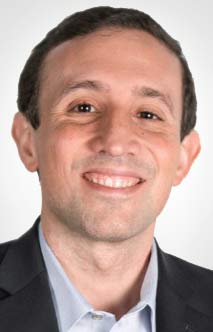 In light of the Biden administration's recent efforts in protecting critical infrastructure from cyber threats, new research from CSC indicates that a majority of the top energy companies in the U.S. are vulnerable to attack due to shortcomings in their online operations. Specifically, these organizations are vulnerable to domain name and domain name system (DNS) hijacking and phishing attacks based on their lack of effective domain security. more
PIR, the registry operator for .org, has sent notices to registrars that it is implementing an anti-abuse policy that offers no due process for innocent domain registrants... While it's good intentioned, there is great potential for innocent domain registrants to suffer harm, given the lack of appropriate safeguards, the lack of precision and open-ended definition of "abuse", the sole discretion of the registry operator to delete domains, and the general lack of due process. more
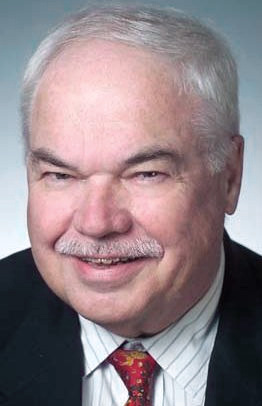 "GOD, at least in the West, is often represented as a man with a flowing beard and sandals. Users of the Internet might be forgiven for feeling that nature is imitating art — for if the Net does have a god he is probably Jon Postel" (The Economist, Feb. 1997) David W. Maher, Senior Vice President, Law and Policy of Public Interest Registry (PIR) offers his reminiscence of the early days of the Internet and attempts made to restructure the Domain Name System — an article he has entitled 'Reporting to God'. more
 When preparing a network for IPv6, I often hear network administrators say that their switches are agnostic and that there is no need to worry about them. Not so fast. Yes, LAN switches function mainly at layer 2 by forwarding Ethernet frames regardless of whether the packet inside is IPv4 or IPv6 (or even something else!) However, there are some functions on a switch that operate at layer 3 or higher. more
"Competitive Bidding for new gTLDs" is the focus of part three of a three-part series based on a study prepared by Karl M. Manheim, Professor of Law at Loyola Law School and Lawrence B. Solum, Professor of Law at University of San Diego. Special thanks and credit to Hastings Communications and Entertainment Law Journal, Vol. 25, p. 317, 2004. ...When new radio frequencies become available for commercial use, federal law requires that licenses be auctioned off to the highest qualified bidder. The FCC does a reasonably good job in designing and conducting spectrum auctions. They are often familiar in format, not much different than found for consumer goods on eBay. In other cases, such as with "Simultaneous Multiple-Round" or "combinatorial bidding," the auction design is fairly complex. Because of complexity in these cases, the FCC sponsors periodic conferences on auction theory and seminars on auction mechanics for potential bidders. more
 In the ICANN realm, TechOps stands for Technical and Operations and its goal is to simplify processes, to find solutions, and to advise on technical and operational matters. There are three TechOps groups: The Registry, the Registrar and the joint Registry and Registrar, also known as Contracted Party House (CPH). How did we get there and what exactly are we doing? more
 There is an interesting note on the ITU Strategy and Policy Unit Newslog about Root Servers, Anycast, DNSSEC, WGIG and WSIS about a presentation to ICANN's GAC. (The GAC website appears to be offline or inaccessible today.) The interesting sentence is this: Lack of formal relationship with root server operators is a public policy issue relevant to Internet governance. It is stated that this is "wrong" and "not a way to solve the issues about who edits the [root] zone file." Let's look at that lack of a formal relationship... more
 Over the last few years, it's become clear that abuse of the Domain Name System -- whether in the form of malware, botnets, phishing, pharming, or spam -- threatens to undermine trust in the Internet. At Public Interest Registry, we believe that every new .ORG makes the world a better place. That means anything that gets in the way of that is a threat, and that includes DNS Abuse. more
 Much has been said about how Google uses the services they provide, including their mail service, their office productivity tools, file storage and similar services, as a means of gathering an accurate profile of each individual user of their services. The company has made a very successful business out of measuring users, and selling those metrics to advertisers. But can we measure Google as they undertake this activity? How many users avail themselves of their services? Perhaps that's a little ambitious at this stage, so maybe a slightly smaller scale may be better. Let's just look at one Google service. more
Chinese technology policy is now more effective even than their naval posture in the South China Sea, and both are playing out in full sunshine. This success is not about the hardware pillar of Chinese tech policy, though: its focus is the structural approach China and, increasingly, other stakeholders are taking to global Internet Governance... Late in the Year of the Pig just gone, China's offer of a New Internet Protocol was chewed over in senior-level advisory groups of the International Telecommunication Union (ITU)... more
 The evolution of the internet is anchored in the phenomenon of new technologies replacing their older counterparts. But technology evolution can be just as much about building upon what is already in place, as it is about tearing down past innovations. Indeed, the emergence of cloud computing has been powered by extending an unlikely underlying component: the more than 30-year-old global Domain Name System (DNS). more
 Efforts have been ongoing in the ICANN community to develop a better understanding of its role in the combat of abuse. This theme has been rising in prominence every year since 2018, and 2021 appears to be the tipping point, in which consensus has built around the idea that more can be accomplished in terms of reducing the impact of rogue actors using the Internet for malicious purposes. more
 Handley's simulation shows that, while not as fast as an equivalent ISLL path, long bent-pipe paths would typically have lower latency than terrestrial fiber routes between the same two points. Mark Handley, a professor at University College London, has made two terrific videos based on runs of his simulation of the first – 1,584 satellite – phase of SpaceX's Starlink Internet-service constellation. I discussed the first video, which assumes that the satellites have inter-satellite laser links (ISLLs), in recent post. more
 As the WHOIS debate rages and the Top-Level Domain (TLD) space prepares to scale up the problem of rogue domain registration persists. These are set to be topics of discussion in Costa Rica. While the ICANN contract requires verification, in practice this has been dismissed as impossible. However, in reviewing nearly one million spammed domain registrations from 2011 KnujOn has found upwards of 90% of the purely abusive registrations could have been blocked. more
CircleID recently interviewed Meng Weng Wong, the lead developer of Sender Policy Framework (SPF) and founder of Pobox.com. As one of the leading anti spam authentication schemes, SPF is used by companies such as AOL, Earthlink, SAP and supported by anti spam companies such as Sophos, Symantec, Brightmail, IronPort, Ciphertrust, MailArmory, MailFrontier, Roaring Penguin Software, and Communigate Pro. Last month, Microsoft announced its agreement to merge Caller ID, its own proposed anti spam authentication scheme, with SPF -- the joint standard is called 'Sender ID'. In this two-part interview, Meng Wong explains how SPF got started, where it is today and what could be expected in the future of email. more
Sponsored byDNIB.com

Sponsored byWhoisXML API

Sponsored byIPv4.Global

Sponsored byVerisign

Sponsored byVerisign

Sponsored byRadix

Sponsored byCSC

A World-Renowned Source for Internet Developments. Serving Since 2002.