
Welcome:
Login
|
Sign Up
|
About CircleID
Follow:
|
|
|

 In January we presented the glorious history of the MIT spam conference, today we present the schedule for the first day. Opening session will be from this author, Garth Buren with a topic entitled The Internet Doomsday Book, with details be released the same day as the presentation. Followed by Dr. Robert Bruen with a review of activities since the last MIT spam conference... more
 How do we harden the Internet against the kinds of pervasive monitoring and surveillance that has been in recent news? While full solutions may require political and legal actions, are there technical improvements that can be made to underlying Internet infrastructure? As discussed by IETF Chair Jari Arkko in a recent post on the IETF blog, "Plenary on Internet Hardening", the Technical Plenary at next weeks IETF 88 meeting in Vancouver, BC, Canada, will focus on this incredibly critical issue. more
 One of the fascinating parts of my job is seeing how different groups in email have radically disparate points of view. A current example is how much value senders put on spamtraps compared to ISPs and filtering companies. I understand why this is. In all too many cases, when a sender asks why they're mail is going to bulk or being blocked, the answer is "you're hitting spamtraps." The thing is, spamtraps are almost never the only reason mail is being blocked. more
 In 1964, Canadian scholar Marshall McLuhan famously wrote, "The medium is the message." This phrase popped into my head last week as I listened to the opening speakers at the Internet Governance Forum in Nairobi. McLuhan meant that the form in which a message is delivered - the medium - embeds itself in the meaning of the message. The medium influences how the message is perceived and understood and is therefore inseparable from the message itself. What does this have to do with the Internet? more
 Speaking at a Technology University of Delft conference on the internationalization of infrastructures, Professor Viktor Mayer-Schoenberger made some unique and provocative observations about the future of the ICANN tether to the U.S. government. Mayer-Schoenberger was trying to predict the position of the three main players: the EU, the US and China... more
 It is not often I go out to my driveway to pick up the Washington Post -- yes, I still enjoy reading a real physical paper, perhaps a sign of age -- and the headline is NOT about how the (insert DC sports team here) lost last night but is instead is about an IT technology. That technology is the Border Gateway Protocol (BGP), a major Internet protocol that has been around for more than a quarter century, before the Internet was commercialized and before most people even knew what the Internet was. more
 When I want to go to a website, I just type in the URL, and I'm there. Sure, we had to get a subscription from a service provider and set up our devices, but that was a one-time thing. As we move into a world of many connected devices, it's no longer a one-time thing. Today, creating connected devices and services requires thinking about all the mechanics and networking and onboarding and providers. more
 For three years, I've been a member of ICANN's "Interim" At-Large Advisory Committee, ALAC. At this Vancouver meeting, for the first time, the ICANN Board met with us, and Bret captured it on mp3 for podcast. ALAC criticized ICANN's proposed settlement with VeriSign, and then spoke about the problems with the current structure for at-large participation. more
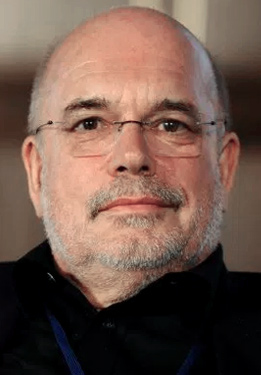 At June 30, 2015 the Inaugural Meeting of the Coordination Council of the NetMundial Initiative (NMI.CC) elected a "Quintett" to guide its activities through the global Internet Governance Ecosystem. Alibaba's CEO Jack Ma from China, ICANN's President Fadi Chehade, Brazilian's Minister Virgilio Almeida and two woman: Eileen Donahou from Human Rights Watch (HRW)) and Marilia Maciel from the Center of Technology and Society (CTS) in Rio de Janeiro are sharing now the helm to bring more steam to this new innovative multistakeholder platform. more
 Today, Friday April 27, ICANN had promised an update on the problems that led to its TLD Registration System (TAS) being taken offline on April 12. As the working day ends in Europe, that update has yet to come. Even if it does, I would not expect anything more concrete than the "we are still working on the issue, thanks for your patience" message of recent days. So what's really going on here? Does anyone at ICANN seriously expect us to believe that the tech team is "still reviewing the TAS data and checking the integrity of each and every application"? more
 A great deal of discussion is taking place about topics such as the digital economy, sharing economy and networked economy. Obviously these are concepts rather than being well-defined, but they are being used by the various players in the market to argue for or against certain developments. For example, in some of the broadband debates around the world, the digital economy is the key reason why national broadband infrastructure gets developed. more
 I saw this case in the excellent National Association of Attorneys General publication Cyber Crime e-newsletter. Many of us host or sponsor online communities of one form or another. On occasion, this means we must engage in moderation of the discourse in that community, and, as chance may arise, on occasion, we must give some chap the boot from the community for violating the AUP or the TOS. Inevitable, the booted chap screams "First Amendment Violation," to which we must respond, "The First Amendment restrains government actors -- we are not government actors." more
 The imminent expiration date (September 30) of the joint project agreement between ICANN and the US government, establishing the US as unilateral supervisor over Internet's addressing and Domain Name System (DNS) operations, has rejuvenated the call for an internationalization of Internet oversight. The average Internet user, however, is unlikely to benefit from a change in the current status quo as both alternatives, full privatization and intergovernmental oversight, are bound to affect both the Internet's innovative power and the personal liberties enjoyed by its users. more
 One of the other web sites I subscribe to is Stratfor. It's a global intelligence website and doesn't really have much to do with spam. But I like politics so I read it. They have some articles which you can get for free, but the better stuff you have to pay for. About two weeks ago, they ran a three-part series on Cyberwarfare. The first article was the title of this post, which you can access here (requires registration). In the article they described different types of cybercriminals and not-so-criminals which they referred to under the umbrella as "hackers." more
 I have written a short paper on the topic of Internet Governance. Since it includes a number of resources, it would be easier for me to just point to a link with the document itself. Below are some selected excerpts from the document. "Several myths have been spreading around the World Summit on the Information Society (WSIS), but especially after the first Internet Governance Forum (IGF): The critical Internet resources (CIR) consist only of the IP addresses and the domain name system... There are only 13 root servers..." more
Sponsored byCSC

Sponsored byDNIB.com

Sponsored byWhoisXML API

Sponsored byVerisign

Sponsored byVerisign

Sponsored byIPv4.Global

Sponsored byRadix

A World-Renowned Source for Internet Developments. Serving Since 2002.