
Welcome:
Login
|
Sign Up
|
About CircleID
Follow:
|
|
|

 When he wanted to show the transformative and unifying power of the Internet to open this week's ICANN meeting in Seoul, ICANN President Rod Beckstrom had an ace in the hole: Korean guitarist Jay (Jeong-hyun Lim), who became a global YouTube sensation with his hard-rocking version of Pachelbel's Canon. As I watched Jay wail on his gold-plated guitar to standing ovations, I couldn't help but think of Rod waxing that the Internet was a "symphony" of ideas and voices from around the world. more
 If you've followed the telecom industry at all, you've heard of the effort to rip-and-replace Chinese network gear used mostly in cellular networks and in some fiber networks. The U.S. government ordered that such equipment be replaced, although it has funded the replacement in dribs and drabs. There has been heightened scrutiny of Chinese electronics since the recently discovered Beijing-sponsored cyberattacks that have been reported to have infiltrated the networks of major U.S. more
Ok, so I had a day in Wellington that was not busy with other things so I thought I'd wander over to the ICANN venue and sit in on the PUBLIC Forum... I saw friends on the walk over and we entered the venue, chatting about several different things. They pulled out their badges. I didn't have one. They were admitted, I was denied entrance... more
 The US war on Huawei brought down sales internationally, but China's 700,000 5G cells and explosive cloud growth meant Huawei had an up year. The chip blockade did hurt in Q4 and will continue to hold down sales in 2021. Huawei has sufficient reserves to outlast the United States until China catches up in chip production. Perhaps the most important figure in the financial report was the $55 billion cash. Another $10 billion will come in from the sale of Honor/Glory. more
 Before we get into what DNSSEC is and the benefits of it, let's talk about some of the other potential pitfalls of DNS. One of the most significant issues we have to deal with are denial-of-service (DoS) attacks. While DoS attacks are not specific to DNS we have seen DNS be a frequent target of these attacks. more
 At the Virus Bulletin conference last month, Andrew Lee from ESET gave a talk entitled "Cyberwar: Reality or Weapon of Mass Distraction?" In it, Lee talks about how the term "cyberwar" is thrown around a lot these days. However, he disagreed with the use of the term because it uses inflationary language and overstates the case; today's "cyberwar" is not the same as a conventional ware. more
 In the run up to the launch of new TLDs there were a lot of rumours about which organisations would apply for which strings. Detractors might pick holes in the entire project, but it's very hard to argue against the merits of new TLDs specifically in the context of cultural linguistic communities that fall outside the realm of ccTLDs (country code top level domains). The case of Catalonia and .cat is probably the best one and has been vaunted as the poster child for new TLDs in some circles. more
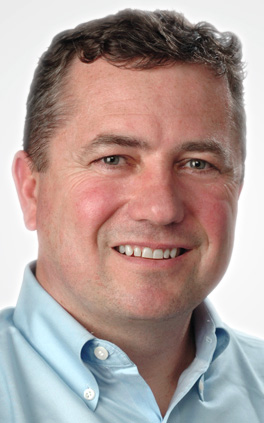 Wednesday's announcement by the Obama administration, that former Washington state governor Gary Locke has been nominated as the next Secretary of Commerce could be a good sign for Internet governance, and the continued globalization of the ICANN regime. The Chinese-American Locke brings key political capital and experience to the table. He is well respected within and has access to the most senior levels of the Chinese government... more
 For a very long time, predating the birth of ICANN, there's been a running battle about what should be required when one registers domain names. To oversimplify quite a lot, one side sees domain names as an essential component of free speech, so anyone should be able to register any domain without limit, the other notes that they're primarily used for commercial purposes and they enable quite a lot of mischief, so the more control, the better. more
 On August 16, 2022, UN Secretary-General Antonio Guterres nominated ten high-level and eminent persons to serve in a new IGF Leadership Panel (ILP). The ILP includes luminaries like Vint Cerf, the father of the Internet, Tomas Hendrik Ilves, the former president of Estonia, and Maria Ressa, the Philippine woman who won the Nobel Peace Prize in 2021. It is an interesting mix of "usual suspects" and "fresh blood." more
 There is an urgent need to clarify the GDPR's territorial scope. Of the many changes the GDPR will usher in this May, the expansion of EU privacy law's territorial scope is one of the most important. The GDPR provides for broad application of its provisions both within the EU and globally. But the fact that the GDPR has a broad territorial scope does not mean that every company, or all data processing activities, are subject to it. more
 Often when looking at IPv6 deployment statistics, the size of the organisation or the network is not taken into account. In this article, we look at IPv6 deployment of Local Internet Registries (LIRs) per country in correlation to the size of the LIR. When looking at IPv6 deployment at the LIR level, we can look at the following two metrics... more
 It probably is because we are so good at doing that in our industry. We start with over-promising and under-delivering and then in following years we fix it. So why would 5G be different? Our admirable technology companies are telling us that 5G will be 100x faster than 4G and that it will have 50x lower latency. But my more independent technology colleagues tell me 'it all depends'. more
 Like many of you, I am keenly following the Comcast-Level 3 dispute and am trying to make sense of it all. The dispute confirms several universal principles about Internet traffic routing that have passed the test of time. ... Consumers pay Internet Service Providers ("ISPs") a monthly subscription with the expectation that the fee covers access to available content, i.e., the conduit. As the World Wide Web evolves and content options diversify to include full motion video, consumers simply expect their ISPs to make sure the download distribution pipes are sufficiently robust to handle high bandwidth requirements and commensurately large monthly download volume. more
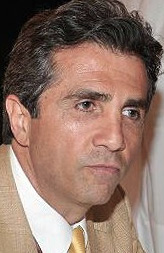 Some readers may wonder why I chose to raise the issue of "trust" now or even ask what it will take for ICANN to repair it. After all, the New gTLDs have been launched; applications have started being received, and all ICANN official announcements are that all is good and going according to plan. But many other readers and astute observers of this space, domestic and international, would not confuse the public dead silence we are hearing from ICANN and its insider community or the euphoria of the long awaited application submissions we are seeing to mean that all is perfect. more
Sponsored byVerisign

Sponsored byRadix

Sponsored byVerisign

Sponsored byCSC

Sponsored byIPv4.Global

Sponsored byDNIB.com

Sponsored byWhoisXML API

A World-Renowned Source for Internet Developments. Serving Since 2002.