
Welcome:
Login
|
Sign Up
|
About CircleID
Follow:
|
|
|

 Let's start by stating the obvious: All business communications depend on IP addresses. Without an IP address, you simply can't communicate over the network. No IP address means no access to your email server, no access to your website, and no cell phone or VoIP access. So much for the new VoIP system installed last month. What does that mean to you? more
 It appears that the FCC will permit exceptions to the standard, plain vanilla best efforts routing standard for Internet traffic, such as the paid peering arrangement recently negotiated between Comcast and Netflix. In both academic and applied papers I have supported this option, with several major conditions... With no opposition that I have seen, companies like Akamai offer better than best efforts routing of "mission critical" traffic from content source to last mile, "retail" Internet Service Providers. more
 For companies with global aspirations, Russian has long been considered a "must support" language. These days, that is no longer the case. But even before Putin decided to invade Ukraine, the Russian language had been slipping, ever so slightly, in global website support. While support for Ukrainian has been steadily rising. I’ve been tracking the languages supported by the leading global brands for nearly 20 years and... more
 With the ICANN Silicon Valley in San Francisco meeting just six short weeks away, the Internet community's hopes of seeing the launch of the new generic top-level domains (gTLD) program have been once again reinvigorated. A meeting of the ICANN Board of Directors last week produced encouraging resolutions that have given hopeful gTLD applicants the clearest indication yet that San Francisco will be the venue for the final approval of the Applicant Guidebook and the beginning of the Internet's next extraordinary phase of evolution. more
My day job, which includes finishing a book, updating a broadband law treatise, and trying to engage undergraduate students in the challenges of telecommunication and Internet policy, prevents me from weighing in each time I see yet another outrageous claim on such issues as network neutrality, broadband market penetration, and the competitiveness of U.S. telecoms markets. But I have to make time for this one. more
 A year ago, under the leadership of the Internet Corporation for Assigned Names and Numbers (ICANN), the internet naming community completed the first-ever rollover of the cryptographic key that plays a critical role in securing internet traffic worldwide. The ultimate success of that endeavor was due in large part to outreach efforts by ICANN and Verisign which, when coupled with the tireless efforts of the global internet measurement community, ensured that this significant event did not disrupt internet name resolution functions for billions of end users. more
This week, the RightsCon Silicon Valley 2016 conference is taking place in San Francisco. Since the use of encryption in general and the Apple/FBI case in particular are likely to be debated, I want to share a perspective on system security. My phone as a system The Apple/FBI case resolves around a phone. Think of your own phone now. When I look at my own phone I have rather sensitive information on it. more
 The Internet's Domain Name System undertakes a vitally important role in today's Internet. Originally conceived as a human-friendly way of specifying the location of the other end of an Internet transaction, it became the name of a service point during the transition to a client/server architecture. A domain name was still associated with an IP address, but that 1:1 association was weakened when we started adjusting to IPv4 address exhaustion. more
 Buzz Lightyear, the astronaut character from the movie Toy Story, is known for his tagline, "To infinity, and beyond!" ICANN can take a lesson from the ebullient Buzz with respect to accountability and transparency. Just as Buzz believed he could fly beyond infinity, ICANN should view full implementation of the Accountability and Transparency Review Team (ATRT) recommendations not as the last stop, but as the next stop on its important journey of accountability and transparency. more
 In the coming days, the Internet Governance Forum Dynamic Coalition on Internet Standards, Security and Safety will be announced on the IGF website. The following is an invitation to participate, share ideas and best practices, the willingness to take on a new approach towards mass deployment of internet standards and ICT best practices. Feel free to reach out to us and start working towards a kick-off meeting at the global, virtual Internet Governance Forum in November. more
 A number of outlets have reported that the U.S. Post Service was hacked, apparently by the Chinese government. The big question, of course, is why. It probably isn't for ordinary criminal reasons: The intrusion was carried out by "a sophisticated actor that appears not to be interested in identity theft or credit card fraud," USPS spokesman David Partenheimer said. ... But no customer credit card information from post offices or online purchases at usps.com was breached, they said. more
 The Caribbean needs more robust infrastructure to support the delivery of local online services during the COVID-19 pandemic and for crises to come. Public health and safety mandates, from social distancing and quarantines to stay-at-home orders and curfews, have confined an estimated one billion persons to their homes globally. The sudden restrictions on social movement have created a reliance on the Internet and technology-enabled services. This should come as no surprise. more
 Every time Google becomes involved in telecommunications it gets international media coverage; and every single time the same question is raised -- why does Google become involved in telecoms infrastructure, plus the underlying issue of it becoming a telecoms operator. This time the question is -- why does Google want to become involved in mobile telecoms and how is it going to compete with the other operators? more
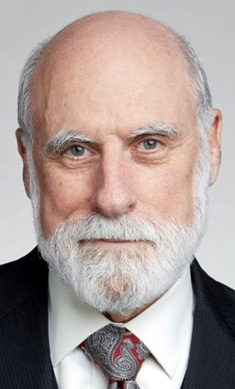 In the fall of 1998, I was present at the first meeting of the ICANN Board which was then made up of very senior, prominent parties from a broad spectrum of sources. Much to her credit, Esther Dyson accepted the position as the first Chair of the ICANN Board for the newly birthed organization. I was in attendance in support of the nomination of Michael Roberts as the first ICANN CEO. It was a time of uncertainty. more
 Abusive behavior that leverages the domain name system (DNS) continues to be a problem, with a reach that has been widely and credibly documented. There is little doubt that bad actors continue to use the DNS for nefarious and costly purposes. While the amendments made in 2024 to ICANN's Registry Agreement (RA) and Registrar Accreditation Agreement (RAA) were a step in the right direction, more advanced tools are needed to bring abuse rates down. more
Sponsored byIPv4.Global

Sponsored byRadix

Sponsored byDNIB.com

Sponsored byVerisign

Sponsored byCSC

Sponsored byVerisign

Sponsored byWhoisXML API

A World-Renowned Source for Internet Developments. Serving Since 2002.