
Welcome:
Login
|
Sign Up
|
About CircleID
Follow:
|
|


|
||
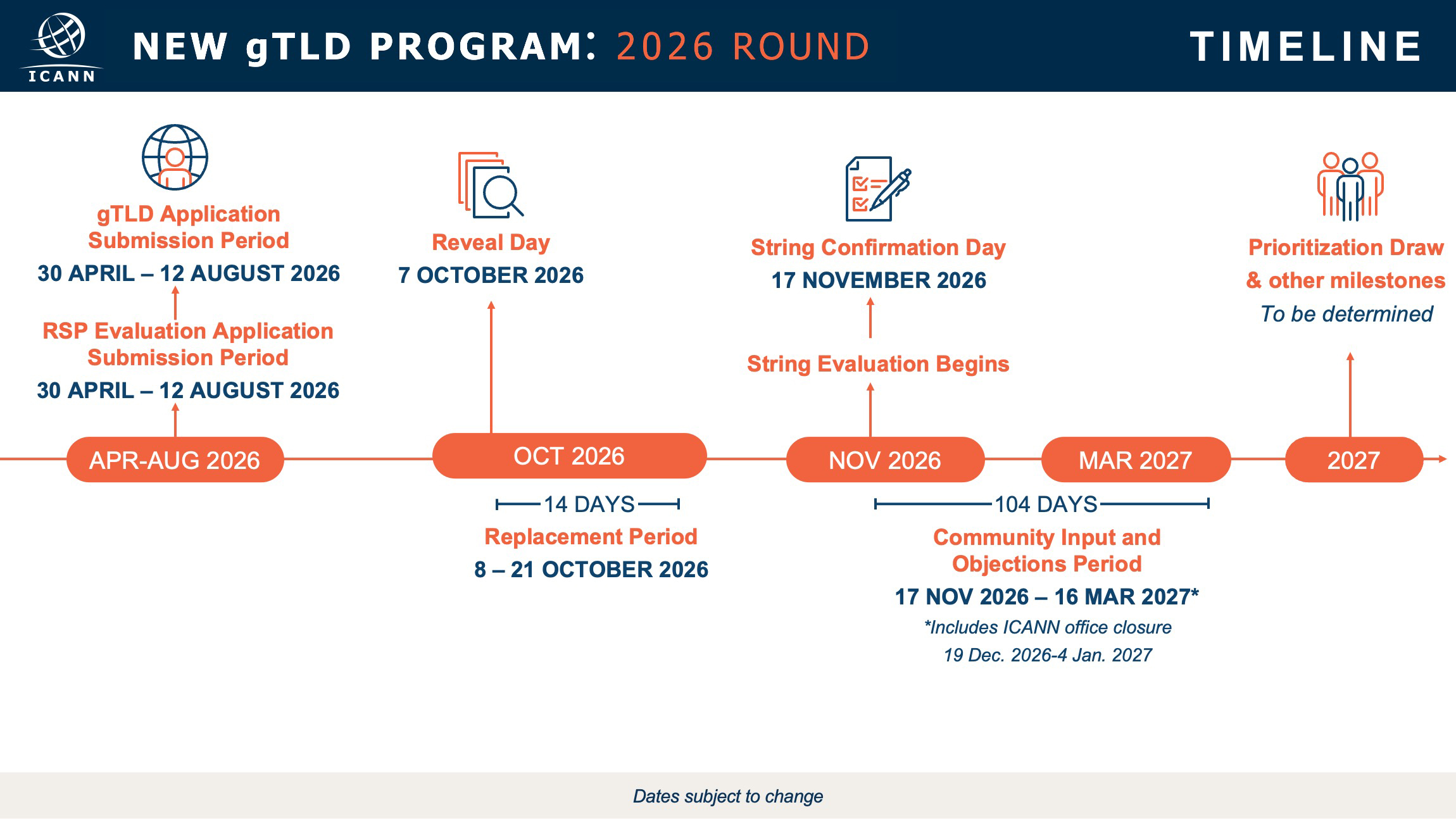
The Internet Corporation for Assigned Names and Numbers (ICANN) has appointed three independent objectors to examine applications in the 2026 round of new generic top-level domains (gTLDs), establishing a mechanism for challenging proposed domain extensions on public-interest and community grounds.
Daniel Müller will chair the three-member team, alongside Abdelmohsen Sheha and Eran Sthoeger, according to ICANN’s October 23 announcement. The appointments followed a competitive selection process launched in March.
The independent objectors can challenge applications without representing a particular individual, organization or commercial interest. Their authority is limited to two grounds: Limited Public Interest, concerning conflicts with internationally recognized legal norms of morality and public order, and Community, concerning substantial opposition from a significantly affected community.
ICANN cannot direct their decisions. Neither the organization nor its board can require an objector to file or withhold a challenge. The three-person structure is intended to reduce potential conflicts of interest associated with assigning the responsibility to a single individual.
The 2026 Applicant Guidebook also constrains their authority. Objectors must consider public comments and cannot challenge an application unless at least one opposing comment has appeared publicly. They generally cannot pursue an objection on grounds already raised by another party, except under extraordinary circumstances.
Müller previously served as counsel to the independent objector during ICANN’s 2012 application round. Sheha is an Egyptian senior judge and United Nations Appeals Tribunal judge with expertise in telecommunications regulation. Sthoeger is an international lawyer specializing in dispute resolution and public international law.
The objection window opens November 17, when ICANN is scheduled to publish the confirmed list of applied-for strings. Independent objectors will have 111 calendar days to file challenges, seven days longer than the general public objection period. They may also appeal objection-panel determinations and participate in mediation or settlement proceedings.
The confirmed application list and associated public comments will help determine the team’s potential workload. ICANN has not announced an expected number of independent objections, and the appointment of three objectors does not indicate how many challenges will ultimately be filed.
The mechanism provides an additional avenue for examining applications that raise public-interest concerns but might otherwise lack a party willing or eligible to pursue a formal objection. Whether that authority results in contested proceedings will become clearer as the 2026 round advances through application review.
Sponsored byIPv4.Global

Sponsored byWhoisXML API

Sponsored byVerisign
Sponsored byRadix

Sponsored byVerisign

Sponsored byDNIB.com

Sponsored byCSC

A World-Renowned Source for Internet Developments. Serving Since 2002.