
Welcome:
Login
|
Sign Up
|
About CircleID
Follow:
|
|
|

A new nonprofit organization called the Open Web Foundation (OWF) launched today with a mission to be an independent non-profit dedicated to the development and protection of open, non-proprietary specifications for web technologies. "The Open Web needs Open Data, Open Date needs Open Specifications," is one of the statements used in today's opening presentation. With backing from some of the biggest companies including Google, MySpace, Facebook, and Yahoo, the foundation plans to serve as a placeholder for "all the legal dirty work that needs to happen in order for data portability to become a reality." more
C-SPAN interviews professor Gene Spafford from Purdue University on the topic of cybersecurity and how the current Internet is a conduit for all types of "cybercrime". He also talks about the much discussed article "A New Internet?" by John Markoff in the February 14, 2009, New York Times in which he was quoted. The piece argued for a new type of Internet that is more secure with the trade-off of users giving up more of their anonymity. Professor Spafford talks about alternative solutions and he responded to questions via telephone calls and email. more
Several wireless, cable and broadband trade associations today called on the U.S. Court of Appeals for the District of Columbia to reverse the net neutrality ruling that passed last month in a 2-1 decision by a three-judge panel. more
"The chairman of the U.S. Federal Communications Commission is moving quickly to replace the Obama administration's landmark net neutrality rules and wants internet service providers to voluntarily agree to maintain an open internet," David Shepardson reporting in Reuters. more
 IPv4 scarcity turned regional internet registries from clerks into gatekeepers of a valuable resource. Yet liability caps remain trivial, leaving powerful institutions with little accountability and incentives for conflict and structural breakdown ahead. more
 The "Decoding Internet Governance Stakeholders" series of articles invites the community to ponder what underlies the labels that define our interactions, roughly 20 years after the "Tunis Agenda for the Information Society" called for the "full involvement of governments, business entities, civil society and intergovernmental organizations", as well as to "make full use of the expertise of the academic, scientific and technical communities". more
Amidst debates concerning privacy rules for ISPs, Comcast in an FCC filing on Monday has urged the Commission to not interfere with business models offering discounts or other value to consumers in exchange for allowing ISPs to use their data. more
In a speech today from the White House, President Obama declared that the United States' computers and digital networks are strategic national assets and that he will personally appoint a cybersecurity coordinator to oversee the effort to protect this critical infrastructure. more
 During the last Computer Law Conference organized by ADIAR (Argentina Computer Law Association) and the Universidad Nacional de Sur, I gave a conference on the Internet of Things, cybercrime and dangerous situation presented by the lack of proper regulation -- a topic in which I have one of my research projects. At the moment some people argued that I was talking about something that might happen in a relatively distant future, dissenting with my view that the possibility was imminent.. more
"ICANN faces first post-transition test of UN power (for real this time)," reports Kevin Murphy today in Domain Incite. more
The Internet Society's President and CEO, Kathy Brown, has highlighted how connecting the unconnected and building trust are the two most pressing imperatives facing the Internet today. more
Governments are toying with the idea of asking ICANN for greater powers over gTLDs that match their geographic features," Kevin Murphy reporting in Domain Incite. more
In his last meeting today, Federal Communication Commission (FCC) chairman Kevin J. Martin, announced that he will be leaving the commission and will not be staying in the Obama administration. While the chairman had previously declined commenting on his future plans, the departure did not come unexpected. In the statement after announcing his departure at the FCC meeting, Martin also mentioned that he would depart Jan. 20 to become a Senior Fellow at the Aspen Institute in Washington, D.C. This announcement follows reports that President-elect Barack Obama will nominate Julius Genachowski to be the next FCC chairman. more
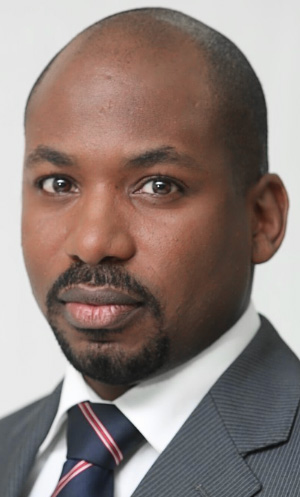 Grenadian Prime Minister Dickon Mitchell is calling for Caribbean policymakers and business leaders to recognise the significance of artificial intelligence technologies. Artificial intelligence, or AI, refers to the ability of computer systems to do tasks that typically require human intelligence, such as learning, reasoning, problem-solving, and decision-making. more
 This past meeting of the Internet Corporation for Assigned Names and Numbers (ICANN), ICANN67, was intended to be held in person in Cancun, Mexico, but was actually the first meeting to be held entirely online and virtually. It was a well-managed affair with fewer sessions than the in-person meetings and less opportunity for the community to convene and meet as individuals. The last-minute change from an in-person to a virtual meeting impacted ICANN's ability to provide translation services for the full set of UN-supported languages, Arabic, Chinese, English, French, Russian, and Spanish. more
A World-Renowned Source for Internet Developments. Serving Since 2002.