
Welcome:
Login
|
Sign Up
|
About CircleID
Follow:
|
|
|

Here are the top ten most popular news, blogs, and industry updates featured on CircleID in 2011 based on the overall readership of the posts for the year. Congratulations to all the participants whose posts reached top readership and best wishes to the entire community for 2012. Happy New Year! more
 Elon Musk assured us that he would not stop the Starlink service in Ukraine. But, given his feud with Trump, his criticism of President Zelensky, and his rash actions with DOGE, can he be trusted? (His termination of USAID is estimated to have resulted in 340,000 deaths so far.) When askedabout Musk's influence, Josef Aschbacher, director general of the European Space Agency, said he declined to comment on "the internal politics of the United States and who should influence these decisions" but added "If changes happen and if our US partners and friends are changing their plans, of course we will be ready for plan B. more
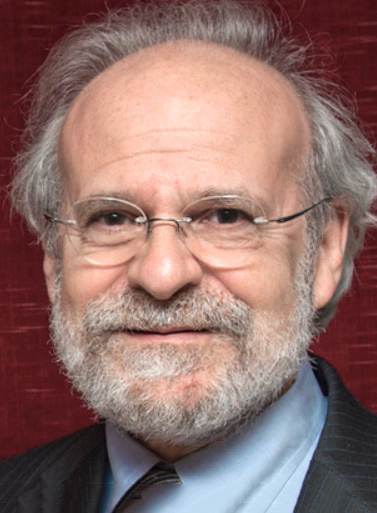 I've been trying to avoid writing about the Internet as such. With as "At the Edge" I'm looking at larger issues but can't escape writing more directly about the Internet. It seems as if everyone wants a say in Internet policy without distinguishing between technical and social issues. Today the term "The Internet" or, for many simply "Internet" is more of brand than a term for a specific technology and its implications. It has become too easy to talk about the Internet in lieu of understanding. We also see the converse -- a failure to recognize "Internet" issues. more
 Wikis have been around for a long time on the Web. It's taken a while for them to transform from geek tool to a mainstream word, but we're here now. Last week at the ICANN Meeting in Vancouver, it was fun to watch hundreds of people get introduced to Wikis and start using them, thanks to Ray King's ICANN Wiki project. In the past few days since, I've come to believe that Wikis are doomed unless they start thinking about security in a more serious way. more
 As the new-gTLD programme - the ICANN initiative to add a large number of new domain extensions (top-level domains, or TLDs) to the Internet - continues to see ongoing launches of new TLDs, we conduct a new retrospective of the activity landscape of the most recent extensions to have been launched. This new study focuses on all new-gTLDs to have entered their Sunrise or General Available periods since the start of 2023, following a previous overview by Stobbs of the full new-gTLD landscape. more
Looking back at 2010, here is the list of top ten most popular news, blogs, and industry news on CircleID in 2010 based on the overall readership of the posts (total views as of Jan 1, 2011). Congratulations to all the participants whose posts reached top readership and best wishes to the entire community for 2011. Happy New Year! more
 Almost every conversation I have with folks just learning about IPv6 goes about the same way; once I'm finally able to convince them that IPv6 is not going away and is needed in their network, the questions start. One of the most practical and essential early questions that needs to be asked (but often isn't) is "how do I lay out my IPv6 subnets?" The reason this is such an important question is that it's very easy to get IPv6 subnetting wrong by doing it like you do in IPv4. more
 Recent attention to the Eighth Circuit decision in Coca-Cola v. Purdy brings to mind the class of sometimes difficult cases involving the use of another's trademark as a domain name for criticism. An ICANN UDRP decision, Full Sail Inc. v. Ryan Spevack, Case No. D2003-0502 (WIPO October 3, 2003), by Mark VB Partridge, presiding panelist, with Frederick M. Abbott and G. Gervaise Davis III, included a review and analysis of the "your trademark sucks.com" cases that remains a useful reference worthy (I hope) of the lengthy quote below. more
Once again it is time for CircleID's annual roundup of top ten most popular posts featured during the past year (based on overall readership). Congratulations to all the 2015 participants and best wishes in the new year. more
 It seems that there is an increasing level of interest in the topic of IPv4 address exhaustion, so I thought I'll share a set of answers to the most common questions I've been asked on this topic in recent times. ... If there is a common factor in many of these challenges, it is scaling the network to meet an ever expanding agenda of more users, more devices, more traffic, more services and more policies. more
 The term "attack surface" is often heard in cybersecurity conversations. It refers to the sum of all possible attack vectors or the vulnerabilities that threat actors can exploit to penetrate a target network or damage an organization somehow. An unused and forgotten subdomain, for instance, can become an attack vector when taken over. Certain categories of companies have very large attack surfaces. Such is the case of streaming media businesses like Netflix and HBO Max. more
 Want a sense of just how much traffic VeriSign is receiving from its SiteFinder service? Alexa, with its Alexa Toolbar and associated traffic tracking services, makes it easy to find out...Over the past three months, taken as a whole, VeriSign had traffic rank 1,559. But today its traffic rank is 19, meaning... more
Google revealed on its official blog today that it is handling an average of more than 70 billion requests per day on its free Public DNS service. According to VeriSign's latest public statistics, it is handling only an average of 59 billion DNS requests per day, less than that handled by Google. more
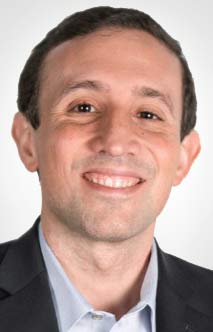 In light of the Biden administration's recent efforts in protecting critical infrastructure from cyber threats, new research from CSC indicates that a majority of the top energy companies in the U.S. are vulnerable to attack due to shortcomings in their online operations. Specifically, these organizations are vulnerable to domain name and domain name system (DNS) hijacking and phishing attacks based on their lack of effective domain security. more
The eighth RIPE NCC hackathon takes on the Quantum Internet! The hackathon will be held during the weekend before RIPE 77 in Amsterdam, and is co-organised by QuTech and TU Delft, along with the RIPE NCC. We're bringing together network operators, quantum networking researchers, students, hackers, software developers and artists, to imagine and build the tools for the future Internet. more
Sponsored byRadix

Sponsored byDNIB.com

Sponsored byVerisign

Sponsored byWhoisXML API

Sponsored byVerisign

Sponsored byIPv4.Global

Sponsored byCSC

A World-Renowned Source for Internet Developments. Serving Since 2002.