
Welcome:
Login
|
Sign Up
|
About CircleID
Follow:
|
|
|

 Like everyone else applying for new gTLDs, the Donuts team thought it would now be poring over a list of applicant names and strings, nodding heads and at times raising eyebrows. The timing didn't work out that way. ICANN did the right thing by closing TAS temporarily in order to understand what it was dealing with. It's easy enough for applicants to get rattled by what they think may have happened... more
 A common security prediction for 2010 is the continued rise of malware and phishing attacks on mobile phones. The MarkMonitor Security Operations Center recently detected an interesting twist on this theme involving a popular smartphone and the latest smart technologies used by cybercriminals. In this case, instead of compromising a smartphone to steal its information, cybercriminals used phishing techniques to clone smartphones. more
 A few weeks ago, when I was lurking around IPv6, I found that my own www.ipv6.tk was my first ever IPv6 domain. A "whois" on the domain says that it was registered in 2005, but something told me that I actually started this earlier. ?I therefore logged in at www.nic.tk and could see that my first feeling was correct; the first invoice for ipv6.tk was actually paid in the year of 2002. Here are some of the key things that I have experienced and learned over my first ten years. more
 A few days ago I wrote about a piece of my intellectual property, an article I wrote and posted on DaileyMuse.com, being stolen, plagiarized, and posted on another web site under a different authors name. I hadn't been looking for my work elsewhere, I was simply browsing the access logs and visiting other websites that stood out. As a result of finding my work posted elsewhere without my permission, I contacted the owner of the website by email and provided 24 hours to remove the content before I pursued legal action. more
 In spite of being a latecomer to the race to deploy a constellation of low-Earth orbit (LEO) broadband Internet satellites, Amazon's Project Kuiper will be a formidable competitor. SpaceX, OneWeb and Telesat already have test satellites in orbit, but Amazon has several strategic advantages. For a start, each of the LEO broadband competitors plans to end the digital divide by providing global connectivity to end-users and small organizations in underserved areas... more
 There has been wide coverage of ICANN's decision this week to adopt a new process for creating new global Top Level Domains (gTLDs). Publishing a clear, transparent and objective process is thought likely to result in a considerable expansion of gTLDs -- although nobody really knows whether this means "quite a lot" or "many thousands"... Less attention has been given to one of the new tests ICANN will use when considering whether to approve a new gTLD, contained in GNSO's sixth recommendation... more
 On 30 September 1850 at Dresden, the first international treaty was issued among the first sovereign nations to internet their national electronic communication networks. It was known as the Dresden Convention, and culminated several weeks hammering out basic requirements and techniques to implement an internet spanning the Austro-German European continent at the time, and established a continuing "Union" of signatories to evolve the provisions of the treaty. more
 In the global telecoms industry, it looks as though 2013 will be remembered as the year when construction of new greenfield HFC networks came to a halt. Of course, there will still be upgrades to existing networks but the cost of fibre deployment -- linked to its much lower operational cost -- is now convincing cablecos and telcos alike to build new fibre networks wherever possible. This is not necessarily directly driven by customer demand, but by network costs and network efficiencies. more
 You may recall a number of years ago when Google experimented with delivering broadband from balloons in an effort labeled Project Loon. The project was eventually dropped, but a remnant of the project has now resurfaced as Taara - broadband delivered terrestrially by lasers. more
DENIC (the registry of .DE and the top-level domain name extension of Germany) has just recently announced that it has cracked the mark of 17 million domain names registered. As one of the most successful ccTLD's (country-code top-level domain names), the press release of DENIC is providing some additional interesting statistics. Such as that there are now 30k new registrations on average every month and that DENIC has over 300 members (mostly domain name registrars) to register domain names on behalf of their customers. more
 Domain name registration is a hot industry. Registrars represent a growing multi-billion dollar industry with the keys to the Internet for any organization hoping to have a web presence. Further, because of their role as one of the gatekeepers to the Internet, registrars have the unique ability and are often asked to take action against illegal activity online. This fact was highlighted in the report released this week by the Office of the U.S. Trade Representative, the 2015 Out-of-Cycle Notorious Markets List. more
 DNS is not something that most people think about when using the Internet. Neither should they have to: the DNS is just part of the infrastructure in the same way that IP addresses are. The only time a user ought to notice the DNS is when it breaks (and it should never break). If that's true, then we ought to expect any Internet client - including web browsers - to use the very same infrastructure as everything else and for the DNS resolution mechanisms to be the ones offered by the operating system. What makes browsers different? more
 To paraphrase an old Klingon proverb, there can be no spam solution, so long as e-mail is free. Yahoo has unveiled plans to launch its Domain Keys software as an open-source toolkit in 2004. The intent is to allow developers of major e-mail systems to integrate Yahoo's public/private key authentication system into their own software and thus create momentum for a standard whose raison d'etre is identify verification. This is a commendable effort, but a closer look reveals that it will not only not stop the spam problem, it may have almost no effect at all. more
 The growing notion among big advertising agencies and brand marketers is that as search engines find answers instantly, there's no real need to enter a domain name in the browser and therefore domain names are far less important. They're absolutely right. Why would you type www.rolex.com when you can simply enter 'Rolex' and be there before you blink? But where they are seriously wrong is when you enter anything like 'Interlink', 'Pronet', 'National Trust', 'Premier Traders' or 'United Manufacturing', uncontrollable citations will gush out from every corners of the world. more
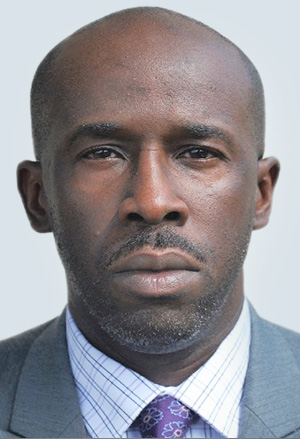 There's a deluge of hype around Bitcoin and blockchain technologies right now, and policymakers and regulators in the Caribbean are doing their best to wrap their heads around the advantages and disadvantages of this virtual currency. Similar questions are being contemplated in the ICTs for development (ICT4D) community, taking into account that electronic money (e-money) platforms such as Safaricom's M-PESA have essentially solved the financial inclusion quandary for millions of people in Kenya. more
Sponsored byVerisign

Sponsored byDNIB.com

Sponsored byCSC

Sponsored byVerisign

Sponsored byWhoisXML API

Sponsored byRadix

Sponsored byIPv4.Global

A World-Renowned Source for Internet Developments. Serving Since 2002.