
Welcome:
Login
|
Sign Up
|
About CircleID
Follow:
|
|
|

 When one person transmits the speech of another, we have had three legal models, which I would characterize as Magazine, Bookstore, and Railroad. The Magazine model makes the transmitting party a publisher who is entirely responsible for whatever the material says. The publisher selects and reviews all the material it published. If users contribute content such as letters to the editor, the publisher reviews them and decides which to publish. more
 How can we work together to improve the security and resilience of the global routing system? That is the question posed by the "Routing Resilience Manifesto" site with the suggested answer launched today of the "Mutually Agreed Norms for Routing Security (MANRS) document, to which a number of network operators have already signed on as participants, including: Comcast, Level 3, NTT, RUNNet, ClaraNet, SURFnet, SpaceNet, KPN and CERNET. more
 On Monday, Facebook announced that they were introducing a new messaging platform. Facebook is careful to point out that this is not a replacement for email; it is not email, so they claim. So what is it? This messaging platform is basically a way to talk to people outside of Facebook from Facebook... Essentially, independent of the platform, you can still use the feature. It's kind of like everything Java promised in the 1990's -- it runs on Windows, the Mac or Unix. more
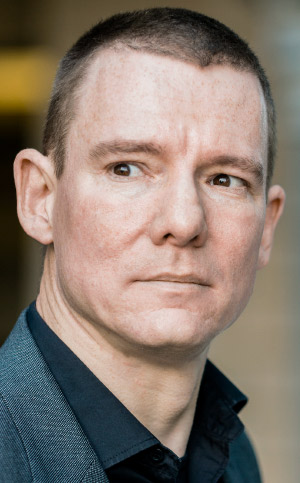 My attention was drawn recently to the article Europe Is About to Adopt Bad Net Neutrality Rules. Here's How to Fix Them by Barbara van Schewick from Stanford Law School. Much as I would like to spend my morning doing other work, I can see imminent harm that these (and many similar) proposals cause to the public. As a responsible professional and native European, I would like to summarise why it is imperative for EU regulators to ignore these siren calls (if they want to retain their legitimacy). more
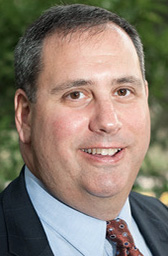 Public Interest Registry is the industry leader of DNS Anti-Abuse efforts on the Internet. Since our inception, we have worked to empower people and organizations that use the Internet to make the world a better place. Whether a .ORG is the foundation of an individual voice, a global non-profit, or any organization that is part of the mission-driven .ORG community, we are proud to have earned the trust of so many dedicated users. more
 The Internet Society today announced the launch of a survey to gain greater insights into multistakeholder governance perceptions and processes at all levels - national, regional, and international. The questionnaire is open to all interested participants and is available until 30 September 2013. The survey is one component of the Internet Society's broader initiative focused on the open and sustainable Internet. more
 Purists have long objected to HTML email on aesthetic grounds. On functional grounds, it tempts too many sites to put essential content in embedded (or worse yet, remote) images, thus making the messages not findable via search. For these reasons, among others, Matt Blaze remarked that "I've long thought HTML email is the work of the devil". But there are inherent security problems, too (and that, of course, is some of what Matt was referring to). Why? more
I'm just stepping back a minute to think about what Emerging Telephony actually is. You might have seen my earlier musings on the different philosophical underpinnings of "Western" telephony and "Eastern" thought. In an oversimplified nutshell, the Western approach puts the individual in the centre of the universe. The Eastern idea is to put the group in the middle. more
 Here's another apparent limitation of the Uniform Rapid Suspension System (URS), the domain name dispute policy that applies to the new generic top-level domains (gTLDS): Proceedings are unlikely to unmask cybersquatters hiding behind privacy or proxy services. Domain name registrants often use these privacy and proxy services to hide their identities when they register domain names. The services have legitimate uses but are controversial. more
 Two companies hope to revolutionize the Internet by providing global connectivity using constellations of low-earth orbit satellites -- Elon Musk's SpaceX and Greg Wyler's OneWeb. It seems that SpaceX gets a lot more publicity than OneWeb, but both are formidable... SpaceX is integrated -- building the rockets, satellites and ground stations themselves -- while OneWeb has a number of collaborators and investors, including Bharti Enterprises, Coca-Cola, Intelsat, Hughes, Totalplay Telecommunications, Virgin Galactic and Softbank. more
 It is somewhat ironic that, several years ago now, Rupert Murdoch (while hinting at China) said something along the lines of the new media constituting a threat to totalitarian regimes, and that these regimes would have to open up and democratise. At that time the entire the western world, led by America (perhaps quietly), applauded his statement. ... However, now that those western leaders are being confronted with exactly the same issues, and are seeing for themselves the enormous democratic benefits of the Internet, they are behaving in a most authoritarian way. more
 It's been a quarter of a century since the world's governments convened to draft up a common set of regulations about the conduct of international telecommunications. In December of 2012 the world's governments will convene to reconsider these regulations, to hopefully sign an updated set of regulations. This time around, this activity is generating considerable levels of public interest. Congressional hearings in the United States have been held, and various pronouncements of intent from various governmental, regional, and industry groups have been made. more
 Ookla recently tackled this question in one of its research articles. Ookla compared the time it takes to load pages for Facebook, Google, and YouTube on cellphones using 4G LTE networks versus 5G networks. Ookla thinks that page load speed is a great way to measure cellphone experience. The time needed to load a web page is directly impacted by latency, which measures the lag between the time a phone requests a website and that website responds. more
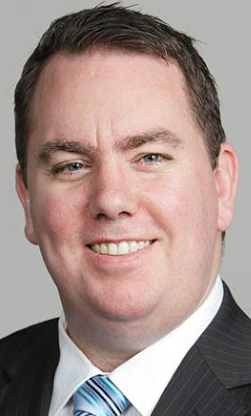 The Google-run .app TLD was always destined to draw attention and scrutiny, from the moment it fetched a then-record ICANN auction price of $25 million. Since it reached General Availability in May it has gained more than 250,000 registrations making it one of the world's most successful TLDs. However perhaps more interesting was Google's choice to add the .app TLD and its widely used .google extension to the HTTP Strict Transport Security (HSTS) Top-Level Domain preload list, offering an unprecedented level of security for all domains under .google and .app. more
 The controversy over the competing .africa TLD applications has been going on for some time. A recent decision by the International Centre For Dispute Resolution (ICDR) said that ICANN had breached its own by-laws and has questioned why ICANN won't allow a current board member and the former GAC Chair to speak to them and provide evidence. A letter that was published on the ICANN site yesterday suggests that ICANN may have changed their tune... more
Sponsored byVerisign

Sponsored byIPv4.Global

Sponsored byWhoisXML API

Sponsored byCSC

Sponsored byVerisign

Sponsored byDNIB.com

Sponsored byRadix

A World-Renowned Source for Internet Developments. Serving Since 2002.