
Welcome:
Login
|
Sign Up
|
About CircleID
Follow:
|
|
|

 Phishing is when bad guys try to impersonate a trusted organization, so they can steal your credentials. Typically they'll send you a fake e-mail that appears to be from a bank, with a link to a fake website that also looks like the bank. Malware offers another more insidious way to steal your credentials, by running unwanted code on your computer... I like VeriSign's characterization of this kind of malware as an insecure endpoint, the PC which is the endpoint of the conversation with the bank isn't actually under the control of the person who's using it. more
One of the essential features of the social compact that makes ICANN viable in its stewardship of the Domain Name system is that the operations of the Contracted Parties, i.e. Registrars and Registries, are governed by the cooperation of the contracted parties and the non-contracted parties, i.e. the stakeholders, in the creation of policy. In ICANN, contracts and other agreements are the method by which this policy is instantiated. more
 We continue to see consolidation in the broadband market and various games played by the cablecos and telcos to thwart competition or undermine network neutrality. Until regulators create true structural separation between infrastructure and service providers the chances of seeing genuine broadband competition are slim. It is interesting to note telecom regulators in North America have imposed structural separation in the past. more
I grew up in a utopian community in India.
I make this statement -- which may seem at best tangential to an article on the DNS -- at the outset because it suggests that I know something about ideology and ideologically charged debates.
Like the town where I grew up, the Internet was the product of dreamers, people who believed in the possibility of surmounting reality. In Code, Lessig compared early Internet euphoria to the euphoria that met the downfall of communism. He could just as well have compared it to the utopianism that accompanied the birth of communism. The point is that Internet pioneers were inspired by ideology, by a fervor to change the world. more
 The really important part of the World Conference on IT (WCIT) is not the internet battles that have caught the interest of the press - it is what will happen after the conference has ended. Membership of WCIT is on a per-country basis... Each country is free to make up its own delegation and these delegations can therefore represent a large variety of social, economic, business, legal, technical and other interests - as large and as wide as each country decides its delegation will be. more
 The RIPE 71 meeting took place in Bucharest, Romania in November. Here are my impressions from a number of the sessions I attended that I thought were of interest. It was a relatively packed meeting held over 5 days. So this is by no means all that was presented through the week... As is usual for RIPE meetings, it was a well organised, informative and fun meeting to attend in every respect! If you are near Copenhagen in late May next year I'd certainly say that it would be a week well spent. more
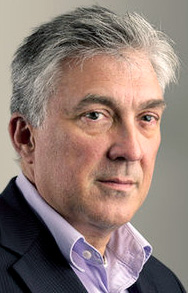 This week bank costumers of The Netherlands were shocked when they realised that online banking may not be as safe as they thought. Perhaps some were surprised to hear that what they think is money, is nothing but digits, something that does not exist. Their money only exist because we all act as if it exists and accept transactions between each other aided by software run by banks, if they haven't outsourced that function. more
 The POPClock tells us that there are 6,807,230,170 of us on this planet when I looked it up at 22:26 UTC (EST+5) Feb 26, 2010. In the meantime we are about to connect the 5 billionth cell phone user this year according to ITU Secretary-General Dr. Hamadoun Toure.
more
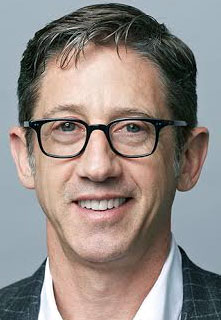 A recent exchange on CircleID highlighted a critical need for data to inform the debate on the impact of ICANN's post-GDPR WHOIS policy that resulted in the redaction of domain name registrant contact data. A bit of background: in my original post, I made the point that domain name abuse had increased post-GDPR. A reader who works with a registrar (according to his bio) commented: "Can you back up that statement with data? Our abuse desk has actually seen a reduction in abuse complaints." more
 On March 20th, Wall Street Journal (WSJ) Op-ed writer L. Gordon Crovitz published an article titled "Stop Obama's Internet Giveaway". In his opinion piece Mr. Crovitz opposed any near-term transition of the IANA functions... In the course of his article Mr. Crovitz also stated, "Icann already has been kowtowing to authoritarian regimes," alluding to former CEO Fadi Chehade's December 2015 decision to become a Co-Chair of the Advisory Committee to China's World Internet Conference... more
 Lee Dryburgh initiated a great thread in the Emerging Communications public group entitled What would your perfect phone be? There are 14 messages there at this moment with a lot of good ideas, but my first thought was the term "phone" is too limiting. Indeed, some of the correspondents' ideas also go far beyond the idea of a telephone. Here's what I want and fully expect to see, eventually. more
 You might expect that the IT department or security team knows who's sending email using your company's domains. But for a variety of reasons these groups are often unaware of many legitimate senders -- not to mention all the bad actors. Fortunately you can get a more complete view by using DMARC's reporting features. How does it happen? Product teams managing a new product launch or customer survey hire marketing consultants and Email Service Providers (ESP)... more
 With the loud crashing of a traditional drum ceremony and an impromptu electric guitar performance by a young Korean whose rendition of Pachabel has been downloaded sixty million times on YouTube, the 36th meeting of ICANN was kicked off this morning (Korean time) by new CEO Rod Beckstrom and his fellow Directors and assembled one thousand or so participants. ICANN has always been about change, but the atmosphere in Seoul this week is charged with a sense of new challenges and new opportunities. more
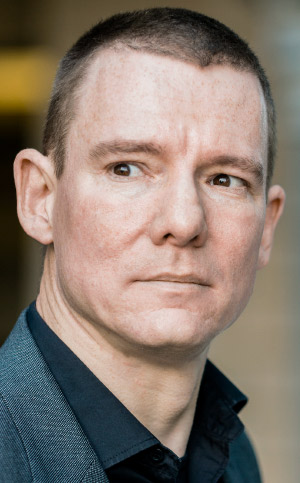 I was recently asked how telcos might come up with new business models for a world where all resources are under software control. The core idea is to match network supply and demand in space and time (and at all timescales). I've typed up my notes for the curious to critique...Today's telco is more like a static utility 'pipe', the way that gas, electric or oil are delivered. It sells direct access to raw network mechanisms, and users buy circuits that offer a fixed bandwidth in space and time. more
 This past May 19th, 5 years after its sunrise, puntCAT arrived at the 50,000 domain names landmark. We know that, nowadays, 50,000 domain names may hardly be described as shocking news, and, certainly, this is not our limit, and we believe there's still plenty of room for .cat to grow. Then, who and why should care about this number? more
Sponsored byDNIB.com

Sponsored byWhoisXML API

Sponsored byVerisign

Sponsored byIPv4.Global

Sponsored byRadix

Sponsored byVerisign

Sponsored byCSC

A World-Renowned Source for Internet Developments. Serving Since 2002.