
Welcome:
Login
|
Sign Up
|
About CircleID
Follow:
|
|
|

 This year in July gen. Keith Alexander, director of the National Security Agency and head of the US Cyber Command participated at DefCon, the hackers conference in Las Vegas. In his address, gen. Alexander said, among other things, "This is the world's best cybersecurity community. In this room right here is the talent our nation needs to secure cyberspace."... As someone, who is regularly meeting the top Russian cyber folks, I already know (unofficially, of course) how the words of gen. Alexander were met in Moscow. more
 The telecoms industry represents one of the most dynamic sectors in the world. Only 25 years ago 90% of all activities took place via telephone calls over fixed telephone lines. Now, within the broader ICT industry, telecoms is underpinning all of the new developments in relation to the digital, sharing and interconnected economies. It facilitates new social and economic developments in all sectors such as e-health, e-education, e-business, smart grids, smart cities, e-government, and so on. more
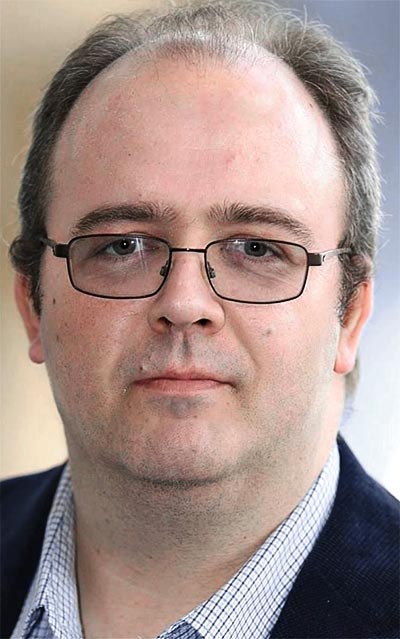 ASOP (Alliance for Safe Online Pharmacies) is often seen as taking a rather confrontational stance towards domain name registrars, registries and hosting providers. However both ASOP and others, including LegitScript, often cite the assistance they've received from internet industry players in their work. This year ASOP has decided to take this a step further... more
 An article from CBC earlier this year reported that beavers had chewed through an underground fiber and had knocked 900 customers in Tumbler Ridge, British Columbia off broadband for 36 hours. The beavers had chewed through a 4.5-inch conduit that was buried three feet underground. This was an unusual fiber cut because it was due to beavers, but animals damaging fiber is a common occurrence. more
 One of the "fathers of the internet," Vint Cerf, in a September 2019 article he published, said: "Today, hackers routinely break into online accounts and divert users to fake or compromised websites. We constantly need to create new security measures to address them. To date, much of the internet security innovation we've seen revolves around verifying and securing the identities of people and organizations online. more
 Admittedly, timing is not altogether "all" since there's a palette of factors that go into deciding unlawful registrations of domain names, and a decision as to whether a registrant is cybersquatting or a mark owner overreaching, is likely to include a number of them, but timing is nevertheless fundamental in determining the outcome. Was the mark in existence before the domain name was registered? Is complainant relying on an unregistered mark? What was complainant's reputation when the domain name was registered? What proof does complainant have that registrant had knowledge of its mark? Simply to have a mark is not conclusive of a right to the domain name. more
 I received a spam message the other day that went to my Junk Mail Folder. I decided to take a look at it and dissect it piece by piece. It really is amazing to see how spam crosses so many international borders and exploits so many different machines. Spammers have their own globally redundant infrastructure and it highlights the difficulties people have in combating the problem of it. more
 As part of a larger effort to make the internet more private, the IETF defined two protocols to encrypt DNS queries between clients (stub resolvers) and resolvers: DNS over TLS in RFC 7858 (DoT) and DNS over HTTPS in RFC 8484 (DoH). As with all new internet protocols, DoT and DoH will continue to evolve as deployment experience is gained, and they're applied to more use cases. more
 The coronavirus pandemic has, in the most emphatic way, shown us all just how interconnected everything and everyone is. A worldwide race is underway to minimize human interactions in order to avoid a global catastrophe. The inescapable consequence of these initiatives is an unprecedented shut down of the local, regional and global economy. The latest cost estimate to save the global economy is now at $7 trillion and climbing. more
 If you are a cloud provider, whether you are pure play or an internal IT department, it is very interesting to know who is buying cloud services, and why. In a recent survey by PB7 sponsored by EuroCloud Netherlands and others, a group of Dutch companies was interviewed about their motivations and hesitations around cloud computing. The survey's results were quite a bit more interesting than the usual lot. In this article I have cherry picked a few observations from the larger survey. more
 Trademarks and brands are often among a company's most valued assets. Customers associate trademarks and brands with producer integrity. They engender consumer trust. Without TMs and Brands, companies struggle for attention and find it more difficult to link the company's integrity and trustworthiness in the marketing of its goods and services. Representing company promise and customer expectations, they are uniquely positioned to symbolize common values and aspirations. more
 A hot topic in telecoms at the moment is 'software-defined networking' (SDN). This term covers a range of technologies that put networks under the control of centralised management software. But what if SDN misses the point of why broadband networks exist in the first place? Network equipment vendors are busy pushing operator CTOs to adopt a 'software telco' approach. A small army of analysts and consultants cheer this process on. more
 I don't (and probably won't) have anything substantive to say about the technical details of the just-announced Meltdown and Spectre attacks. What I do want to stress is that these show, yet again, that security is a systems property: being secure requires that every component, including ones you've never heard of, be secure. These attacks depend on hardware features... and no, many computer programmers don't know what those are, either. more
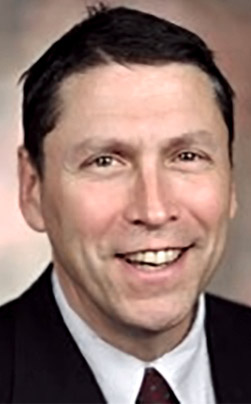 Honesty is the best policy. At the risk of anthromorphizing a regulatory agency, at the very least the FCC has not told the complete truth, or put itself in a position not to know the truth. The FCC has contributed to debates about what constitutes credible facts and statistics, and what this data means. For example, soon-to-be former FCC Chairman Kevin Martin asserted as the gospel truth his factual conclusion that cable television operators collectively have a 70% market share... The FCC should acknowledge that it may not know all the facts. more
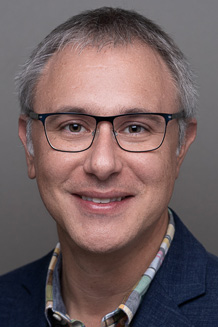 The initial instalment of my recent series of articles on domain name discovery1 considered the use of phonotactic analysis - that is, the measure of the similarity of a string to the 'corpus' of other words in a language - to identify available unregistered candidate domains which may be of interest for potential brandability. more
Sponsored byRadix

Sponsored byIPv4.Global

Sponsored byVerisign

Sponsored byDNIB.com

Sponsored byCSC

Sponsored byVerisign

Sponsored byWhoisXML API

A World-Renowned Source for Internet Developments. Serving Since 2002.