
Welcome:
Login
|
Sign Up
|
About CircleID
Follow:
|
|


|
||
|
||
2029 is three years away. Whether you see that time as long or short probably depends on what you intend to do by then. Success is a function of expectations.
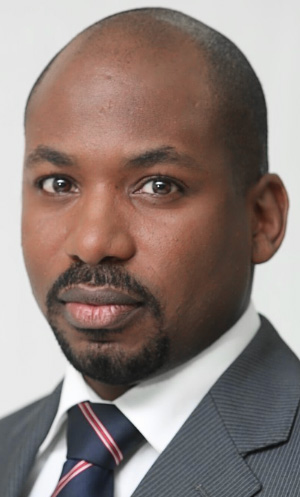
Worth writing down what Niel Harper expects.
The Barbados-born cybersecurity specialist was appointed in August as a Director of the Internet Corporation for Assigned Names and Numbers (ICANN), the non-profit that decides how the internet’s domain names and addresses are managed. He was selected by the organisation’s Nominating Committee (NomCom), which fills eight of the board’s sixteen voting seats. He takes his seat at the annual general meeting at ICANN87 in Bali in October 2026, for a term running to 2029.
Which is why the question is worth asking now: what does one seat actually change? Harper answered in writing, and he was specific about what he wants done in three years. Full Q&A below.
Q: What’s actually pulling you toward this role at this point in your career?
Fair question. The truth is, I don’t need to do this. And that’s kind of the point.
I grew up in a small community in Barbados, in a region that’s usually an afterthought in global Internet governance. I’ve spent twenty-five years earning a seat in rooms people from where I’m from rarely get invited into. At some point, showing up isn’t enough—you have to use the seat. So this isn’t about padding my CV. It’s about continuing to serve the global public interest, and ensuring that Latin America and the Caribbean get heard on decisions that shape how we connect to the world. It’s also about using my expertise in corporate governance, financial oversight, strategy oversight, cybersecurity, digital transformation, law, etc. to ensure that ICANN is run in a manner that best serves its global constituencies and the greater public good.
Q: When did you first know you were in real contention, and what was that moment like when the announcement actually landed?
I first knew I was in contention when I was shortlisted for the face-to-face interview at the ICANN Public Meeting in Seville, Spain. When the announcement landed, I felt a combination of relief, happiness, accomplishment and pride as a Caribbean citizen.
Q: Speaking of the Caribbean, how do you see yourself representing LAC’s specific interests at the table?
Firstly, my role on the ICANN board is to represent the interest of all users and stakeholders, including of course LAC. That being said, I would like to see more fellowships and structured on-ramps for LAC newcomers. On top of that, there is a need for continued investment in regional engagement and involvement in policy discussions. I can also ensure that input from LACRALO and LACTLD is actually heard and considered in board deliberations. Advocate for technical and policy work on DNSSEC deployment and DNS abuse mitigation that integrates LAC-specific data and outcomes.
To what extent do you see yourself as having come up through those capacity-building pipelines as well?
This is a great question! I don’t think we would be here talking today if it weren’t for these “fellowships and on-ramps”. I was an ARIN Fellow, ISOC Fellow to the OECD Technology Foresight Forum, ISOC Next Generation Leader, and participated in the DiploFoundation Internet Governance Capacity Building Program. These all served to expose me to the broader Internet ecosystem, the core issues and challenges for SIDS, and the inner workings of the different stakeholder groups. They also inspired me to commit to serving the Internet governance community for the last 15-16 years, and I will continue to do so for the foreseeable future.
Q: Looking three years out, at the end of this term, what would have to happen for you to call your time on the ICANN board a success?
Concretely, I’d want to see more Latin American and Caribbean voices actually shaping ICANN policy, not just attending its meetings. And this is through meaningful investment in fellowships and regional engagement.
I’d want DNS abuse and security to be measurably better, because that work matters to ordinary people who’ve never heard of ICANN but rely on the Internet being safe. I’d want the new gTLD round to actually be accessible to applicants from developing economies, not just formally open to them.
And I’d want at least one or two people from our region to come up behind me, ready to take this further than I did.
There are also areas such as reform and continuous improvement of the UDRP process; increasing ICANN accountability, transparency, and overall trust across constituency groups; increasing collaboration between the GAC and key constituency groups; and enhancement of the Registration Data Request Service (RDRS) that have been top of my mind. I’d like to have worked on effectively addressing these critical areas.
Sponsored byVerisign

Sponsored byWhoisXML API

Sponsored byDNIB.com

Sponsored byCSC

Sponsored byVerisign

Sponsored byRadix

Sponsored byIPv4.Global


A World-Renowned Source for Internet Developments. Serving Since 2002.