
Welcome:
Login
|
Sign Up
|
About CircleID
Follow:
|
|



|
||
|
||
Recent data shows that, in addition to increases in the number of security vulnerabilities, the average time to exploit those vulnerabilities has decreased dramatically, creating a dangerous multiplier effect. According to research conducted by Cogent Security, and as further reported by Dark Reading, the use of AI has significantly reduced the time to develop an exploit for a known vulnerability—compressing the window from publication of Common Vulnerability Enumeration (CVE) to exploit from 125 days down to a mere half of one day.
AI has both accelerated adversarial capabilities and expanded the attack surface, leading to higher probability of credential compromise. Revoking a digital certificate does not guarantee that every system will immediately stop trusting it. A system relying on cached status information may continue to accept the certificate until that information is refreshed. This gap between revocation and enforcement creates an exposure window—a problem we call Stale Trust.
While the threat landscape has accelerated, digital certificate validation hasn’t kept pace, and with the recent move away from status checking in webPKI, it’s arguably eroded. At the same time, recency in certificate status information is increasingly important for internal/private Public Key Infrastructure (PKI) environments. For decades, the certificate status information associated with digital certificates, typically obtained via periodic downloads of Certificate Revocation Lists (CRLs) or extended caching of Online Certificate Status Protocol (OCSP) information if enabled, was generally assumed good for extended periods of time. Now, with systems moving at machine speed and with the proliferation of digital certificate use across a diverse range of identity-based applications (e.g., network authentication, email, code signing, Internet of Things (IoT) and Industrial Control System (ICS) infrastructure, digital provenance, agentic identity and authorization, etc.), certificate validation gaps represent an increasing risk, leading to Stale Trust and raising the probability that trust decisions are made with outdated information.
To understand the implications of certificate validation gaps, Verisign commissioned a study by Forrester Consulting to evaluate how security leaders of high-assurance systems can reduce identity-based threats in their private/internal PKI by closing certificate validation gaps.
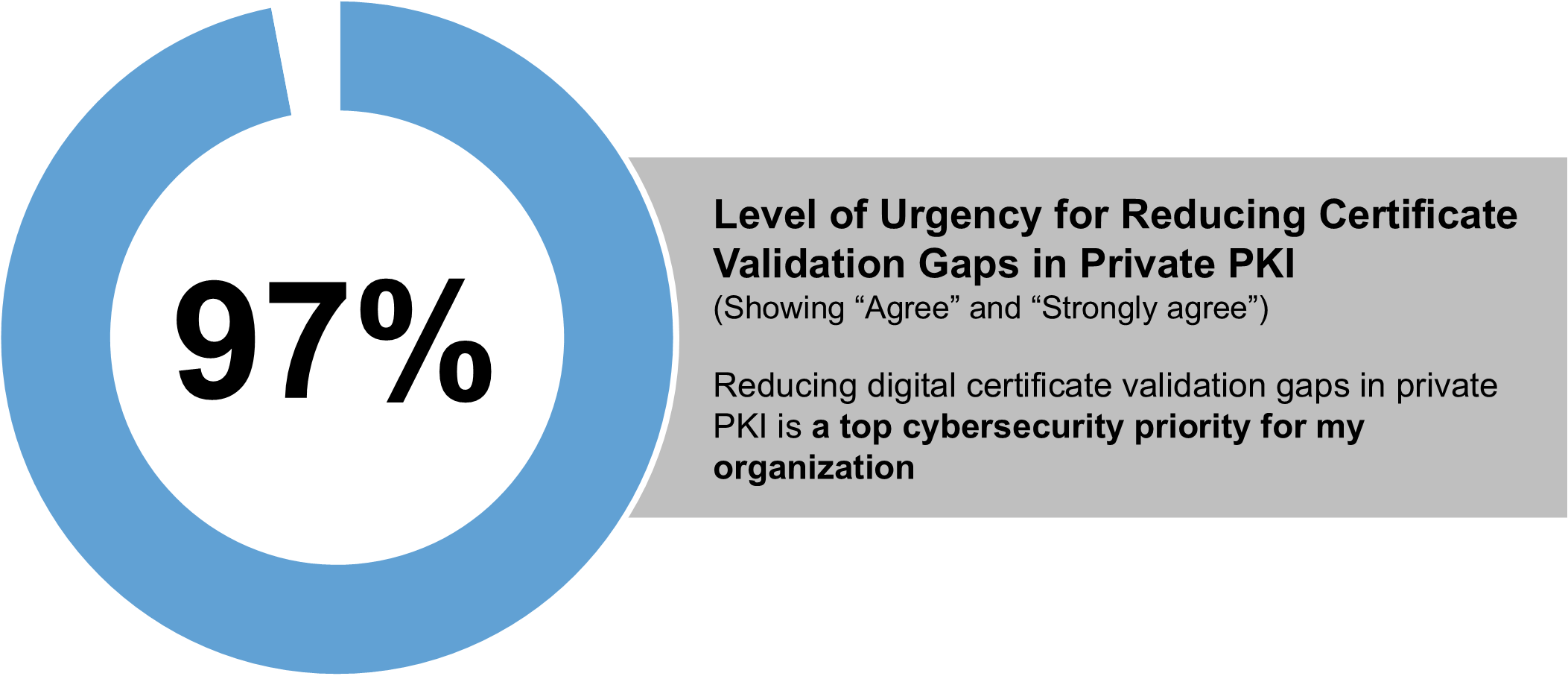
Digital Certificates are a widely used security foundation in enterprises today—the study found that the surveyed organizations depend on certificate-based trust to manage privileges and access, with an average of six digital certificate use cases. This means that timely certificate validity checking becomes fundamental to making the right user and machine identity trust decisions when granting access to networks, systems, and services. Ninety-seven percent of surveyed decision makers indicated that reducing private PKI validation gaps is a top cybersecurity priority for their organization.1 A similarly high percentage (96%) also reported that reducing these gaps would directly address challenges their teams face with certificate validity checking.
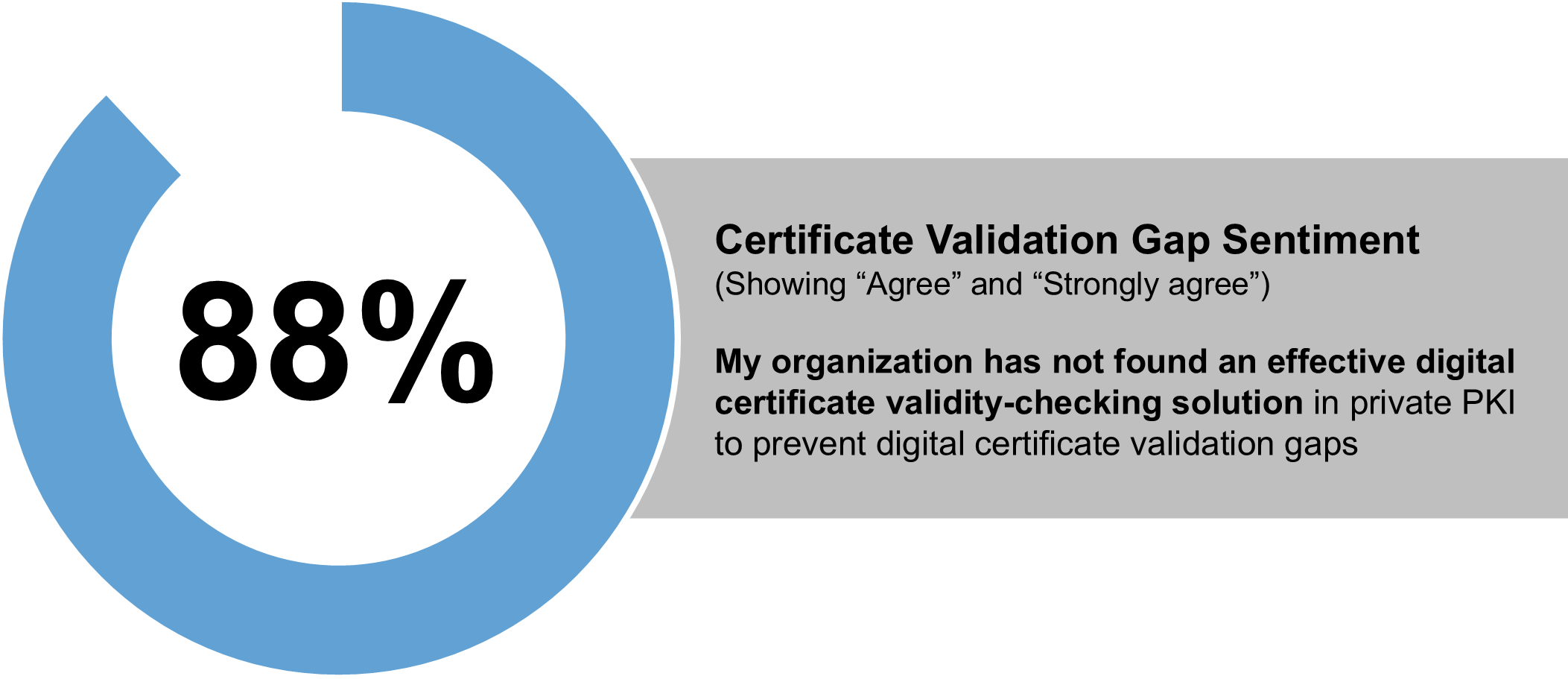
However, despite that risk, 88% of respondents have yet to find an effective solution to digital certificate validity checking in private PKI to prevent validation gaps.1
This is why we built Verisign InformedTM.
Verisign Informed addresses the problem of stale trust caused by certificate validation gaps, enabling organizations to better combat identity-based threats and create a stronger Zero Trust posture. It is purpose-built to deliver High-Assurance Validation with the performance, reliability, and information recency to help combat today’s machine-speed threats. Verisign Informed provides current certificate status information through OCSP, helping organizations reduce reliance on stale validation data when making trust decisions.
To learn more, check out our recent webinar below where we discussed how reduced caching of digital certificate validity data helps mitigate identity-based threats, reduces operational disruptions, and supports Zero Trust objectives.
Sponsored byVerisign
Sponsored byCSC
Sponsored byWhoisXML API

Sponsored byRadix

Sponsored byDNIB.com

Sponsored byIPv4.Global

Sponsored byVerisign


A World-Renowned Source for Internet Developments. Serving Since 2002.