
Welcome:
Login
|
Sign Up
|
About CircleID
Follow:
|
|

 China is holding the First Internet Conference in the rivertown of Wuzhen, calling for global Internet interconnectivity and shared governance by all. Founders of China's top three Internet companies Alibaba, Tencent and Baidu as well as executives from global giants including Apple, Amazon, Google and Facebook all joined the gala. more
 The April NETmundial meeting was a seminal event in the history of Internet Governance. Fears that the meeting might fail to reach consensus were not realized. Instead, the participants achieved a high degree of harmony -- the "Spirit of NETmundial" -- that resulted in issuance of a consensus Statement that, while lacking in precise detail, was effused with positive energy. Since that meeting there has been considerable discussion within the Internet Governance (IG) community as to what lessons have been learned from NETmundial, and how its work might best be carried into the future. more
In mid-August ICANN staff attempted to impose their own proposal for the process that will determine what overall new ICANN accountability measures should accompany the proposed IANA functions transition -- and thereby replace the restraining and corrective oversight role that the U.S. has played through periodic reevaluation of ICANN performance in conjunction with re-awarding of the IANA contract. In united reaction against that attempt, the ICANN community sent an unprecedented joint letter to CEO Fadi Chehade and the ICANN Board... more
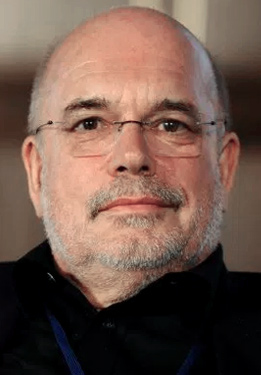 On November 1, 2014, the new European Commission started its work. One of the priorities of its new president, Jean Claude Juncker, is the digital agenda. The European Union wants to be a leader in the Internet world of tomorrow. Vice President Andrus Ansip from Estonia (some people spell the country name "e-stonia") and Commissioner Günter Oettinger from Germany will have special responsibilities to implement the big plans. Juncker was elected by the European Parliament, although the green light for his nomination came from the European Council. more
 There was a compelling article in the Wall Street Journal (WSJ) the other day about ICANN and illegal online pharmacies. The result of a six-month investigation, the reporter, Jeff Elder, calls into question ICANN's effectiveness in investigating complaints of suspected illegal activity on domain names it has a contractual relationship with. Elder cites a recent incident where Interpol and the U.S. Food and Drug Administration tried to have 1,300 websites shut down because they were suspected of selling drugs without a prescription. more
 In my first CircleID post, I compared the cyberspace to a farmland, which has to be cultivated and developed. I ended by asking: Where is cyberspace? I have asked this same question from many people, many of whom are internet experts. They all said the cyberspace is in the computers, networks, or servers, or the Internet itself. I agree with these cyberspace ideas. In addition, my opinion is a bit different. more
ICANN 51 taking place in Los Angeles this week may not have its customary evening Gala, but it opened with rousing remarks by U.S. Secretary of Commerce Penny Pritzker in the first-ever ICANN appearance of the head of the Cabinet agency from which it was born and which has exercised continuous oversight of its key IANA functions. The themes of the growing importance of Internet Governance and the U.S. government's steadfast commitment to defense of the multistakeholder model, as well as the connection between maintenance of an open Internet and fostering free speech and economic growth, were key elements of Secretary Pritzker's address. more
 It has been my distinct pleasure to serve on ICANN's Expert Working Group on gTLD Directory Services (EWG). We put in many long months and what seemed like countless hours of research, discussion, meetings, and deliberations on how to tackle a clean-slate approach to gTLD directory services, popularly known as "WHOIS". In our Final Report, the Expert Working Group (EWG) recommended a Registration Directory Service (RDS) to replace today's WHOIS, providing a next-generation system to better meet the needs of the evolving global Internet with greater accuracy, privacy, and accountability. more
 At the NANOG meeting in Baltimore this week I listened to a presentation by Patrick Gilmore on "The Open Internet Debate: Section 706 vs Title II." It's true that this is a title that would normally induce a comatose reaction from any audience, but don't let the title put you off. Behind this is an impassioned debate about the nature of the retail Internet for the United States, and, I suspect, a debate about the Internet itself and the nature of the industry that provides it. more
Fourteen years ago, we had so much hope at the start of a new century. We thought the global economy was going to improve a lot because of the emerging Internet technologies. But where are we today? What has happened in the last 14 years? We know that even advanced countries are suffering from economic difficulties today. What happened to these advanced countries with high speed Internet? more
If we were to apply themes to Internet governance world, the narrative for 2014-15 is definitely 'change'. The governance ecosystem is knee deep in the IANA transition, with a few meetings and teleconferences of the IANA Transition Coordinating Group behind us, and a ramping up of activity around ICANN accountability and governance. While the IANA transition and ICANN accountability processes are being conducted in parallel and independently, it's important to note that not only are they related, they are dependent on one another. more
 During its September 9, 2014 meeting, the ICANN Board selected the Chair of the 2015 Nominating Committee (NomCom). The 2015 NomCom will begin its work In Los Angeles, immediately after the close of ICANN's 51st International Meeting due to be held in mid-October. ICANN's Nominating Committee is charged with identifying, recruiting and selecting nominees of the highest possible quality for key leadership positions at ICANN. more
Bowing to unprecedented community pressure in the form of a unanimous letter questioning its staff-developed Accountability Process, as well as a reconsideration request filed with the Board, on September 5th ICANN issued a notice titled "Public Comment Invited: Enhancing ICANN Accountability Process". The notice opens a 21-day public comment period on that staff proposal. However, ICANN staff apparently cannot resist asserting some form of top-down control even what that very conduct is at issue, and the notice and accompanying explanation contain attempts to restrict and unduly channel the scope of community comment. more
 The Ninth Annual Internet Governance Forum (IGF) Meeting is taking place all this week, September 2-5, 2014, in Istanbul, Turkey and live video streams are available for all the sessions... I watched the opening session live stream today from my home office in New Hampshire, USA, and the quality was excellent. There was also a live text transcription. more
In another unpredicted development the entire community of ICANN stakeholders has sent a joint letter to CEO Fadi Chehade and the ICANN Board that strongly questions the "Enhancing ICANN Accountability and Governance - Process and Next Steps" document published by ICANN staff on August 14th over widespread community objections. Signatories to the August 26th letter include the GNSO Council and all of the GNSO's stakeholder groups and constituencies, the Country Code Name Supporting Organization, the At-Large Advisory Committee, the Security and Stability Advisory Committee - and, most surprisingly, the Governmental Advisory Committee. more
A World-Renowned Source for Internet Developments. Serving Since 2002.