
Welcome:
Login
|
Sign Up
|
About CircleID
Follow:
|
|

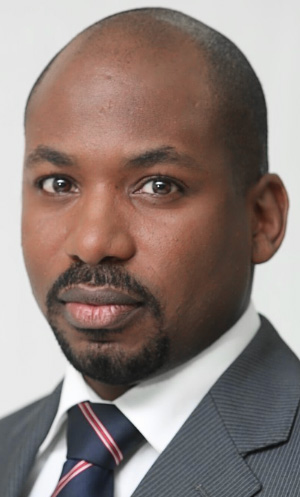 Edward Mc Nair will deliver the keynote address at the next regional meeting of the Caribbean Network Operators Group (CaribNOG), to be held in Bridgetown, Barbados from April 10 to 12. The featured talk will take place on Thursday 11 April at 9 am AST. A live netcast will be available. Mc Nair is the Executive Director of the North American Network Operators Group (NANOG). more
 In January 2018, I looked back at 2017 to figure out how routing security looked globally and on a country level. Using the same metrics and methodology, I've recently taken a look at 2018 to see if we're making improvements. The good news is, it seems like the routing system is doing better! But there is still much work to be done. Using BGPStream.com, a great public service providing information about suspicious events in the routing system, I analyzed the number of incidents... more
 As a long-standing contributor to open standards, and someone trying to become more involved in the open source world (I really need to find an extra ten hours a day!), I am always thinking about these ecosystems, and how they relate to the network engineering world. This article on RedisDB, and in particular this quote, caught my attention. more
 Do you know someone who has played a major role in the development and advancement of the Internet? Now is the time to recognize their contribution. Nominate them for the 2019 Internet Hall of Fame. With more than 100 inductees, the Internet Hall of Fame celebrates Internet pioneers and innovators who have pushed the boundaries to bring the Internet to life and make it an essential resource for billions of people today. more
 Much has been written about the progress of the adoption of IPv6 over the years. I know I've been guilty of adding my writings into the pool, and this article is a further contribution to that pool of observations and measurements. In this case, I want to look in some detail at the deployment of IPv6 in China. Why is China so important in this story of IPv6 deployment? more
More than 30 million people lost their data connectivity on December 6, 2018, in the United Kingdom as O2's network suffered from a nationwide service outage. Based on several reports, the incident was caused by a human error at Ericsson, the telecoms supplier responsible for operating certain parts of the O2 network. To compensate for the downtime and tarnished reputation, the O2 management is now reportedly seeking damages of up to a hundred million pounds from Ericsson. more
 I find myself reading, frequently, about "interesting" exploits of IP routing. Recent history includes the redirection of Telegram traffic to Iran, Google traffic to China, and Cloudflare traffic to Nigeria -- and, per bgpstream.com, 64 events this month, 18 of them on one day. Is this expensive? You bet, both in money and in mindshare. Imagine the impact of discovering your company's name in the press. more
Computers have always had clocks. Well maybe not clocks as you might think, but digital computers have always had oscillators, and if you hook the oscillator to a simple counter then you have a clock. The clock is not just there to tell the time, although it can do that, nor is it there just to record the time when data files are created or modified, though it does that too. Knowing the time is important to many functions, and one of those is security. more
Much of Google's traffic yesterday appeared to be re-routed through Russia and dropped at China Telecom. The issue raises serious concerns as a possible traffic hijacking incident. more
The security of the global Default Free Zone (DFZ) has been a topic of much debate and concern for the last twenty years (or more). Two recent papers have brought this issue to the surface once again - it is worth looking at what these two papers add to the mix of what is known, and what solutions might be available. The first of these traces the impact of Chinese "state actor" effects on BGP routing in recent years. more
A paper published by the Naval War College titled, "China's Maxim - Leave No Access Point Unexploited: The Hidden Story of China Telecom's BGP Hijacking," accuses the Chinese government of manipulating BGP routing in order to intercept internet traffic. more
Mostafa Ammar, out of Georgia Tech recently posted an interesting paper titled The Service-Infrastructure Cycle, Ossification, and the Fragmentation of the Internet. I have argued elsewhere that we are seeing the fragmentation of the global Internet into multiple smaller pieces, primarily based on the centralization of content hosting combined with the rational economic decisions of the large-scale hosting services. The paper in hand takes a slightly different path to reach the same conclusion. more
U.S. Senators Mark Warner, a Virginia Democrat, and Marco Rubio, a Florida Republican, both critics of China, have urged Canada to consider dropping China's Huawei Technologies from helping to build next-generation 5G telecommunications networks. more
 Cuban President Miguel Díaz-Canel addressed the first annual meeting of Cuba's IT professional society, the Unión de Informáticos de Cuba. In his talk, Díaz-Canel announced that four Cuban organizations - the Havana City Historian's Office, the University of Computer Sciences (UCI), Infomed, Cuba's medical network, and the Ministry of Culture had signed memoranda of understanding (MOUs) with Google. more
When rolling out a new protocol such as IPv6, it is useful to consider the changes to security posture, particularly the network's attack surface. While protocol security discussions are widely available, there is often not "one place" where you can go to get information about potential attacks, references to research about those attacks, potential counters, and operational challenges. more
A World-Renowned Source for Internet Developments. Serving Since 2002.