
Welcome:
Login
|
Sign Up
|
About CircleID
Follow:
|
|
|

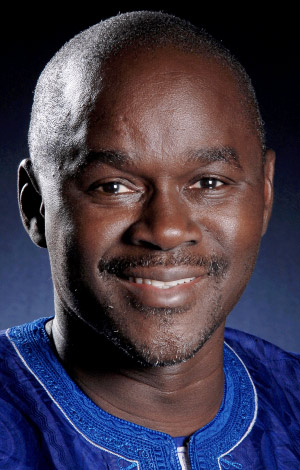 In the last month of last year, the World Conference on International Telecommunications (WCIT-12) ended in Dubai amid, not hugs and fanfare, but finger-pointing and acrimony. The end, much anticipated as it was, wasn't the finest hour for international cooperation for the global public interest. Looking back, one would be forgiven to conclude that the WCIT-12 was doomed to fail. more
 The 30-day .BANK Sunrise Period just concluded this week and is notable for several reasons. The .BANK TLD is highly restricted to members of the banking industry. The .BANK Registry (which also has rights to .INSURANCE, launching this fall), was founded by 24 companies and organizations from the banking and insurance industries, The Registry's founders include industry leaders such as the American Banking Association, Citigroup, Dollar Bank, Independent Community Bankers of America, JPMorgan, Visa and Wells Fargo. more
 On 14 September 2012, the RIPE NCC began allocating IPv4 address space from the last /8 we received from the Internet Assigned Numbers Authority (IANA). Nobody was entirely sure what would happen when we reached this point. Would there be a "run on the bank" for this final block of addresses? more
 Over the last two years, we've all faced supply shortages on items we previously never thought could be in short supply. Most recently, the baby formula and semiconductor markets were hit. Before that, supply chain attacks on Colonial Pipeline and JBS Foods showed us that an attack on one company through a singular point of compromise has the potential to disrupt an entire network of connected companies, products, partners, vendors, and customers. more
 Several months ago McKinsey did a very interesting study on the economic value of the Internet. They pointed out that Internet in the G8 countries as well as Brazil, China, India, South Korea, and Sweden is now bigger than agriculture or energy. The Internet represents 3.4% of GDP and accounted for 21 percent of GDP growth over the last five years among these developed countries and as Vint Cerf pointed out in his blog created 2.6 jobs for every one lost. more
 What are the most pressing Internet governance issues in the next 2-5 years? What are the biggest priorities in terms of making the Internet more secure and trusted? What are the best ways to bring the next 3 billion people online? Those will all be topics of discussion at the "InterCommunity 2015" meeting taking place this week on July 7 and 8. The meeting will not take place at any one physical location... more
 Having a single price index for the domain name industry would be worse than useless. Such an index is presented in a recent study by Thies Lindenthal. The index is intended to be a benchmark for domain owners and investors. But it's out of line with other studies and the common sense of how a market operates. A much better barometer to follow is average prices for groups of domain names with similar characteristics. more
 The ICANN community has been especially concerned about the economic reports used by ICANN to justify its decisions as to whether, and how, to implement applications for new gTLDs. Among the greatest sources of concern has been the failure of ICANN staff to issue a complete public response to the ICANN Board's October 2006 demand that ICANN Staff commission economic studies about gTLDs... more
 Lately, the word blockchain is gaining a lot of attention from businesses, investors and governments, especially around how it could transform how we do business today. As the world looks up to Blockchain technology for radical transformations in many industries and sectors, I want to take a look at how it could help governance in Africa.
The African continent is plagued with corruption, bad governance, mismanagement and lack of accountability. more
 The 8.9-magnitude earthquake in Japan rocked the northeastern portion of the coast. The quake was the strongest to hit Japan in at least a century, sending a tsunami that flooded northern towns and also reached portions of the United States, including Hawaii. The quake was followed by a 7.1-magnitude aftershock. Impact on Internet connectivity... Japan’s Internet performance seemed to have emerged largely unscathed, but concerns continue for the telecommunications infrastructure as the country struggles to meet power demands in a state-of-emergency. more
 Two weeks ago I blogged about ICANN's astonishingly lucrative domain auctions. At that time, they'd raised $26.7 million. Now, two auctions later, they're up to about $33 million. Yesterday's two auctions were for .MLS and .BABY. The former, for those who aren't deep into the real estate biz, stands for Multiple Listing Service, the system that lets you list a house with one broker, and all the other brokers can sell it. more
 Today we have sent following to the Minister of Industry Canada, James Moore, as well as the Canadian Internet Registration Authority (CIRA) Board of Directors. This is in response to the revelation that CIRA is positioning to enter the managed DNS space. As we outline in the letter, we are fine with more competition (in fact Google just entered the domain and DNS space too... No, competition is a fact of life, what we want is more of it, not less. Here's what we wrote to The Honourable James Moore. more
 It's January again, and being the start of another year, it's as good a time as any to look at the last 12 months and see what the Internet was up to in 2010. This is an update to the report prepared 12 months ago when looking at 2009, so lets see what has changed in the past 12 months in addressing the Internet, and look at how address allocation information can inform us of the changing nature of the network itself. more
 Like the poetic prose of Bob Dylan, the reality of modern technology cannot be ignored: "the times they are a-changin'." Transitioning from the novelty of the Internet, society is embracing connected technology as the new digital frontier. Dominated by the Internet of Things ("IoT"), the future will be one of increased interconnection of wireless and computing devices in everyday objects, allowing these devices to send and receive personal data. IoT's limits appear boundless, extending from physical devices and home appliances to vehicles and medical implants. more
In my previous blog on the topic, I stated that the business case supporting the IPv4 roll-out in the late 90s was the Internet. Although IP depletion will slowly become a reality, the chances are that due to mitigating technologies such as NAT and DNS64, it may take quite a while before organizations in the developed economies will get serious about IPv6. So where should we look to find a business case for IPv6? more
Sponsored byVerisign

Sponsored byWhoisXML API

Sponsored byVerisign

Sponsored byCSC

Sponsored byDNIB.com

Sponsored byRadix

Sponsored byIPv4.Global

A World-Renowned Source for Internet Developments. Serving Since 2002.