
Welcome:
Login
|
Sign Up
|
About CircleID
Follow:
|
|
|

 Verisign has been involved with an initiative known as Mutually Agreed Norms for Routing Security, or MANRS, since its inception. MANRS, which is coordinated by the Internet Society, focuses on strengthening the security and resiliency of IP networks throughout the world by identifying and providing best practices for mitigating common routing security threats. MANRS began as a collaboration among network operators and internet exchange providers, with Verisign formally becoming a participant in its Network Operator Program in 2017. more
 The Uniform Domain Name Dispute Resolution Policy now has seventeen years of history. A high percentage of disputes are indefensible and generally undefended. As the history lengthens, early registrants of dictionary word-, common phrase-, and arbitrary letter-domain names have been increasing challenged in two circumstances, namely by businesses who claim to have used the unregistered terms before respondents registered them and later by emerging businesses with no history prior to the registrations of the domain names. more
 Global leaders gathered in New York at the Summit of the Future and adopted the "Pact for the Future" on Sunday 22nd September. This is a historic milestone as the Pact is the first international agreement aimed at securing a better digital future for all, grounded in human rights. The recent adoption of the "Pact for the Future" at the United Nations General Assembly marks a significant step toward revitalizing multilateral cooperation in an increasingly fragmented world. more
 A recent report from Pike Research, "Smart Grid Cyber Security" has found if smart grids can realize their full potential, consumers, utilities, nations, and even the earth itself will benefit. As with nearly any new technology, the industry focus has been on getting smart grids up and running, often with little consideration for cyber security issues. more
 The White House has recently released a draft of the National Strategy for Trusted Identities in Cyberspace. Some of its ideas are good and some are bad. However, I fear it will be a large effort that will do little, and will pose a threat to our privacy. As I've written elsewhere, I may be willing to sacrifice some privacy to help the government protect the nation; I'm not willing to do so to help private companies track me when it's quite useless as a defense. more
In the second part of this two-part series article (part one here), Andrew McLaughlin concludes his critical look at the recently reported study, Public Participation in ICANN, by John Palfrey, Clifford Chen, Sam Hwang, and Noah Eisenkraft at the Berkman Center for Internet & Society at Harvard Law School... "ICANN has never attempted to be -- and was never designed to be -- 'representative' of the worldwide Internet community in any mathematically precise way. In view of the vast size of the global population of Internet users, and the specialized technical focus of ICANN's policy-making responsibilities, it would be a hopeless task to try to achieve truly representative statistical proportionality among ICANN's participants, committees, task forces, or Board members. Rather, here's how the U.S. government's foundational 1998 DNS policy statement described the core principle of 'representation'." more
 The longer I have been in the tech industry, the more I have come to appreciate the hidden complexity and subtlety of its past. A book that caught my attention is 'Open Standards and the Digital Age' by Prof Andrew Russell of Stevens Institute of Technology in New Jersey. This important work shines a fresh light on the process that resulted in today's Internet. For me, it places the standard 'triumphant' narrative of the rise of TCP/IP into a more nuanced context. more
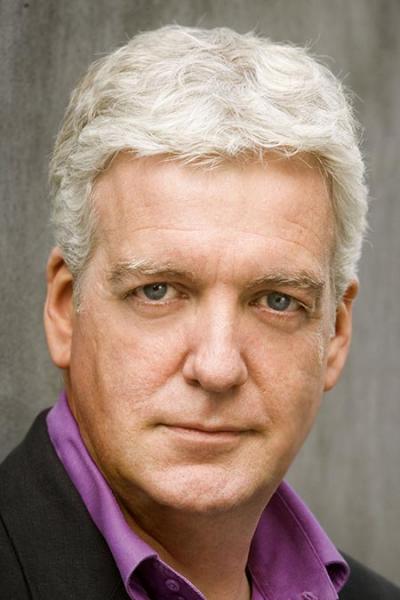 After two decades of involvement with ICANN, I am stepping down from the Board of Directors, where I served for nine years. I have spent considerable time of late reflecting on the past 20 years, and I have isolated some memories that help frame my time with ICANN. ... November 2000, ICANN07 in Marina del Rey, California - With only a scant idea of what ICANN is all about, I am warmly welcomed by the flag-wearing country code top-level domain (ccTLD) community, who come to ICANN to ensure that nothing happens to affect the independence of ccTLDs... more
 Now that IPv6 deployment is happening in major networks around the world, the question becomes -- what does "success" look like for IPv6? How much IPv6 traffic is "enough"? What are major milestones we should be tracking in IPv6 deployment? What is next for IPv6? more
 The IETF held its 115th meeting in London in November 2022. This was another in the set of hybrid meetings with specific support for online attendees in addition to the normal face-to-face meetings for the week. In no particular order, here are a few of my impressions from the IETF meeting. more
A split Panel in an early decision under the Uniform Domain Name Dispute Resolution Policy (UDRP) held that parties deserve more than "[i]t depends [on] what panelist you draw." Time Inc. v. Chip Cooper, D2000-1342 (WIPO February 13, 2001). That's one side of the paradigm; the other side makes demands on the parties to prove their contentions, either of cybersquatting (one element of which is proving that respondent lacks rights or legitimate interests) or rebutting the claim (one element of which is respondent demonstrating it has rights or legitimate interests). more
International organisations should step in to prevent the "tasting," "kiting" and "spying" related to Internet domain names, say representatives from the US telecommunications and trademark industries. These new activities are dramatically altering online commerce and impacting legitimate businesses, and the United States Federal Trade Commission (FTC), World Intellectual Property Organization (WIPO) and the Internet Corporation for Assigned Names and Numbers (ICANN) should take action, they say. The US Anti-Cybersquatting Consumer Protection Act (ACPA) had too many loopholes given the actual trends in the domain name secondary market, said Sarah Deutsch, vice president and associate general counsel for Verizon, and Marilyn Cade, former AT&T lobbyist and now consultant on Internet and technology issues... more
The ICANN bylaws require a periodic review of ICANN structures and operations; the first of such reviews, that of the Generic Names Supporting Organization Council, is scheduled to be finalized in the next few weeks prior to the start of ICANN's annual meeting. To begin discussion on this topic, I draw your attention to a very thoughtful question posed by Joe Sims during the prior ICANN reform process... more
 There is a high degree of uncertainty when launching a product, and new gTLDs are no exception. However, registries that have introduced them -- or will introduce them in the second round of new gTLDs -- can improve their odds. A key move: go to established domain name forums and check out their specialized sections for new gTLDs. What users say there can help companies refine tactics and strategy. more
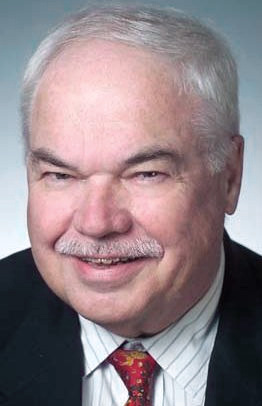 ICANN's mission, and the avoidance of "mission creep", is currently the subject of intense debate in the Internet community. Multiple cross-community working groups are dealing with the proposal by an agency of the United States government, NTIA, to give up the last vestiges of its control of the IANA function. Many of the new organizational structures under consideration purport to deal with ICANN's expanding mission. more
Sponsored byRadix

Sponsored byDNIB.com

Sponsored byVerisign

Sponsored byWhoisXML API

Sponsored byVerisign

Sponsored byIPv4.Global

Sponsored byCSC

A World-Renowned Source for Internet Developments. Serving Since 2002.