
Welcome:
Login
|
Sign Up
|
About CircleID
Follow:
|
|
|

 I'd like to reflect on a presentation by Dr. Paul Vixie at the October 2022 meeting of the North American Network Operators Group (NANOG) on the topic of the shift to pervasive encryption of application transactions on the Internet today. There is a view out there that any useful public communications medium needs to safeguard the privacy and integrity of the communications that it carries. more
 On June 12th, I speculated on Trump's forthcoming Cuba policy and its impact on the Internet. He outlined his policy in a June 16th speech and the Treasury Department published a FAQ on forthcoming regulation changes. It looks like my (safe) predictions were accurate. I predicted he would attack President Obama, brag about what he had done, make relatively minor changes that would not upset businesses like cruise lines, airlines, and telecommunication and hotel companies. more
 As many in the ICANN community prepare to depart for the sunny beaches of Cancun, Mexico, it appears the ICANN 76 meeting could be significant when it comes to the long-awaited next application window for gTLDs. It's been over 11 years since applicants were last able to apply for a gTLD (and some of those strings are still launching into the marketplace all these years later), and the community work to review that initial process has never really stopped. more
 Whenever I examine the technical elements of the various Internet security certifications and standards that organisations are clamouring to achieve compliance against, I can't help but feel that in too many cases those businesses are prioritising the wrong things and wasting valuable resources. They may as well be following a WWI field guide on how to keep cavalry horses nourished and bayonets polished in a world of stealth aircraft and dirty bombs. more
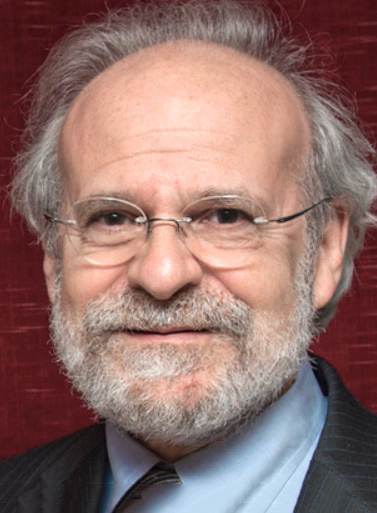 In reading a Q&A with Verizon's Brian Whitten I found this striking Q and A: "Q. With a fiber connection being symmetric, many fiber providers such as Paxio are providing symmetric connections such as 5Mbit, 10Mbit, 30Mbit. Why is Verizon keeping this arbitrary asymmetric limit with Fiber? A. ...Indeed, our FTTP network can easily support a symmetric data service. As market dynamics change, we would re-assess the benefit to our customers of introducing a class of symmetric data services." My reaction is "No thank you, I'd rather do it myself". To understand my reaction you need to recognize the difference between wanting to build my own bridge across a stream and asking why I'm not allowed to cross it myself using my own boat. more
 Upon being appointed as ICANN's new CEO in Sydney, Rod Beckstrom gave a rousing speech in which he stressed the vital importance of free expression on the Internet... Many ordinary, powerless people are indeed willing to fight and die. But is ICANN going to help them? Or at very least make sure that their decisions won't help those who want to muzzle them? more
 n 2004 Jaynes became the country's first convicted spam felon under the Virginia anti-spam law. He's been appealing his conviction ever since, most recently losing an appeal to the Virginia Supreme Court by a 4-3 decision in February. As I discussed in more detail at the time the key questions were a) whether the Virginia law had First Amendment problems and b) whether Jaynes had standing to challenge it. The court answered No to b), thereby avoiding the need to answer a), the dissent answered Yes to both. more
 One could think that the authors of The Universal Declaration of Human Rights (UDHR) -- adopted in 1948 -- had the Internet in mind when they declared in Article 19: "Everyone has the right to freedom of opinion and expression; this right includes freedom to hold opinions without interference and to seek, receive and impart information and ideas through any media and regardless of frontiers." All human beings are entitled to certain rights, and it makes no difference if they choose to exercise them in a town square or an Internet chatroom. more
Former President Theodore Roosevelt is not one whose remarks are usually associated with the domain name industry, but his commentary in 1913 could just as easily have been written today:
"The mob leaders usually state that all that they are doing is necessary in order to advance the cause of 'liberty', while the dictator and the oligarchy are usually defended upon the ground that the course they follow is absolutely necessary so as to secure 'order'. Many excellent people are taken in by the use of the word 'liberty' at the one time, and the use of the word 'order' at the other, and ignore the simple fact that despotism is despotism, tyranny tyranny, oppression oppression, whether committed by one individual or by many individuals, by a state or by a private corporation." more
 James Urquhart claims Cloud is complex - deal with it, adding that "If you are looking to cloud computing to simplify your IT environment, I'm afraid I have bad news for you" and citing his earlier CNET post drawing analogies to a recent flash crash. Cloud computing systems are complex, in the same way that nuclear power stations are complex - they also have catastrophic failure modes... more
ome 50 years ago, at the Palo Alto Research Centre of that renowned photocopier company Xerox, a revolutionary approach to local digital networks was born. On the 22nd of May 1973, Bob Metcalf authored a memo that described "X-Wire," a 3Mbps common bus office network system developed at Xerox's Palo Alto Research Center (PARC). more
 In 2018, nothing can get approved in 3GPP that China strongly opposes. In the past, 3GPP often was a battle between a few American giants and their European peers. A Qualcomm or a Nokia will still be heard, but the power has shifted. I haven't seen evidence that the Chinese influence has made for better or worse standards. There are now over a billion 4G subscribers at the big 3 Chinese telcos, by far the largest equipment buyers. Nokia, Ericsson, and the other vendors do not dare oppose their largest customers. more
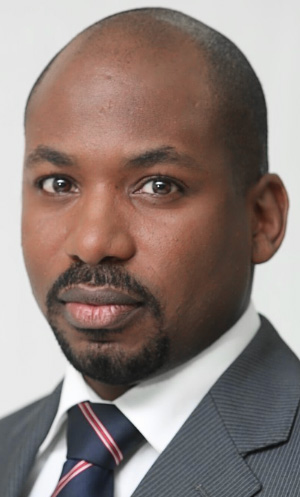 For anyone wondering how Internet development is evolving in the Caribbean, an international conference held in Bridgetown, Barbados, hosted by the American Registry for Internet Numbers (ARIN), provided more than a few positive clues. The second annual ARIN Caribbean Forum attracted Internet policymakers, computer networking and cybersecurity experts and law enforcement officials from across the Caribbean, North America and Europe for high-level talks under the theme "Caribbean priorities for the global Internet." more
In spite of having a slow, expensive, government-controlled Internet infrastructure, Cuba is undergoing what Ted Henken and Sara Garcia Santamaria refer to as a digital revolution. The digital revolution might be said to have begun in 2007 when Yoani Sánchez launched her blog "Generation Y." Internet access was difficult -- she would get illegal connectivity at tourist hotels, and the blog was initially hosted in Germany. Soon, the Huffington Post began publishing her posts, and she has subsequently received many international awards, including the Ortega y Gasset Award for Digital Journalism in 2008. more
 We have just released the 2025 edition of the DOTZON study "Digital City Brands." Since first presenting the study in early 2017, DOTZON has now analyzed for the ninth consecutive year how cities successfully use their Digital City Brands. The Digital City Brand represents the digital aspect of a city's brand and reflects how digitally advanced a city is. The emergence of the Internet was the reason Digital City Brands were created in the first place. more
Sponsored byWhoisXML API

Sponsored byRadix

Sponsored byVerisign

Sponsored byIPv4.Global

Sponsored byVerisign

Sponsored byCSC

Sponsored byDNIB.com

A World-Renowned Source for Internet Developments. Serving Since 2002.