
Welcome:
Login
|
Sign Up
|
About CircleID
Follow:
|
|
|

 In the midst of the election season, Congress passed a plethora of Internet related laws. Most involved child protection. One involved webcaster protection. Wasting no time, the impact of the new laws is already being felt through federal agency implementation. On Friday, the National Telecommunications and Information Administration (NTIA) in the Department of Commerce released the following notice... more
 Karl Auerbach has written a quite long but very detailed and well thought out letter to Congress. It's not clear which members of Congress were sent the letter. Karl Auerbach is a former member of ICANN's board and is probably best remembered by many as having taken ICANN to court (and winning) in order to gain access to the organisation's financial records. more
 Two miles (and a short Tube ride) from where ICANN is gathering in London, rests an original copy of the Magna Carta, which introduced the concept of imposing limits on the powers of the king. I'm taking the proximity of this icon of constitutional history as a good omen for our task: to create a charter to limit ICANN's powers and enhance its accountability, in the wake of the U.S. Government's decision to terminate its legacy role. more
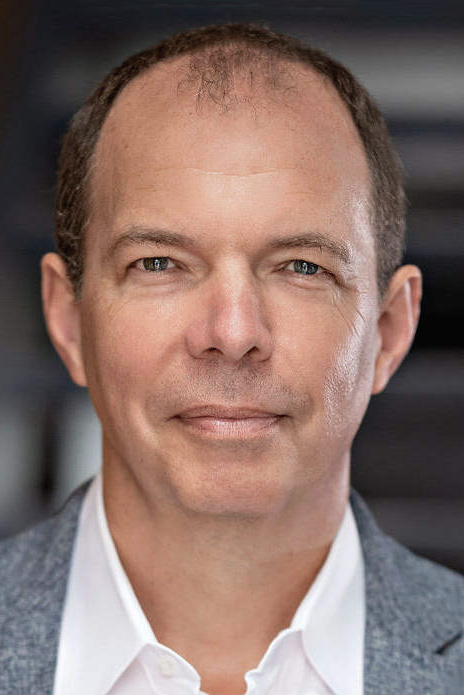 A few days ago, I sat in a meeting here in Ottawa with our IT Director and Director of Marketing and Communications. These are two highly intelligent people working on the same team, for the same company, talking about a common subject. And yet, something was amiss in achieving mutual understanding. Each was seeing things from his own distinct perspective and as such, speaking his own language. As I reflected on my team's internal dynamic, I began to see parallels in areas that have an even more direct impact on the Internet ecosystem. more
 Do you have new information about DNSSEC or DANE that you would like to share with the wider community? Have you created a new tool or service? Have you found a way to use DNSSEC to secure some other service? Do you have new statistics about the growth or usage of DNSSEC, DANE or other related technology? If so, and if you will be in Copenhagen, Denmark, for ICANN 58 in March 2017 (or can get there), please consider submitting a proposal to speak at the ICANN 58 DNSSEC Workshop! more
 China's insomniac twitterati were on fire this afternoon U.S. time, powered no doubt by much caffeine and sugar in the the wee hours of the morning in China. Half an hour before Google's David Drummond posted his announcement that Google.cn is now effectively operating from Google.com.hk, Guangzhou-based open source programmer @LEMONed broke the
news that google.cn was being redirected to the Hong Kong service. Reacting to the news, @wentommy quipped: "One Google, One World; One China, No Google." more
 While many were expecting a decision of strict Registry/Registrar separation, in an unexpected ruling, it was announced that ICANN will not restrict cross-ownership between Registries and Registrars. While the current set of agreements prohibits Registries from acquiring Registrars, they do not prohibit Registrars from applying for or operating TLDs. The Board Resolutions also made note of the fact that while individually negotiated contracts have included restrictions on Registry ownership of Registrars, cross-ownership provisions have varied over time and no formal "policy" on this topic has ever been recommended by the GNSO or adopted by ICANN. more
 In Asia -- a region that at various points in its recent history has been a hotbed for civil unrest, secessionist movements and political instability -- the line between national security and public interest can be difficult to draw. A session organised by the Internet Society at the recently held RightsCon Southeast Asia in Manila shed some light on the perceived trade-offs between national security objectives and digital rights, in particular freedom of expression and privacy. more
 On July 28th DNSSEC took center stage at the 2010 Black Hat Conference in Las Vegas. Two years ago, at the same conference, Dan Kaminsky unveiled the infamous DNS bug that many believe became a major catalyst for DNSSEC implementation. To kick things off, Jeff Moss -- founder of Black Hat -- in his opening speech called out the fact that "we have not solved any fundamental problems" and noted that the technical community must catch up. more
 Network Neutrality is a hot topic in the US. The FCC held hearings in my neighborhood recently (while I was in Asia). Now I see Professor Susan Crawford will be testifying next Tuesday at a House Judiciary Committee hearing on "Net Neutrality and the First Amendment." I look forward to her remarks, but I worry that the whole discussion will be focused on "IP Pipes," that is connectivity at network layer 3. This distracts us from the fundamental problem... more
 My Twitter feed has exploded with the release of the Kaspersky report on the "Equation Group", an entity behind a very advanced family of malware. (Naturally, everyone is blaming the NSA. I don't know who wrote that code, so I'll just say it was beings from the Andromeda galaxy.) The Equation Group has used a variety of advanced techniques, including injecting malware into disk drive firmware, planting attack code on "photo" CDs sent to conference attendees, encrypting payloads... more
 The Department of Energy (DoE) recently came out with an excellent report, called the Magellan report, on the advantages and disadvantages of using commercial clouds versus in house High Performance Computers (HPC) for leading edge scientific research. The DoE probably supports the largest concentration of HPC facilities in the world. I agree with the report that for traditional applications such as computational chemistry, astrophysics, etc. will still need large HPC facilities. more
 In a landmark judgment issued this past Tuesday, the European Court of Justice (ECJ) ruled that Google is not liable for trademark infringement when an advertiser purchases a keyword based on a competitor's trademark to trigger a search ad, so long as it removes infringing ads promptly when notified by brand owners. However, and this is critical, individual advertisers could be held liable if ads triggered by a keyword involving a competitor's trademark are found to confuse consumers. So, what qualifies as consumer confusion? more
 The RIPE NCC is 20 years old and it now has over 8,000 members. In this article we are looking at the growth curve and the composition of the membership: what industry do RIPE NCC members come from today. The RIPE NCC became the first Regional Internet Registry in September 1992 (six months after it was set up as the secretariat for the European operators community, RIPE). more
 As Reddit recently learned it's not a great idea to use the Amazon EC2 cloud to host mailservers. There are a number of reasons for this, most of them related to the reputation of mail coming from EC2 servers. When you're using machines in the cloud, changing IP addresses is as simple as initializing a new server. Spammers discovered this almost as soon as the EC2 cloud became public. more
Sponsored byDNIB.com

Sponsored byCSC

Sponsored byVerisign

Sponsored byWhoisXML API

Sponsored byIPv4.Global

Sponsored byRadix

Sponsored byVerisign

A World-Renowned Source for Internet Developments. Serving Since 2002.