
Welcome:
Login
|
Sign Up
|
About CircleID
Follow:
|
|
|

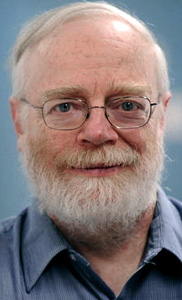 In the wake of recent high-profile security incidents, I started wondering: what, generally speaking, should an organization's security priorities be? That is, given a finite budget - and everyone's budget is finite - what should you do first? More precisely, what security practices or features will give you the most protection per zorkmid? I suggested two of my own, and then asked my infosec-heavy Twitter feed for suggestions. more
 The AI Strategy course at UC Berkeley has come to an abrupt end, but formal learnings in AI will continue. I want to thank professors at UC Berkeley, Alberto Todeschini, Ph.D., and Stuart Russell, who developed a comprehensive course to implement AI in business. After three certificates, Alberto has encouraged me to pursue a master's in Artificial Intelligence. My wife and I are contemplating this next step. more
 If you operate an Internet Exchange Point (IXP) or are interested in creating one, the Internet Society has a “Sustainable Peering Infrastructure” funding program that is open for applications until this Friday, September 6, 2024... Grant funds from USD $5,000 up to $50,000 are open to all regions and are available to assist in equipment purchases (switches, optic modules, servers, and routers), training, capacity building, and community development. more
 "Philosophy is a battle against the bewitchment of our intelligence by means of our language." (-Ludwig Wittgenstein) The words we use to describe telecoms networks often contain hidden metaphors and meanings that lead us into wrong thinking. Here are three examples... Why misleading? The word "best" implies both benevolent and optimal intentionality: the network is going to do the "right" thing for its users, and it will maximise the "rightness" in some way. more
 Ahead of next week's ICANN meeting in Paris, I would like to consult users, At-Large Structures (ALSs) and others involved in internet governance in North America. As one of the three regional representatives on the ICANN At-Large Advisory committee, I want to make sure individuals, users and ALS's are given the chance to summit their own questions, suggestions and items to the agenda of the upcoming meeting. I'd be happy to receive your comments, and/or schedule a chat with you Mon-Thur, from 13:00-18:00 EDT. Leave a comment to this post, or leave me a message. more
 After two years of meetings, comment periods, and more meetings, the Internet Corporation for Assigned Names and Numbers submitted its IANA transition proposal to the US Department of Commerce last week at the end of the ICANN 55 meeting in Marrakech. While this is a critical milestone and the multi-stakeholder community should be commended for its efforts, several concerns still remain. more
 For many years, I've heard people say that broadband is essential. I read it in articles. I hear it on broadband panels and webcasts. I see it said in comments on social media. It's obvious that a whole lot of people think broadband is essential. But what exactly does that mean? Does it mean that broadband is important in a lot of people's lives, or does it mean that broadband is something that society can't live without? more
 There has been a lot of talk about how the DNS can provide network-based security, and how DNS is in the best position to detect malware traffic before it does any harm. But what does this mean for end users? How does it make their online lives easier and more secure? DNS servers that are aware of sites that host malware, perform phishing activities (harvesting bank details, for instance) and other nefarious misbehaviors, can prevent end users from ever going to those sites. more
 One of the main roles played by science fiction is to portray fundamental issues and questions that face humanity long before they actually become relevant to our daily lives. We cannot always be sure of where our reality ends, and fiction begins. Star Trek storylines including Borgs are a good example. In the storyline, Borgs are part organic, part artificial and created eons ago, yet they seem to presage the challenges in our contemporary personal reality and challenges in the Internet's cyberspace. more
 For the past several months, there has been much discussion within the ICANN community about something called "PDP 3.0". This has been raised in a number of different contexts including as part of ICANN's new governance review. But what exactly is PDP 3.0? And, will it save ICANN's multi-stakeholder governance model? I believe that if we are to save the multi-stakeholder model then now is the time to address the big issues not just the low hanging fruit on the surface - a new approach to achieving consensus across parties with widely differing views is needed. more
Deema Tamimi had one plan for the 2016 California Apps for Ag hackathon: get in and get out. She thought the weekend-long event would be a good opportunity to meet people, but she didn't feel ready to launch a new app, and so she planned on stealing away soon after the hackathon began. This, despite the very impressive resume she'd accrued and the fully-formed idea for a gardening-based app that had been brimming for half a year. But something magical can happen when so many engineers, experts, change-makers, and creatives converge at a hackathon. more
The following are the most important current trends that will be affecting the telecom industry in 2021. Fiber Construction Will Continue Fast and Furious in 2021. Carriers of all shapes and sizes are still building fiber. There is a bidding war going on to get the best construction crews and fiber labor rates are rising in some markets. The Supply Chain Still has Issues. The huge demand for building new fiber had already put stress on the supply chain at the beginning of 2020... more
 Elizabeth "Jake" Feinler, known as the "Mother of Whois," transformed internet infrastructure as the ARPANET Network Information Center's lead. Her work in organizing data and pioneering Whois set the foundation for modern internet protocols. A trailblazer in technology, she championed inclusivity, mentoring women and minorities, while her legacy endures as a cornerstone of the digital age. more
The digital domain encompasses the different spaces and spheres we use to relate and interact with the people and things that surround us using digital technologies. The Universal Declaration of Human Rights, UDHR, as the globally accepted standard, should serve us as the guiding light when it comes to striking the delicate balance between our rights and responsibilities on and off-line. more
 A domain name is a unique alphanumeric designation that facilitates reference to sets of numbers which actually locate a particular computer on the Internet. Domain names are a fundamental part of the Internet's user interface. Improving the usability of the Internet depends upon effective domain name policy. This study is intended to contribute to improvement in Internet usability for the end users of domain names. Benefits of more usable domain names include: higher sales, customer satisfaction and productivity, and reduced support costs. more
Sponsored byDNIB.com

Sponsored byCSC

Sponsored byVerisign

Sponsored byWhoisXML API

Sponsored byIPv4.Global

Sponsored byVerisign

Sponsored byRadix

A World-Renowned Source for Internet Developments. Serving Since 2002.