
Welcome:
Login
|
Sign Up
|
About CircleID
Follow:
|
|


|
||
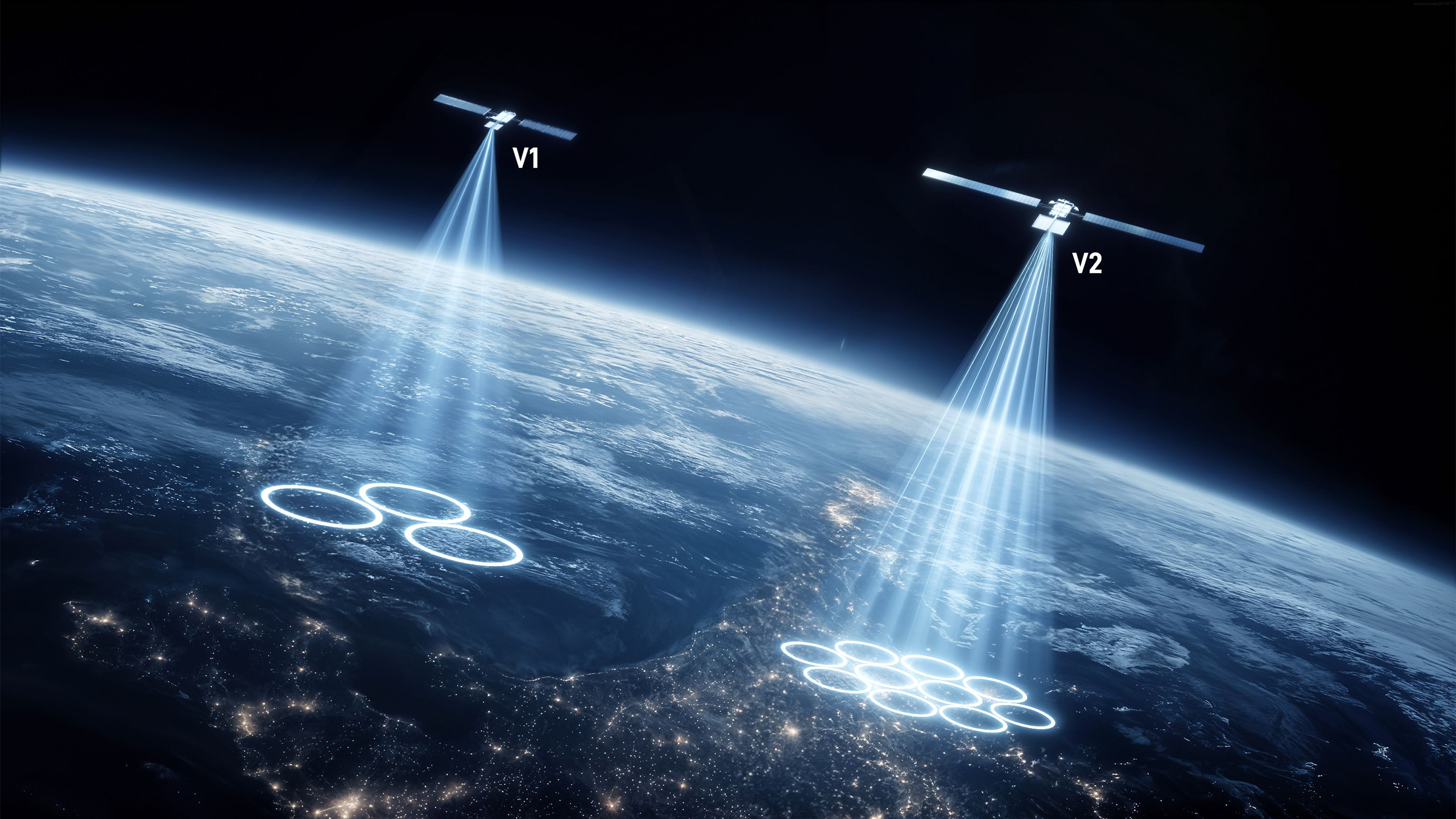
SpaceX has agreed to acquire a nationwide portfolio of 800 MHz wireless spectrum licenses from investment firm Grain Management, expanding its options for integrating satellite and terrestrial mobile services in the United States. The October 8 agreement, reportedly valued at approximately $8 billion, remains subject to Federal Communications Commission (FCC) approval.
The acquisition could provide up to 14 MHz of paired low-band spectrum, according to SpaceX. Frequencies in the 800 MHz range offer relatively long propagation distances and better building penetration than higher-frequency mobile bands, making them valuable for extending coverage across rural areas and supporting conventional cellular networks.
Grain Management, a Washington-based communications infrastructure investor, confirmed the sale of its nationwide 800 MHz portfolio in an October 8 announcement. The companies did not disclose financial terms, although Reuters subsequently reported an estimated transaction value of $8 billion.
The agreement would give SpaceX greater control over spectrum used for mobile connectivity. Starlink’s existing direct-to-device approach relies on partnerships with terrestrial mobile operators, which provide access to licensed frequencies for communications between compatible smartphones and satellites. Ownership of additional spectrum could reduce that dependence and provide greater flexibility in coordinating terrestrial and satellite coverage.
The proposed acquisition also comes as SpaceX develops its next-generation Starlink Mobile constellation. In its October 8 update, the company described plans for a 15,000-satellite system using 2 GHz spectrum for direct-to-device communications. SpaceX says its V2 satellites will deliver more than 100 times the bandwidth of the current generation, although that performance claim has not been demonstrated across a fully deployed network.
Terrestrial infrastructure remains a substantial requirement. Low-band spectrum ownership would not, by itself, allow SpaceX to operate a nationwide cellular network or guarantee that existing smartphones could communicate with its satellites on those frequencies. Such a service would depend on compatible equipment, regulatory authorizations, interference management and potentially extensive investment in ground-based infrastructure.
Bernstein analysts have estimated that building comprehensive terrestrial coverage could require between $50 billion and $130 billion and access to 30,000–20,000 tower sites, according to MarketWatch. Those figures are analyst estimates rather than announced SpaceX investment commitments.
The acquisition could also affect SpaceX’s relationships with established mobile operators. While satellite connectivity is particularly useful beyond the reach of conventional networks, terrestrial systems retain substantial capacity advantages in densely populated areas through localized spectrum reuse.
FCC approval is the next regulatory hurdle. The commission’s review will determine whether the spectrum licenses can be transferred and under what conditions. Questions surrounding deployment obligations, interference protections and the integration of satellite and terrestrial operations remain unresolved.
Sponsored byCSC

Sponsored byVerisign

Sponsored byDNIB.com

Sponsored byRadix

Sponsored byIPv4.Global

Sponsored byWhoisXML API

Sponsored byVerisign


A World-Renowned Source for Internet Developments. Serving Since 2002.