Welcome:
Login
|
Sign Up
|
About CircleID
Follow:
|
|

DNS Security |
Sponsored by |
|

 When we look at the intersection of cryptocurrency and domain data, we see something insidious: The prevalence of crypto-related threats. And it's not just cryptojacking. It's not even the use of cryptocurrency which has made ransomware attacks easier for threat actors to commit and all the more widespread. As with nearly every trend, there is always someone looking to capitalize on it and use it for their own, personal gain. Ever since cryptocurrency became the pandemic hobby of choice, threat actors have begun to target crypto novices for their schemes. more
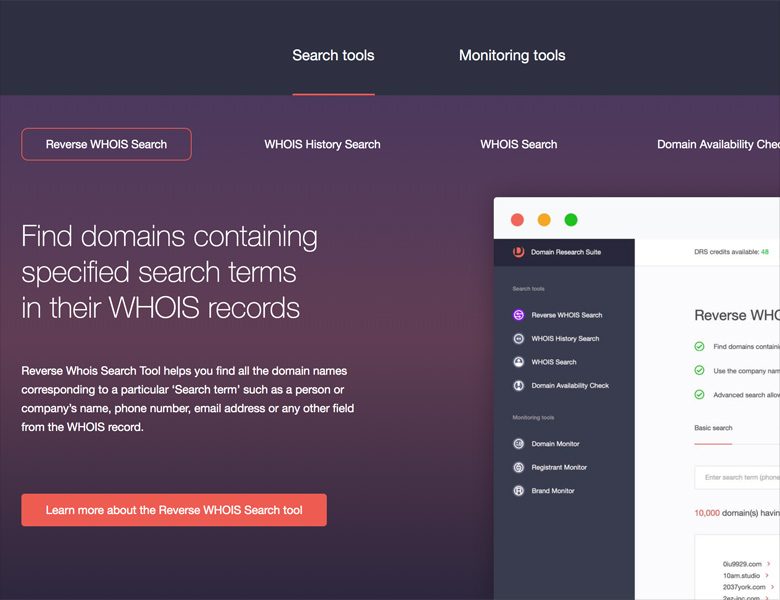
 Domain names are registered by the thousands every day. In July 2021, 236,336 domains were newly registered daily on average across all top-level domains (TLDs). Tens of thousands were also newly expired. Other months could be just as busy. "Newly registered" and "newly expired." Those are two terms I often get questions about. Newly registered domains are domains that someone just reserved, typically through a registrar or web hosting company. Newly expired domains, meanwhile, are those domains that someone had reserved but decided to let go for one reason or another. more
 It was not without a little trepidation that I planned the 2nd DNS Abuse Institute Forum to focus on the long-standing and often contentious definitional issues surrounding DNS Abuse. While the risk of getting stuck in the usual entrenched positions was real, it seemed to me that we had an opportunity to provide some clarity and if not change minds, at least provide perspective. more
 The ways in which the Internet is embedded in our daily lives are too varied and numerous to catalogue. The Internet delivers information, access to goods, services, education, banking, social interaction and, increasingly, work space. The global pandemic has only heightened our dependence on the online world, which is why efforts to ensure that the Internet remains a trusted and secure environment are more important than ever. more
 Managing the risk of third parties has become a compliance focus for many large organizations. Companies even work with third-party service providers and external vendors just to manage this risk. The recent SolarWinds attack escalates the critical need for chief compliance officers to collaborate with their business counterparts to identify and mitigate potentially unknown threats that lie within third-party supply chains. Yet how can companies manage this risk when it's not if but when you're attacked? more
 The Registration Operations Workshop (ROW) was conceived as an informal industry conference that would provide a forum for discussion of the technical aspects of registration operations in the domain name system and IP addressing. The 10th ROW will be held online on Tuesday, June 8th, 2021 at 13h00-17h00 UTC. Click to learn more about the discussion topics and registration details. more
Domain name abuse is one of the most dangerous and under-regulated issues in digital business security today. Many of the largest companies in the world still lack basic domain security protocols, making them prime targets for bad actors. An attack on a domain can lead to the redirection of a company's website, domain spoofing, domain and domain name system (DNS) hijacking attacks, phishing attacks, network breaches, and business email compromise (BEC). more
 The DNS Operations, Analysis, and Research Centre (DNS-OARC) convened OARC-35 at the start of May. Here are some thoughts on a few presentations at that meeting that caught my attention... These days it seems that the term "the digital economy" is synonymous with "the surveillance economy." Many providers of services on the Internet spend a lot of time and effort assembling profiles of their customers. These days, it's not just data in terms of large-scale demographics but the assembling of large sets of individual profiles. more
New Zealand's .nz operator, InternetNZ, on Wednesday disclosed a vulnerability against authoritative DNS servers. The vulnerability called TsuNAME was first detected in February 2020 in the .nz registry and found that it could be exploited to carry out Denial-of-Service (DoS) attacks across the world. more
The celebrated security researcher, Dan Kaminsky, widely known for his work on discovering cruicisl DNS security flaws, Sony Rootkit infections and pupular talk at the Black Hat Briefings. more
 In light of the Biden administration's recent efforts in protecting critical infrastructure from cyber threats, new research from CSC indicates that a majority of the top energy companies in the U.S. are vulnerable to attack due to shortcomings in their online operations. Specifically, these organizations are vulnerable to domain name and domain name system (DNS) hijacking and phishing attacks based on their lack of effective domain security. more
 Public Interest Registry (PIR) announced the creation of the DNS Abuse Institute about two months ago as it believes that "every .ORG makes the world a better place" and "anything that gets in the way of that is a threat," notably in the form of Domain Name System (DNS) abuse. To show support for the initiative, WhoisXML API analyzed monthly typosquatting data feeds for December 2020, January 2021, and February 2021 to identify .ORG domain trends... more
Completely eradicating malware, botnets, phishing, pharming, and spam from the Domain Name System is not possible. That may be an odd statement from someone who just took the leadership position at the DNS Abuse Institute, but it's meant to underscore the scope of the work ahead of us. There will always be bad actors exploiting the DNS for their own criminal purposes, but working together, we can mitigate their impact. more
Domain names, domain name systems (DNS), and digital certificates are fundamental components of the most important applications that enable your company to conduct business - including your website, email, voice-over IP, and more. However, these vital applications are being attacked with an increasingly high level of sophistication and severity. more
For many years the consuming topic in DNS circles was that of the names themselves. If you wind the clock back twenty years or so, you will find much discussion about the nature of the Internet's namespace. Why were there both generic top-level labels and two-letter country codes? If we were going to persist with these extra-territorial generic country codes in the namespace, then how many should there be? Who could or should manage them? And so on. more
A World-Renowned Source for Internet Developments. Serving Since 2002.