
Welcome:
Login
|
Sign Up
|
About CircleID
Follow:
|
|
|

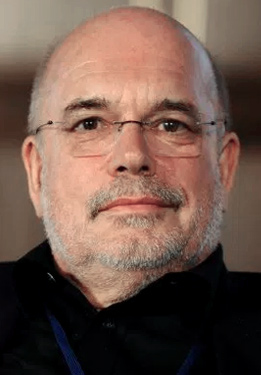 The Budapest Conference on Cyberspace brought together nearly 20 heads of states and ministers plus 700 high level experts from various stakeholder groups from 60 countries. However, after two days of discussion there is less clarity where the so-called "London Process" - established by the British Foreign Minister William Hague in November 2011 in London - will go. The next meeting is scheduled for October 2013 in Seoul. Another flying circus for another Internet Governance talking shop? more
 For years, corporate domain name administrators have scoffed at every new second-level and third-level country code Top-Level Domain (ccTLD) liberalization, and rightly so. Until recently, most had continued the practice of registering significant numbers of variations, misspellings and typo-squats. While I have never encouraged the practice of registering every variation in every geography, as this becomes prohibitively expensive over time... With what seems to be the imminent launch of hundreds of new TLDs as a result of ICANN's new initiative, companies appear to be saying enough is enough, and meaning it. more
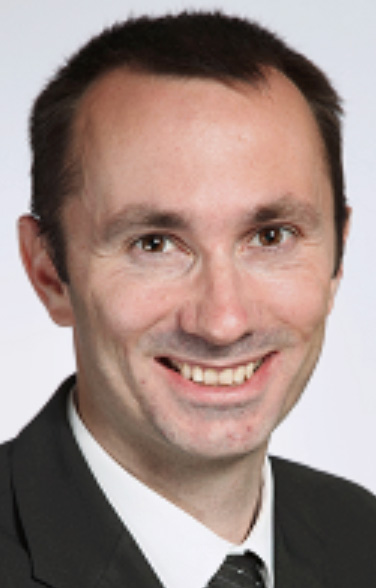 New domain names are now on the market and you start to realize that you may have missed the train by not submitting your own new gTLD application. So why not get your part of the cake and consider applying for your own new Top-Level Domain in the second Round of the ICANN new gTLD program? Why not become a "Registry" and sell domain names... to the world? more
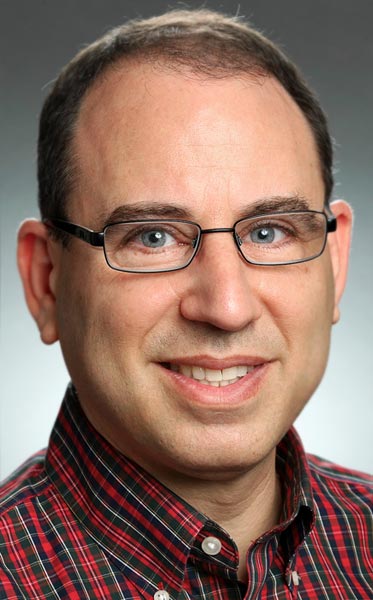 In a June court ruling, domainer Navigation Catalyst and registrar Basic Fusion lost a cybersquatting lawsuit to Verizon... This is an extremely interesting and potentially precedent-setting case regarding domaining and domain name tasting. The court condemns both practices, leading to a preliminary injunction against the domainer and its registrar based on the Anti-Cybersquatting Consumer Protection Act (ACPA). As far as I can recall, this is the first time that a domainer has lost an ACPA lawsuit in court, and it provides an important data point confirming that domaining can be cybersquatting (a previously unresolved issue)... more
 My general impression of the Task Force 3 (TF3) output was that it was a prettified way of accusing the community of internet users as being cheats and liars and demanding that the costs of trademark enforcement be offloaded from the trademark owners onto the backs of domain name registrants and the DNS registration industry. (It is amazing how often the trademark industry forgets that the purpose of trademarks is to protect the consumer's right and ability to identify goods and services and to distinguish such goods and services from one another.. The trademark industry forgets that trademarks are intended to benefit the customer, not the seller, and that any benefit to the seller is merely incidental.) more
 SpaceX first departed from its uniform Starlink pricing policy when it offered a reduced price for throttled service in France two years ago. Since then, many new, higher-capacity satellites have been launched, enabling SpaceX to reduce prices in low and middle-income countries like Kenya. Kenya had 405 geostationary satellite internet subscribers when Starlink became available in July 2023. more
 As you've undoubtedly heard, the Equifax credit reporting agency was hit by a major attack, exposing the personal data of 143 million Americans and many more people in other countries. There's been a lot of discussion of liability; as of a few days ago, at least 25 lawsuits had been filed, with the state of Massachusetts preparing its own suit. It's certainly too soon to draw any firm conclusions... but there are a number of interesting things we can glean from Equifax's latest statement. more
There have been quite a number of recent articles about various IPv6 issues. Thus the question: how far along is the actual IPv6 deployment? This is a quick-and-dirty survey that focuses mainly on the content provider side. What domains were surveyed? Alexa offers country depended TopSites listings. Domains listed are frequently visited by users from that country, not necessarily hosted there... more
After roughly 19 days of its introduction, VeriSign's Site Finder service was finally shutdown on October 4, 2003 following a "Formal Deadline" issued by ICANN (previously reported here). With the plug pulled, the Internet appears to be returning to its regular status ending a historic event that can be best described as a 'Hurricane' -- a Cyber-Hurricane. What follows is a collection of commentaries and questions raised around the Net in response to this event during and after the final hours of VeriSign's deadline... more
With so many new gTLDs moving into their respective general availability periods, and incidents of cybersquatting beginning to appear, many companies are now looking towards the URS (Uniform Rapid Suspension) as a possible solution for quickly remediating abuse. As a reminder, domains that are the subject of a successful URS ruling are suspended for the remainder of the registration term, or can be renewed for an additional year at the current registrar. more
 There is much talk currently about the WSIS meeting taking place in Geneva this week which means some needed attention is being paid to Internet governance. While some may view the term "Internet governance" as an oxymoron and my natural reaction is something along the lines of "I hope that they continue to view regulation as too complicated so that we Internet-folks can just keep doing what we are doing" I confess to knowing deep down that we would all be better off with a simple, effective policy framework than with the current anarchic state. more
 Posted here on behalf of DotConnectAfrica Trust as rejoinder and reply to Andrew Mark's recent article... In his article, Mr. Mark tried to re-frame the ongoing discussions and commentary about DCA Trust's recent IRP victory against ICANN as one about "requisite support for geographic string" to assist him reach the biased conclusion that ZACR's bid has the required support to run .Africa whilst DCA Trust's bid does not. more
 Businesses in the financial services sector are among the most frequent targets of cybersquatters. In this free webinar, I will be joining Craig Schwartz of fTLD Registry Services to provide important information about how domain name fraud is affecting the financial services industries, including banking and insurance, and what businesses and consumers can do to protect themselves online. more
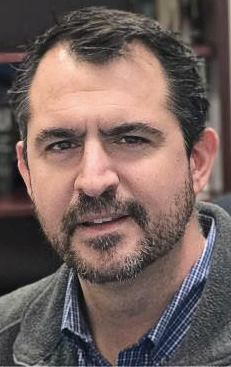 In this action under the usTLD Dispute Resolution Policy (which mirrors the Uniform Domain Name Dispute Resolution Policy), Complainant sought transfer of the Domain Name grazia.us. Complainant, an Italian company, has used the mark GRAZIA for many years in several markets around the world in connection with its fashion magazine. more
 The ICANN Meetings are in full flow here in sunny Luxembourg. The venue is immense and located a cab, bus, or shuttle ride from the various hotels. So far, the big topics are the .Net finalization (focusing on the readjustment of the pricing verbiage), the USDOC root announcement, the shell registrar accreditations used in the batch pool for the purposes of getting dropped names, and the practice of registrars exploiting the 5 day add grace period to register in excess of 50000 names to watch how much web traffic they have, and returning the ones that do not at no cost... more
Sponsored byDNIB.com

Sponsored byWhoisXML API

Sponsored byCSC

Sponsored byVerisign

Sponsored byVerisign

Sponsored byIPv4.Global

Sponsored byRadix

A World-Renowned Source for Internet Developments. Serving Since 2002.