
Welcome:
Login
|
Sign Up
|
About CircleID
Follow:
|
|
|

 It is not often I go out to my driveway to pick up the Washington Post -- yes, I still enjoy reading a real physical paper, perhaps a sign of age -- and the headline is NOT about how the (insert DC sports team here) lost last night but is instead is about an IT technology. That technology is the Border Gateway Protocol (BGP), a major Internet protocol that has been around for more than a quarter century, before the Internet was commercialized and before most people even knew what the Internet was. more
 One of the other web sites I subscribe to is Stratfor. It's a global intelligence website and doesn't really have much to do with spam. But I like politics so I read it. They have some articles which you can get for free, but the better stuff you have to pay for. About two weeks ago, they ran a three-part series on Cyberwarfare. The first article was the title of this post, which you can access here (requires registration). In the article they described different types of cybercriminals and not-so-criminals which they referred to under the umbrella as "hackers." more
 ICANN is finalising a policy to curb DNS abuse, aiming to preserve internet stability while defending freedom of expression. With regulatory pressure mounting, the multistakeholder model faces a critical test. more
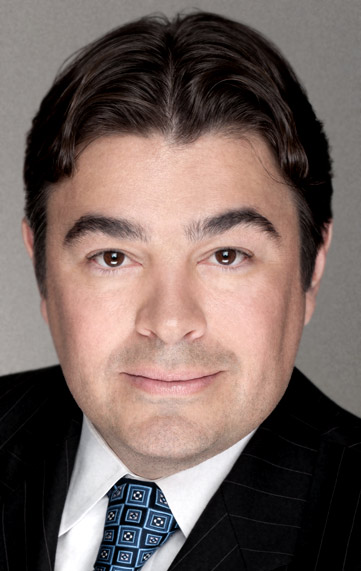 Last fall, I wrote about ICANN's failed effort to achieve its goal of preserving the Whois domain name registration directory to the fullest extent possible. I predicted that if the policy effort failed, governments would take up the legislative pen in order to fulfill the long-ignored needs of those combating domain name system harms. That forecast has now come true through significant regulatory actions in the United States and the European Union in the form of a proposed directive from the European Commission (EC) and instruction from the US Congress to the National Telecommunications and Information Administration (NTIA). more
 Search marketers and SEO mavens are starting to pay attention to top-level domains (TLDs) now that ICANN has announced a starting date. Many of them are dubious about the benefits of TLDs to search, but they are missing out on why search will benefit from new TLDs - and vice-versa. A recent article on SEO.com looked at the value of new top-level domains for search. One of the reasons for his skepticism comes from a common but completely erroneous notion that there's some sort of order to how top-level domains work today... more
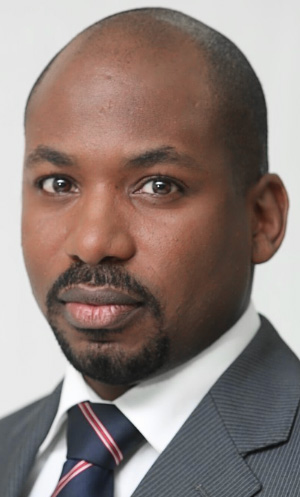 Regenie Fräser, the former Secretary General of a regional trade association, has been selected to serve a one-year term on the board of trustees of the American Registry of Internet Numbers (ARIN). Fraser's appointment makes her the first person from the Caribbean and the first non-white person to serve on the ARIN board. ARIN is one of five registries worldwide that coordinate Internet number resources. more
 VeriSign makes a great deal of money from the .COM and .NET registries. Can we tell how much they make, and how much that might change if the CFIT lawsuit succeeds? It's not hard to make some estimates from public information. The largest gTLD registry that VeriSign doesn't run is .ORG, which was transferred a few years ago to the Public Internet Registry (PIR) which pays Afilias to run the registry, and uses whatever is left over to support the Internet Society (ISOC)... more
 I was looking back at industry reporting a year ago after the impact of the pandemic first hit our broadband networks. Almost every big ISP issued press releases talking about how well it had weathered the pandemic and bragged about the resiliency of its networks. It turns out that these ISP press releases largely missed the point. They are right that their networks didn't crash, but once we understood the nature of the changes in broadband traffic due to the pandemic, that wasn't a big surprise. more
 At June 30, 2015 the Inaugural Meeting of the Coordination Council of the NetMundial Initiative (NMI.CC) elected a "Quintett" to guide its activities through the global Internet Governance Ecosystem. Alibaba's CEO Jack Ma from China, ICANN's President Fadi Chehade, Brazilian's Minister Virgilio Almeida and two woman: Eileen Donahou from Human Rights Watch (HRW)) and Marilia Maciel from the Center of Technology and Society (CTS) in Rio de Janeiro are sharing now the helm to bring more steam to this new innovative multistakeholder platform. more
 A great deal of discussion is taking place about topics such as the digital economy, sharing economy and networked economy. Obviously these are concepts rather than being well-defined, but they are being used by the various players in the market to argue for or against certain developments. For example, in some of the broadband debates around the world, the digital economy is the key reason why national broadband infrastructure gets developed. more
 I have written a short paper on the topic of Internet Governance. Since it includes a number of resources, it would be easier for me to just point to a link with the document itself. Below are some selected excerpts from the document. "Several myths have been spreading around the World Summit on the Information Society (WSIS), but especially after the first Internet Governance Forum (IGF): The critical Internet resources (CIR) consist only of the IP addresses and the domain name system... There are only 13 root servers..." more
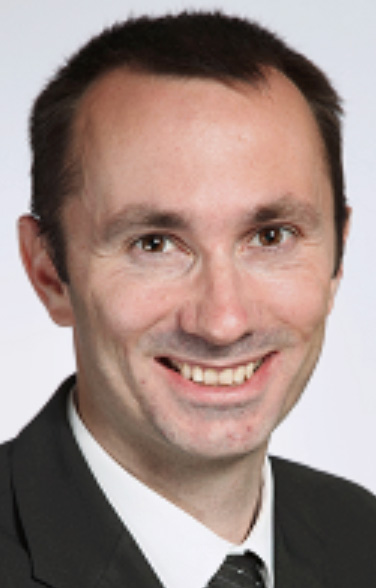 Minds + Machines was the first "new gTLD portfolio applicant" I spotted early in 2008, when .PARIS started being mentioned. Then came a few other projects like .HORSE and later .VODKA. Being French, my vision of good new gTLD suffixes may be slightly different to those native English speakers. Therefore, I favour some TLDs such as .SURF and .ART over some clearly English terms others such as .HORSE. more
 Much has been said about the criticality of the small coterie of large-scale content distribution platforms and their critical role in today's Internet. These days when one of the small set of core content platforms experiences a service outage, then it's mainstream news, as we saw in June of this year with outages reported in both Fastly and Akamai. In the case of Akamai, the June outage impacted three of Australia's largest banks, their national postal service, the country's reserve bank, and one airline... more
 For all the many reasons raised by thousands of petitioners by prominent members of the U.S. Congress, and the California Attorney General's office, this "sale" plainly should not be occurring. However, in a very real way, it is déjà vu. For me, as one of the handful of people who were members of the original InterNIC public advisory committee which oversaw the spinout of the registry activity from its DARPA government instantiation to a private enterprise business... more
 I saw this case in the excellent National Association of Attorneys General publication Cyber Crime e-newsletter. Many of us host or sponsor online communities of one form or another. On occasion, this means we must engage in moderation of the discourse in that community, and, as chance may arise, on occasion, we must give some chap the boot from the community for violating the AUP or the TOS. Inevitable, the booted chap screams "First Amendment Violation," to which we must respond, "The First Amendment restrains government actors -- we are not government actors." more
Sponsored byVerisign

Sponsored byDNIB.com

Sponsored byVerisign

Sponsored byCSC

Sponsored byWhoisXML API

Sponsored byIPv4.Global

Sponsored byRadix

A World-Renowned Source for Internet Developments. Serving Since 2002.