
Welcome:
Login
|
Sign Up
|
About CircleID
Follow:
|
|
|

 Yesterday law enforcement officials arrested 6 people and charged them with running a massive internet fraud ring. Over 4 million PCs were part of the botnet. According to the FBI, "the cyber ring used a class of malware called DNSChanger to infect approximately 4 million computers in more than 100 countries. There were about 500,000 infections in the U.S., including computers belonging to individuals, businesses, and government agencies such as NASA." more
On 6 March 2017, ICANN's GDD finally responded to an applicant letter written on 14 August 2016 to the ICANN Board. This was not a response from the ICANN Board to the letter from 2016 but a response from ICANN staff. The content of this letter can best be described as a Null Response. It reminded the applicants that the Board had put the names on hold and was still thinking about what to do. more
 When I first entered the domain industry as head of finance and operations at .MOBI, the company had just acquired its licence from ICANN. I did a quick overview of the business environment through a financial lens. My first impressions were predominantly positive. Sales were generated up front on a cash basis, which put registry operators in an enviable operational cash flow position... Outsourcing the back-end registry operations meant that we could tie cost of goods sold (COGS) to activity. But I had a steep learning curve... more
 Domain name owners have traditionally complained that ICANN does not listen to us, and there is indeed plenty of evidence demonstrating the group’s obliviousness to community input. Nevertheless, as domain owners, we need to begin giving ourselves a share of blame too. It’s time to reflect on our failures so we can come up with an actionable solution... more
 Imagine that you are considering the purchase of your first self-driving car. You anticipate the benefits of sensors and steering that avoid accidents, conserve energy and keep you in contact with emergency personnel should you need help. You unlock the door, get situated in the driver's seat and are about to engage the ignition and then a question pops into your mind, "Is it really safe"? To answer that question, we need to understand first, that the car is not being controlled by Artificial General Intelligence... more
 Does "voice" communication really matter as much today in business communications? Think about it. When you need to reach someone today, what do you do? Do you call them on the phone? Or do you send them email? Or a text message? or IM? I know personally that my normal communication flow usually goes something like this: Instant Messaging; I check first to see if I can reach the person on some form of IM... SMS; if the matter is relatively important... E-mail/Facebook/Twitter/other; Previously that would have just been email, but these days I find myself very often sending messages via Facebook or Twitter... more
 The case I'm reporting on today has garnered attention from a number of quarters. One commentator, Andrew Allemann tells us that "[he's] struggling with this UDRP decision" and Nat Cohen of Telepathy Inc. in a couple of Tweets and a private conversation is concerned that the holding could be a Trojan Horse by erasing the distinction between merely confusing and confusingly similar. The problem centers on the Panel's holding that everyfamily.org is confusingly similar to EVERYTOWN... more
 The indicators of compromise (IOCs) outlined in my last blog post can be used as a baseline for developing intrusion sets and tracking attack campaigns and threat actors. When launching an attack, threat actors use a variety of vectors and infrastructure, which Verisign iDefense analysts -- as well as analysts across the cybersecurity community -- correlate to group attacks, tracking actors and determining attack methods. more
 In previous installments we've been looking at aspects of the design of the DNS. Today we look at the relationship of similar names in the DNS. A poorly appreciated aspect of the DNS is that there is no inherent relationship between similar looking names. more
 In 2010, ICANN's Security and Stability Advisory Committee (SSAC) published SAC045 [PDF], a report calling attention to particular problems that may arise should a new gTLD applicant use a string that has been seen with measureable (and meaningful) frequency in queries for resolution by the root system. The queries to which they referred involved invalid Top-Level Domain (TLD) queries (i.e., non-delegated strings) at the root level of DNS, queries which elicit responses commonly referred to as Name Error, or NXDomain, responses from root name servers. more
 ome 50 years ago, at the Palo Alto Research Centre of that renowned photocopier company Xerox, a revolutionary approach to local digital networks was born. On the 22nd of May 1973, Bob Metcalf authored a memo that described "X-Wire," a 3Mbps common bus office network system developed at Xerox's Palo Alto Research Center (PARC). more
Would you like to present an idea you have related to DNSSEC or DANE to a gathering of people within the DNSSEC community? Do you have an idea for a new tool or service? Have you recently implemented DNSSEC or DANE and want to share your story? The deadline is Monday, August 17, so please send your proposal soon! We are open to proposals on a wide range of topics... more
In the five previous exciting installments, we've been looking at aspects of the design of the DNS. Today we look at records types, and how you can tell what a DNS record means. All the records in the DNS are strongly typed. Each record includes an RRTYPE, a small number, which defines both the format of the record and what the record means. It is possible and common to have different record types with the same format, but different meanings. more
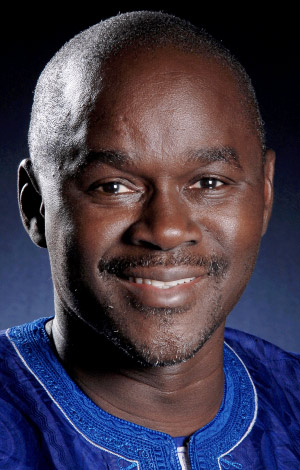 Like everyone else, former ICANN board members have been preoccupied by the horrific November 13th, 2015 attacks on Paris, France, by a bunch of cold-blooded mass murderers. Our email list discussion of the Paris attacks covered a number of issues, including the inevitable question: what, if anything, should ICANN do in response? Some list subscribers concluded that the events had nothing to do with ICANN's mission, and that we should just sigh and move on. Others, on the other hand, said: not so fast, it would serve ICANN well to take a closer look at the matter, and its ramifications on wider world of ICANN. more
 In spite of having a slow, expensive, government-controlled Internet infrastructure, Cuba is undergoing what Ted Henken and Sara Garcia Santamaria refer to as a digital revolution. The digital revolution might be said to have begun in 2007 when Yoani Sánchez launched her blog "Generation Y." Internet access was difficult -- she would get illegal connectivity at tourist hotels, and the blog was initially hosted in Germany. Soon, the Huffington Post began publishing her posts, and she has subsequently received many international awards, including the Ortega y Gasset Award for Digital Journalism in 2008. more
Sponsored byDNIB.com

Sponsored byCSC

Sponsored byVerisign

Sponsored byVerisign

Sponsored byRadix

Sponsored byWhoisXML API

Sponsored byIPv4.Global

A World-Renowned Source for Internet Developments. Serving Since 2002.