
Welcome:
Login
|
Sign Up
|
About CircleID
Follow:
|
|
|

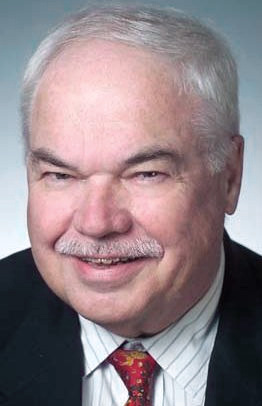 The courts of the United Kingdom have set themselves outside the mainstream of Internet consensus policies on trademark/domain name disputes. A U.K. court decision regarding the UDRP reflects an unfortunate tendency to overlook one of the fundamental principles of the UDRP, namely the opportunity to seek independent resolution of a trademark/domain name dispute by court proceedings. more
 There are several perspectives from which one can give various answers to the question of 'what are domain names?'. Originally the domain name system started and continues to be a human-friendly way of addressing to a set of machines or specific machine connected to the Internet. Hence, from the technical perspective, a domain name is simply an address consisting of a combination of alphanumeric and symbols to communicate with a machine which also happens to be hosting certain services in form of data and information on it. more
 In a recent post to CircleID entitled New Domains and ICANN Accountability, Steve DelBianco paints himself as "frustrated" that ICANN didn't take a different path toward new Top-Level Domains (TLDs). Mr. DelBianco was one of four witnesses at a hearing before the House Judiciary Committee's Subcommittee on Courts and Competition on September 23, 2009. He is a creative advocate for his clients, an engaging speaker, and a skillful writer, and he produced a synopsis of the hearing which sounded convincing -- until I tried to make sense of it. more
The recent meeting of the Internet Corporation for Assigned Names and Numbers (ICANN) in China demonstrates a serious dilemma for Internet users around the world. In the name of reforming ICANN and making it more responsive, ICANN ended the seats of the At-Large directors on its board. This was the part of the ICANN structure that was supposed to be responsive to Internet users. more
The Internet, ultimately, is a fragile thing, as an entity. It depends upon the consensus of those responsible for its infrastructure to operate on a daily basis. Because of the inherent robustness as a technical architecture, there is no entity that can "break the Internet" in the sense of stopping the flow of traffic, but there are several entities that can create a variety of inconveniences, some minor and some serious, for the millions who use the Internet. more
 There has been no shortage of speculation within the ICANN community regarding the continued show down between the ICANN Board and its Governmental Advisory Committee (GAC) over new generic Top-Level Domains (gTLDs) and the pending expiration of the IANA contract this September. Now one of the more interesting topics of discussion that I have had with multiple independent parties was the potential of ICANN making changes to the L root zone file... more
 Verizon Wireless' decision to allow their subscribers to access Skype raises a question about strategy. Is Verizon leveraging Skype access as an inducement for subscribers to upgrade to smartphones and commit to $30 a month data plans, has the company acknowledged that its future marketplace success lies in data and not voice services, and how will the company prevent a substantial reduction in plain old voice subscriptions priced above the $30 data plan benchmark? more
 Readers of my blog may recall that the Canadian Internet Registration Authority wrote a public letter earlier this year to ICANN that expressed concern over the current lack of accountability (note that I am on the CIRA board). The letter indicated that CIRA was withholding payment of any voluntary fees to ICANN until the accountability concerns were addressed. This week CIRA followed up with a second public letter to ICANN... more
 Mobile Network Operators (MNOs) serve the largest constituent of connected devices. There are over 4.6B GSM (and its derivatives) subscriptions today. When you add the CDMA family along with technologies with smaller footprints such as WiMax, IDEN to this list, that number tops 5B mark. On the other hand there are only (yes only!) 800M Internet hosts per ISC. Considering such a small percentage of those 5B or so devices are capable of being an Internet host and out of that percentage even a much smaller percentage is connected at a given time, one can understand the sheer potential of explosion in the number of Internet hosts as mobile devices in the next 3-5 years. more
 According to the 10/10 rule, it takes about a decade to take a product from initial idea to having a standard developed, and then another decade to reach mass market adoption. How can that second decade be reduced in the case of Internationalized Domain Names and their adoption by Internet users? The most effective way to speed up IDN mainstream adoption is learning from history. more
 This past Monday, as ICANN65 was beginning in Marrakesh, the technical review blog Review Signal published a detailed expose, "The Case for Regulatory Capture of ICANN" authored by site founder and "geek-in-charge" Kevin Ohashi. The post was clearly the product of extensive investigative reporting – and what it reveals is deeply disturbing. more
 Cuban requests for Google services are being routed to GCC servers in Cuba, and all Google services that are available in Cuba are being cached -- not just YouTube. That will cut latency significantly, but Cuban data rates remain painfully slow. My guess is that Cubans will notice the improved performance in interactive applications, but maybe not perceive much of a change when watching a streaming video. more
 While the internet has brought about the transformation of whole industry sectors and generated thousands of business models, as well as changing social behaviour, it is at the same time creating its own giants and dominant players. Does this mean that while certain vested interests are demolished, and others transform themselves into smaller sectors and organisations, new conglomerates will surface? Only time will tell more
 With the market for connected humans reaching saturation in advanced economies, mobile operators now see connected devices as the next growth opportunity. 'Everything that can benefit from being connected will be connected', according to Ericsson's CTO (source). In the meantime, Intel dreams of embedding processors into everything that can gain something from communicating. more
 Hootsuite is the premier tracker of social media usage around the world. They publish numerous reports annually that track broadband statistics and social media statistic from around the world. They report the following statistics for the end of 2018. The world has been seeing one million new users online every day since January 2018. That means there are 11 new users on the web every second. There are now 5.11 billion mobile subscribers in the world, 67% of the world's population. more
Sponsored byDNIB.com

Sponsored byCSC

Sponsored byVerisign

Sponsored byWhoisXML API

Sponsored byRadix

Sponsored byVerisign

Sponsored byIPv4.Global

A World-Renowned Source for Internet Developments. Serving Since 2002.