
Welcome:
Login
|
Sign Up
|
About CircleID
Follow:
|
|
|

 Around the world, digital technology is seen as vital for economic development. In the U.S. alone, the Internet accounts for about six percent of the entire economy. Digital technology has expanded its role in the global economy in recent years, as both developed and developing nations have become increasingly reliant on the Internet. more
 The digital domain encompasses the different spaces and spheres we use to relate and interact with the people and things that surround us using digital technologies. The Universal Declaration of Human Rights, UDHR, as the globally accepted standard, should serve us as the guiding light when it comes to striking the delicate balance between our rights and responsibilities on and offline. more
 Industry standards are indispensable for today's technology driven economies. Every time we use a mobile phone to place a call, or connect a computer to the Internet at a café, we rely on standardized technology. Most standards are developed over years through the collaboration of numerous engineers from different companies -- the result is a technical document explaining how to make products that can 'interoperate' with one another. As EU Commissioner Neelie Kroes put it: 'Standards are the foundation of interoperability.' more
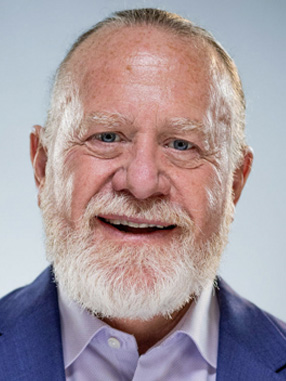 The Secure Hosting Alliance has introduced a certification programme to establish clear, verifiable standards for internet hosting providers, aiming to improve accountability, boost transparency, and strengthen the trust that underpins global online infrastructure. more
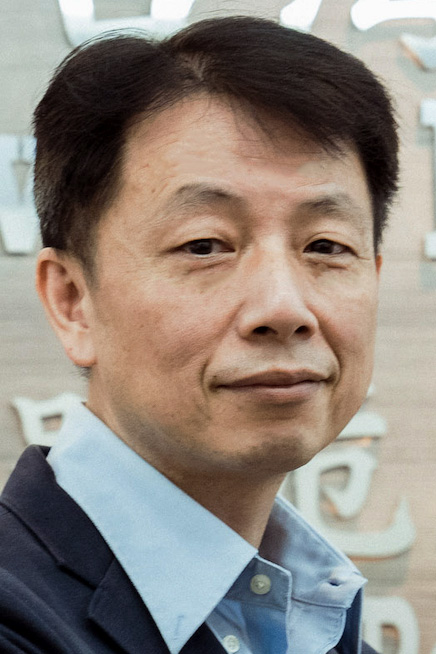 Over the past decade, cloud computing has experienced explosive growth, evolving from its nascent stage to widespread adoption and fundamentally changing how businesses and individuals use information technology. At the same time, traditional on-premise computing, while still having its use cases, has been progressively integrated with, and often even controlled by, Cloud Service Providers (CSPs) in many aspects. more
 Observers of IANA transition may have found a remarkably interesting fact that both supporters and opponents of the transition like citing China, along with a small number of other countries, as evidence in favor of their arguments. For supporters, take Larry Strickling as an example, blocking transition benefits China in that it will "intensify their advocacy for government-led or intergovernmental management of the Internet via the United Nations." On the contrary... more
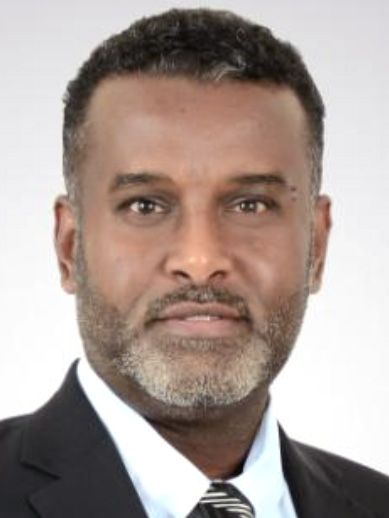 Granular regulation offers a new governance framework for AI, blending flexibility with enforceability. By translating broad principles into risk-sensitive, technical mandates, it overcomes the rigidity of rule-based models and the vagueness of principle-based approaches. more
Unlike past technological shifts, artificial intelligence is automating high-skilled professions before low-skilled ones. This reversal challenges long-held assumptions about job security, expertise, and governance, forcing policymakers to rethink regulation, trust, and digital sovereignty. more
 In a post last week, I advised Cuban President Díaz-Canel that investment in fixed broadband Internet would benefit both the Cuban people and his regime. This week, I've got advice for US President Biden -- don't try to out-pander the Republicans and call President Díaz-Canel's bluff by offering support for fixed broadband. What won't work... more
 AFRINIC's fight over 6.2 million IPv4 addresses exposes how legal pressure, offshore vehicles and scarcity economics can strip Africa of leverage, turning a technical dispute into a test of sovereignty, institutional resilience and Internet governance. more
 The crucial importance of Iran Nuclear Deal and, hopefully, the imminent expectation, for reaching to an indisputable solution and agreement among 5+1+ Iran (as well as the other parties who claim to have interest in this matter) all have created a special climate and proper ground for all the activists and the observers in order to seriously sit and make a review of the actual situation and the potentials of the main player of the field, say Iran, or Civil Society of Iran... more
 What defines a stakeholder in Internet governance? Is it a professional occupation, an ideology, or a specific methodology? One of the key themes emerging in the Netmundial+10 event has been that of stakeholder involvement, participation and representation in different IG mechanisms. The numeric increase in contributors to these processes since the original Netmundial is palpable. However, questions remain about the definition of a stakeholder and the premises under which these actors should engage in policy work together. more
 OpenVault's latest broadband report shows U.S. households using more data, with uploads rising faster than downloads and a major shift toward midrange speed tiers. Growing gaming, streaming, and cloud activity continues to reshape network demand and subscriber behavior. more
 As the digital landscape continues to evolve at an accelerated pace, the role of end-user participation in Internet governance has never been more crucial. With the World Summit on the Information Society (WSIS) +20 Review on the horizon, it's time to critically evaluate the progress made and the vast terrains yet to be charted. This topic was recently discussed at the EURALO round table moderated by Pari Esfandiari with panelists Sandra Hoferichter, Olivier Crépin-Leblond, and Lucien Castex, delving into the intricacies of fostering a user-centric, inclusive, and development-oriented information society since the inaugural WSIS meetings in 2003 and 2005. more
There was a recent article in JAMA Network Open, part of the monthly journals of the American Medical Association, that reported on a large study to quantify the benefits of using telemedicine with cancer patients. The study was conducted at National Cancer Institute - Designated Comprehensive Cancer Center in Florida from April 2020 through June 2021. The study wanted to quantify the cost savings for patients that were able to conduct visits via telehealth rather than drive to the cancer center. more
Sponsored byDNIB.com

Sponsored byRadix

Sponsored byVerisign

Sponsored byWhoisXML API

Sponsored byVerisign

Sponsored byIPv4.Global

Sponsored byCSC

A World-Renowned Source for Internet Developments. Serving Since 2002.